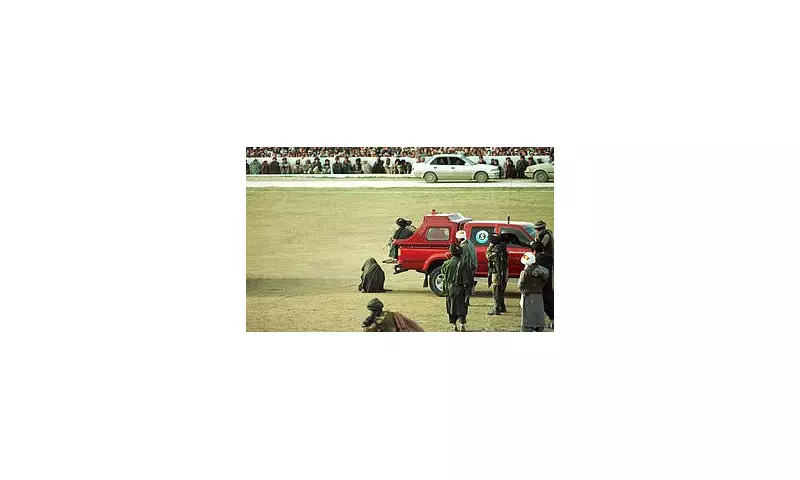
A man convicted of murder was put to death before a large crowd in a sports stadium in eastern Afghanistan on Tuesday, in the latest application of the Taliban's strict judicial code.
Stadium Execution in Khost
The Supreme Court of Afghanistan stated that the man, identified as Mangal, was executed in the city of Khost. The execution was carried out as a form of 'retaliatory punishment' for a killing, following what the court described as a thorough and repeated examination of his case.
Authorities had widely circulated official notices on Monday, urging the public to attend the event. The court added that the families of the victim had been offered the chance to grant amnesty but had refused.

A Rising Tally of Public Executions
This incident brings the total number of men publicly executed since the Taliban returned to power in August 2021 to 12, according to a tally kept by the AFP news agency. The ruling regime has reinstated its interpretation of Sharia law, which includes capital punishment for severe crimes.
In a similar case last October, a man convicted of murdering a man and his heavily pregnant wife was shot three times by a relative of the victims in a sports stadium in Qala-i-Naw, Badghis province. That execution also followed a multi-court review and final approval from the Taliban's supreme leader, Hibatullah Akhundzada.
International Condemnation and Legal Context
Prior to Tuesday's execution, the UN Special Rapporteur on Human Rights in Afghanistan, Richard Bennett, publicly criticised the practice. In a post on X, he stated that such acts constitute 'inhumane, cruel, and an unusual punishment, contrary to international law'.
'They must stop,' Bennett asserted. The public nature of the executions, often held in sports grounds, has drawn widespread condemnation from international human rights organisations, which argue they violate fundamental human dignity.
The Taliban's Supreme Court, however, maintains that these sentences are only applied after exhaustive legal processes and are a form of justice for victims' families under their system of 'qisas', or retributive justice.