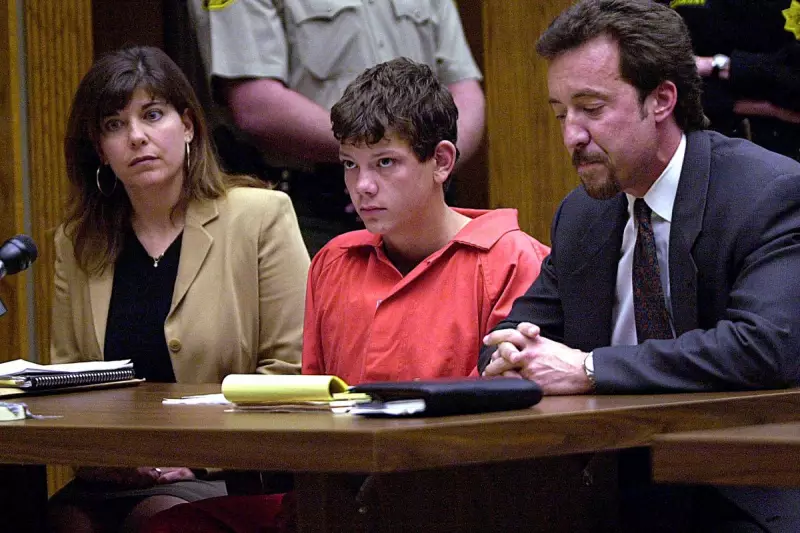
A gunman who killed two pupils and wounded thirteen others in a 2001 high school shooting could walk free imminently after a judge approved his resentencing.
Judge's Decision Paves Way for Release
Charles Andrew Williams, now 39, was just 15 years old when he opened fire with his father's revolver at Santana High School in San Diego on 5 March 2001. He pleaded guilty and received a sentence of 50 years to life in prison.
Having served 23 years, a judge's ruling on Tuesday means Williams' case will be transferred to juvenile court. The San Diego County District Attorney's office, led by Summer Stephan, warns this is expected to result in his immediate release without parole supervision or any evaluation.

Prosecutors have vowed to challenge the decision in the appellate court in an attempt to halt his release. "As prosecutors, our duty is to ensure justice for victims and protect public safety," Stephan stated.
Victims and Parole Denial
Williams' shooting spree claimed the lives of two students: 14-year-old Bryan Zuckor and 17-year-old Randy Gordon. He also injured eleven other students and two staff members.
Currently held at the California Institution for Men in Chino, Williams became eligible for parole in September 2024. However, a state parole board denied his release, labelling him an "unreasonable risk to public safety". The board also noted it was unclear if Williams fully understood why he committed the atrocity.
In a past statement, Williams expressed deep remorse: "I am sorry for the physical scars and for the psychological scars I created... It is my intention to live a life of service and amends, to honour those I killed and those I harmed."
Legal Mechanism Behind Resentencing
This potential release stems from a 2011 law that allows judges to reconsider sentences for juvenile offenders given life without parole. A subsequent 2022 appeals court decision expanded eligibility to include those with the "functional equivalent" of such sentences.
Due to his age at the time of the crime, Williams' convictions will be redesignated as juvenile "true findings." Prosecutors confirm his case has been moved to juvenile court for a disposition hearing, after which he could be released and potentially placed on juvenile probation.
The legal battle now centres on balancing the rights of the defendant, the enduring grief of the victims' families, and the community's right to safety.