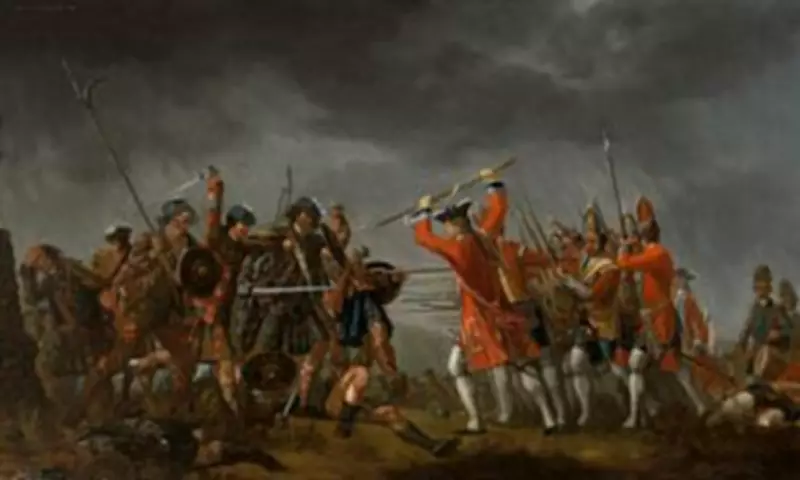
Archaeologists have made a startling discovery at the historic Culloden battlefield near Inverness: an unexploded mortar shell fired during the bloody 1746 conflict that effectively ended the Jacobite risings. This remarkable find represents the first unexploded ordnance ever recovered from the moorland site, offering a tangible connection to one of Britain's most significant military engagements.
The Shell's Preservation and Discovery
The mortar shell was discovered during archaeological excavations conducted last year and has since been safely rendered inert. Experts believe the projectile's fuse failed to ignite when it landed in the boggy terrain nearly three centuries ago, preserving it in a potentially dangerous state until modern detection methods revealed its presence. The shell's unveiling comes just ahead of the 280th anniversary of the Battle of Culloden, which historians believe lasted less than an hour on April 16, 1746.
Artillery Context and Historical Significance
Archaeological analysis suggests the shell was fired from one of six Coehorn mortars deployed by government Redcoat troops against forces loyal to Charles Edward Stuart, better known as Bonnie Prince Charlie. The Coehorn mortar, named after its Dutch inventor Menno van Coohorn, was a lightweight, short-barrelled artillery piece typically used in siege warfare. Professor Tony Pollard of the University of Glasgow, which participated in the excavation, confirmed to the BBC that mortars were among the artillery types deployed during the battle.

The Battle of Culloden resulted in catastrophic losses for the Jacobite army, with approximately 1,600 men killed in the confrontation. In stark contrast, government forces reported only 50 fatalities and fewer than 300 total casualties. Historians widely regard Culloden as the last pitched battle fought on British soil, and a substantial portion of the battlefield is now preserved and managed by the National Trust for Scotland.
Additional Archaeological Finds from the 2023 Excavation
Last year's archaeological dig yielded more than 100 additional projectiles beyond the unexploded mortar shell. These included numerous lead musket balls and various cannon shot, among which archaeologists identified what they believe to be a three-pound cannonball fired by Jacobite artillery. Each discovery contributes to a more nuanced understanding of the battle's dynamics and the weaponry employed by both sides.
Derek Alexander, Head of Archaeology for the National Trust for Scotland, expressed particular excitement about the mortar shell discovery. "This is a remarkable – dare I say, explosive – find of the kind archaeologists dream of, but never expect to encounter," Alexander stated. "The preservation of this ordnance provides an extraordinary window into the final moments of the Jacobite cause and the brutal efficiency of government artillery."
The discovery underscores how modern archaeology continues to reveal new dimensions of historical events long thought to be thoroughly documented. As preservation work continues at Culloden, each artifact helps contemporary audiences better comprehend the human and material costs of this decisive eighteenth-century conflict.