
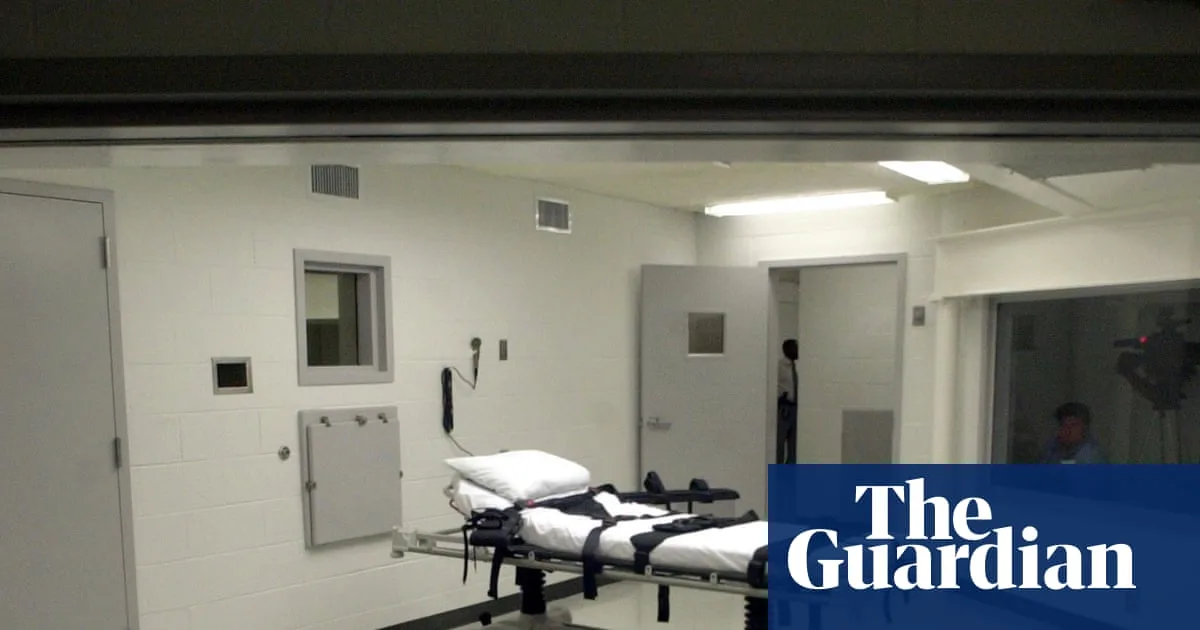
The United States Supreme Court has declined to allow Alabama to carry out the execution of a death row prisoner using nitrogen gas, a method that has become increasingly controversial. The decision late Thursday leaves in place lower court rulings that deemed the state's nitrogen gas protocol unconstitutional, and sets the stage for a potential Supreme Court battle over the method's legality nationwide.
The prisoner, Jeffery Lee, 49, was convicted of murdering two people during a 1998 robbery. His case has been marked by legal controversy: despite a jury's vote for life without parole, a judge overrode that decision and sentenced him to death in 2000. Alabama abolished judicial override in 2017 but did not apply the change retroactively to Lee.
Alabama's attorney general, Steve Marshall, condemned the Supreme Court's refusal, describing it as a "miscarriage of justice" and vowing to pursue Lee's execution. The ruling currently applies only to Alabama, but a definitive Supreme Court judgment would affect the five states that have authorised nitrogen gas executions: Alabama, Arkansas, Louisiana, Mississippi and Oklahoma. There have been eight such executions to date, seven in Alabama and one in Louisiana.
Nitrogen hypoxia, which involves forcing an inmate to breathe pure nitrogen through a respirator until death from oxygen deprivation, has faced mounting criticism for its apparent brutality. Witnesses have reported that Eugene Smith, the first inmate executed by the method, thrashed and writhed, while Anthony Boyd's execution appeared to last more than 30 minutes with shuddering and gasping. Critics argue that state secrecy laws have prevented proper scrutiny of a practice they compare to human experimentation. Marshall has dismissed such criticism as sensational.
Lee's legal team welcomed the Supreme Court's decision, noting that the jury had voted for life and that two courts had ruled the method unconstitutional. "Today, the constitution prevailed," their statement said, adding that Governor Kay Ivey could now "restore the jury's verdict of life without parole." The religious adviser who witnessed two nitrogen executions, Rev Jeff Hood, said the rulings "vindicate" witnesses who described the deaths as torturous. "The body doesn't lie," he said. The Supreme Court voted 6-3, with Justices Thomas, Alito and Gorsuch dissenting.




