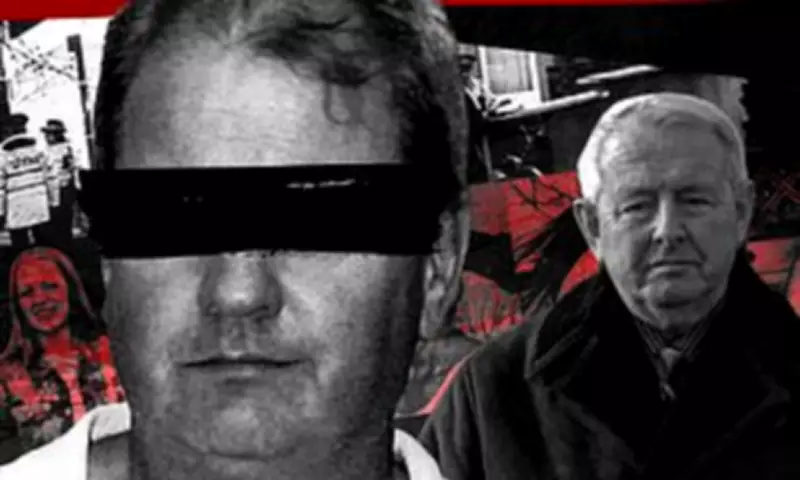
In a profound testament to parental devotion, a father's love for his child often manifests as an unwavering belief in their inherent goodness. This instinct was starkly tested in the case of Conrad Wright, who initially refused to accept the monstrous reality of his son's actions, even as evidence mounted against him.
The Suffolk Strangler's Reign of Terror
Steven Wright, a seemingly unassuming truck driver and married man, was convicted in 2008 for the brutal murders of five women in Ipswich during a six-week killing spree in late 2006. Dubbed the Suffolk Strangler, his victims—Tania Nicol (19), Gemma Adams (25), Anneli Alderton (24), Paula Clennell (24), and Annette Nicholls (29)—were all sex workers. Their naked bodies were discovered dumped in remote locations around Suffolk over less than a fortnight.
A Chilling Revelation of an Earlier Murder
Only last month, it was confirmed that Wright's murderous campaign began years earlier. In 1999, he abducted, raped, and killed 17-year-old Victoria Hall as she walked home from a nightclub in Trimley St Mary, near Felixstowe. This connection remained undetected when Wright was apprehended for the Ipswich murders.

A Father's Heartbreaking Realisation
In his final interview before his death in 2021 at age 84, Conrad Wright disclosed the moment he acknowledged his son was a 'monster hiding in plain sight.' The Daily Mail obtained this previously unpublished conversation, along with others spanning several years, offering a unique perspective on Wright's warped psyche from the man who believed he knew him best.
'I believe he is guilty and could have murdered more women,' Conrad admitted. 'He's my son. And he turned into a mass murderer.'
The Investigation and Conviction
The investigation into the Ipswich murders bore eerie similarities to high-profile cases like the Yorkshire Ripper and the Soham murders. Suspicious officers stopped Wright twice while he cruised the red-light district, but the breakthrough came with DNA evidence. Forensic analysis matched Wright's DNA to three victims, with blood from two women found on his hi-vis jacket and specks in his car.
CCTV and numberplate recognition technology placed his vehicle in the area when several women disappeared. At trial, it was revealed Wright picked up the women, incapacitated them with heavy drug doses, and killed them. He admitted to sexual encounters but denied the murders, claiming forensic links were coincidental. He received a rare whole-life sentence.
Family Estrangement and Psychological Theories
Conrad Wright never spoke to or received a letter from his son after the conviction, despite attempts to contact him in prison. The killer also cut ties with his extended family. As Conrad's health declined post-2020 Covid pandemic, he considered phoning his son but feared it might push him to suicide.
'I was half expecting some contact—perhaps a phone call from jail. But he hasn't,' Conrad said. 'A phone call from outside, from me, might upset him and he could do something silly, like suicide. I don't want him to do anything stupid.'
Roots of Hatred: A Mother's Departure
Conrad theorised that his son's hatred for women stemmed from childhood trauma. He claimed Wright's mother, Patricia, left the family in 1964 when Wright was six, moving to America with an American serviceman. They divorced in 1977, and Conrad later remarried his son's babysitter, Valerie, who died of cancer in 2011.
Patricia returned only once in the 1990s, and Conrad recalled Wright saying, 'Why has she come back now? She didn't want me.' He believed this abandonment fueled Wright's misogyny. Patricia, however, told the News of the World she left due to a violent marriage and wanted to take the children but was prevented.
A Jekyll and Hyde Character
Conrad described his son as quiet and respectful, with no signs of violence. Wright spent days watching his father play cricket and sharing pints at a village pub. Conrad lived with Wright and both wives at different times, yet neither reported any aggression.

'They never once told me he was physically or verbally aggressive to them,' Conrad said. 'To me, he was a good son who I could have a few quiet pints with. Steve must have been a sort of Jekyll and Hyde character.'
Conrad died of heart failure unaware his son had murdered Victoria Hall, but he suspected Wright was involved in other unsolved killings. His final words encapsulate a father's tragic awakening: 'Steven was quiet and unassuming—but perhaps he was a monster hiding in plain sight. He must be a strong suspect for other unsolved murders.'