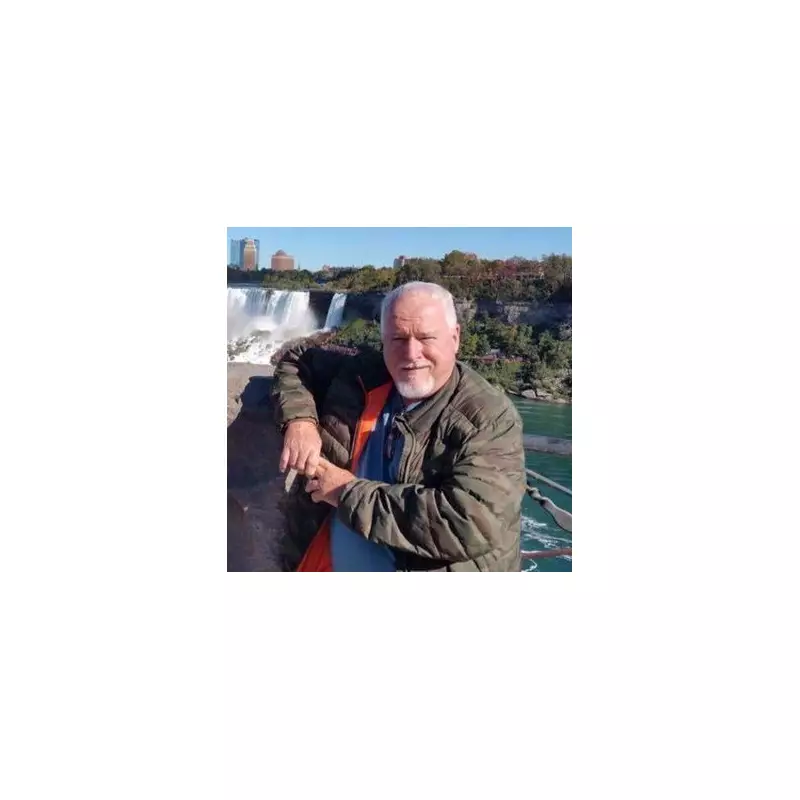
The case of Bruce McArthur stands as one of Canada's most disturbing serial killer investigations, revealing a predator who hid in plain sight for years. McArthur, who worked as a landscape gardener and even played Santa Claus in a shopping mall, led a gruesome double life, murdering eight vulnerable men between 2010 and 2017.
The Double Life of a Killer
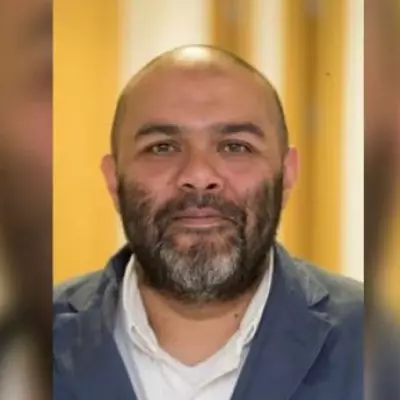
To the outside world, Bruce McArthur appeared as a friendly, bearded figure. He was a familiar face as a shopping mall Santa and a trusted landscape gardener for clients in Toronto. However, this facade concealed a brutal serial killer who preyed on men from the city's Gay Village. His victims were often marginalised individuals, including asylum seekers, homeless people struggling with addiction, and men living secret lives away from their families.
McArthur's own life involved layers of deception. He was married to Janice Campbell from the age of 23, and they had two children, Melanie and Todd. He began having affairs with men in the early 1990s and eventually came out to his wife. The couple separated in 1997, after which McArthur moved to Toronto.

A Pattern of Disappearances and a Flawed Investigation
The killings began in 2010. The first known victim was Skandaraj Navaratnam, 40, a Sri Lankan immigrant last seen leaving a bar with an unknown man. Later that year, Abdulbasir Faizi vanished from the Village. In 2012, Majeed Kayhan, 58, also disappeared.
Police launched Project Houston in 2012 to investigate these three disappearances. Alarmingly, McArthur was interviewed as a witness in 2013, as he was a long-time friend of Navaratnam. He was not considered a suspect. The investigation was closed in 2014, with authorities stating they "couldn’t establish whether these gentlemen had met with any foul play." Two weeks after his police interview, McArthur purchased a new van.
The disappearances continued. Soroush Mahmudi, 50, a married Iranian immigrant, went missing in 2015. Dean Lisowick, a man in his mid-40s involved in the sex trade, vanished in 2016. The case broke open in 2017 after the disappearances of Selim Esen, 44, in April and Andrew Kinsman, 49, in June, prompting the new Project Prism investigation.
The Pivotal Clue and Dramatic Arrest
Andrew Kinsman's disappearance proved to be the turning point. A well-liked figure in the LGBTQ community, his absence was immediately and seriously investigated. Police found a crucial entry in his calendar for the day he vanished: the single word "Bruce". This matched surveillance footage showing Kinsman entering a red Dodge Caravan.
Police traced the van to a shortlist of owners named Bruce, with McArthur emerging as a prime person of interest. After months of surveillance and a covert search of his apartment, officers moved in on January 18, 2018. They intervened when they saw McArthur bringing another man home, believing he was in immediate danger.
Inside the apartment, they found a man, identified in court as "John," handcuffed to the bed with a black bag over his head. McArthur was in the process of taping his mouth shut.
Gruesome Discoveries and a Guilty Plea
The subsequent search of McArthur's home and the properties where he worked as a landscaper uncovered a horror story. Investigators found jewellery belonging to victims and bags of hair. Most chillingly, they discovered the dismembered remains of his victims hidden inside large garden planters and a nearby ravine at a property on Mallory Crescent.
In January 2019, McArthur pleaded guilty to eight counts of first-degree murder. The court heard harrowing details of his "twisted rituals," where he would sometimes shave his victims, pose their naked bodies in fur coats with cigars, and photograph them. Prosecutor Michael Cantlon stated that six of the eight victims appeared in these after-death photos. Several victims had been strangled.
Justice John McMahon, sentencing McArthur to life in prison, said he had "no doubt Bruce McArthur would have continued killing" and noted the killer showed no remorse.

Missed Opportunities and Systemic Failures
The case raised serious questions about police procedure and background checks. McArthur had three prior encounters with police. In 2003, he was convicted of assault after attacking a former partner with a metal pipe. In 2014, after committing at least three murders, he was granted a record suspension (equivalent to a pardon), meaning his criminal past was hidden from background checks.
In 2016, during his killing spree, he was interviewed again after attempting to strangle a friend in his van. The friend called police, but McArthur was not charged, as officers found his story "credible." His 2003 conviction did not appear in their search.
The Bruce McArthur case remains a stark reminder of how a manipulative individual can exploit systemic gaps and target society's most vulnerable, all while maintaining a chillingly ordinary public persona.