Prosecutors Face Uphill Battle in Ben Roberts-Smith War Crimes Case
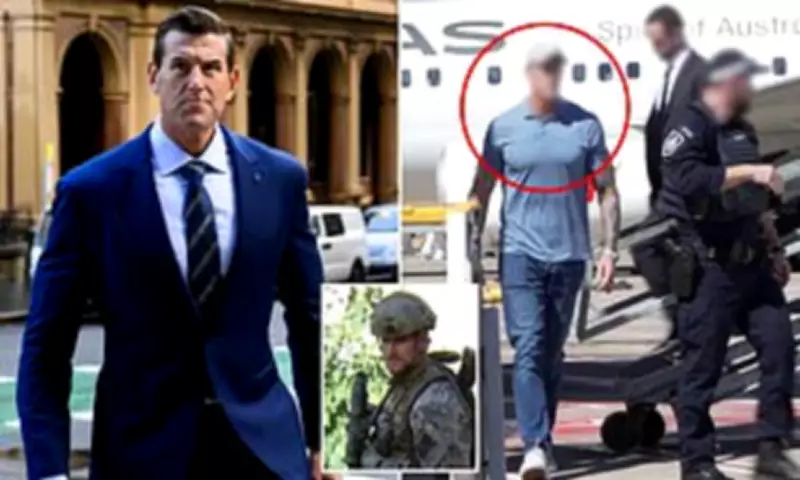
Prosecutors hoping to convict decorated SAS veteran Ben Roberts-Smith of war crimes may face a monumental challenge in proving their case in court, as authorities have admitted they possess limited evidence. The Victoria Cross recipient was taken into custody at Sydney Domestic Airport on Tuesday morning after arriving on a flight from Brisbane, with his teenage twin daughters witnessing the arrest.
Complex Investigation in Inaccessible War Zone
Roberts-Smith, Australia's most decorated soldier, is expected to be charged with five counts of war crime murder relating to alleged incidents in Afghanistan between April 2009 and October 2012. The charges follow a joint investigation between the Office of the Special Investigator and the Australian Federal Police.
OSI Director of Investigations Ross Barnett acknowledged at a press conference that the investigation has been exceptionally complex because authorities "don't have access to the crime scene." Barnett explained that unlike conventional investigations conducted within Australia, the OSI has been tasked with investigating dozens of alleged murders committed in a war zone approximately 9,000 kilometers from Australian shores.

Critical evidence typically available in murder investigations is completely absent in this case:
- No photographs of crime scenes
- No site plans or measurements
- No recovered projectiles
- No blood spatter analysis
- No access to deceased victims
- No post-mortem examinations
- No official causes of death
- No links to weapons carried by Australian Defence Force personnel
High Legal Threshold for Conviction
Dr. Brianna Chesser, an associate professor in criminology and justice, told media outlets that proving this case in court would present substantial challenges. "There are practical, evidentiary and legal issues with bringing a prosecution for historical war crimes in Australia," she stated.
Chesser emphasized that any criminal prosecution would require proving guilt "beyond reasonable doubt"—a significantly higher threshold than the civil standard of proof used in Roberts-Smith's recent defamation case. In 2023, Justice Anthony Besanko found that claims Roberts-Smith was responsible for the murder of four unarmed male civilians in Afghanistan were substantially true, but this civil finding used the lower standard of proof based on the balance of probabilities.
The prosecution faces multiple evidentiary hurdles:
- Locating and compelling witnesses to give evidence
- No access to crime scenes or victim remains
- Limited availability of evidence from previous inquiries
- Requirement for entirely new investigation in criminal proceedings
Previous Legal Proceedings and Current Charges
Roberts-Smith previously sued Nine newspapers and journalists Nick McKenzie and Chris Masters for defamation over their 2018 reports accusing him of war crimes. After losing that case in 2023 and having his appeal refused by Australia's highest court last year, he now faces direct criminal charges.
The specific charges against Roberts-Smith include:
- The war crime of murder for intentionally causing death on April 12, 2009, at Kakarak, Uruzgan Province
- Aiding, abetting, counselling or procuring murder on April 12, 2009, at Kakarak
- Aiding, abetting, counselling or procuring murder on September 11, 2012, at Darwan, Uruzgan Province
- Jointly causing death with another person on October 20, 2012, in Syahchow, Uruzgan Province
- Aiding, abetting, counselling or procuring murder on October 20, 2012, at Syahchow
The maximum penalty for war crime murder is life imprisonment.
Whistleblower Context and Human Rights Perspectives
The arrest has drawn attention to the case of David McBride, a whistleblower currently serving a jail sentence until at least August 2026 after pleading guilty to leaking classified documents that exposed alleged war crimes by Australian soldiers in Afghanistan.

Rawan Arraf, principal lawyer and executive director of the Australian Centre for International Justice, welcomed Roberts-Smith's arrest as "an important step towards truth and accountability." Arraf has been a long-time advocate for McBride and emphasized that proper investigation and prosecution of alleged war crimes is essential for justice for Afghan victims and for Australia to meet its international law obligations.
Rex Patrick, founder of the Whistleblower Justice Fund, noted the irony that "the whistleblower was the first person prosecuted and subsequently jailed, while there have been no consequences for the alleged perpetrators."
Defence Perspective and Presumption of Innocence
A source close to Roberts-Smith criticized the manner of his arrest, claiming authorities sought to inflict "maximum distress" by arresting him in front of his daughters. The source stated that Roberts-Smith's legal team had repeatedly informed investigators that he would present himself voluntarily if charges were brought, making the public arrest unnecessary.
The source emphasized: "Mr. Roberts-Smith is entitled to the presumption of innocence—a cornerstone of our justice system, and one he fought to defend in service of his country, that has to date been conspicuously absent in his case."
Roberts-Smith has maintained his innocence throughout the investigations and was held behind bars overnight on Tuesday ahead of a bail hearing on Wednesday. As the case progresses, prosecutors will need to overcome significant evidentiary challenges to meet the high criminal standard of proof required for conviction.