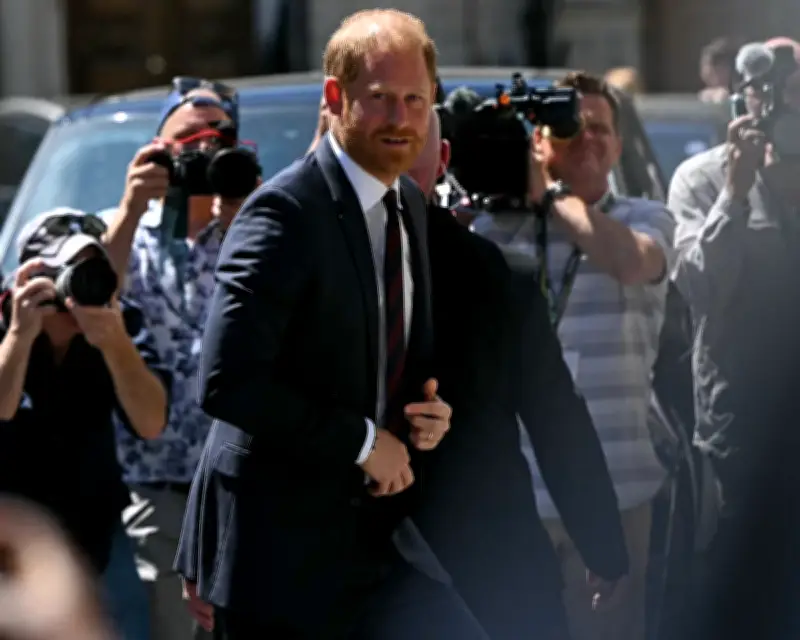
Prince Harry's legal battle against the Daily Mail collapsed in the high court after the judge rejected allegations of phone hacking and privacy breaches. The case, brought by Harry and six others including Elton John and Doreen Lawrence, was built on evidence from self-confessed 'professional liar' Graham Johnson and former private investigator Gavin Burrows, whose credibility was 'comprehensively undermined'.
How the case unravelled
The claim relied heavily on Johnson, a former tabloid journalist with a suspended sentence for phone hacking, and Burrows, who initially confessed to illegal surveillance but later recanted. Mr Justice Nicklin found that the claimants' evidence was inconsistent and that Johnson and Evan Harris, a former MP who coordinated the case, had pursued a 'single course of conduct' combining journalism and litigation objectives.
Harris proposed using Johnson's Byline Investigates website to publish stories that could help claimants circumvent limitation periods. Nicklin called this an 'improper and dishonest proposal'. The judge also noted that Burrows, who was paid £5,000 monthly retainer, had his credibility destroyed after switching sides and claiming his confessions were fabricated.
Background to the case
The action began after Hugh Grant met Johnson in January 2015 at the KX Gym in Chelsea. Johnson had received a two-month suspended sentence for hacking a soap actor's phone. Grant agreed to fund Johnson's investigation into allegations that the Daily Mail had offered payments to Ian Huntley, the Soham murderer. The Soham tip did not bear fruit, but the investigation expanded into a broader probe codenamed Operation Bluebird.
Johnson sourced funding from the families of Max Mosley and James Stunt, and paid private investigators with criminal convictions. The claimants included Elizabeth Hurley, who said she felt her 'nightmares were becoming a depraved reality' upon learning of alleged bugging, and Doreen Lawrence, who was allegedly spied on while the Mail campaigned for justice for her son Stephen.
Key witness failures
Burrows claimed he had placed a hardwire tap on Prince Harry's friend Guy Pelly's phone and intercepted voicemails of Harry's teenage girlfriend. He also alleged he bugged Elton John's Windsor mansion. However, Burrows later gave a statement to the Mail's lawyers saying his confession was forged and based on conversations with Johnson while he was drinking heavily. He claimed he never worked for the Mail.
Jonathan Rees, another private investigator, did not give evidence and told Channel 4 Dispatches he had not bugged Lawrence or believed the Mail acted illegally. The judge ruled that Burrows's credibility was 'comprehensively undermined' and that the claimants' case rested on unreliable witnesses.
Aftermath
Prince Harry was rumoured to be on the verge of tears when he learned of the defeat. The judge did not assert that Johnson and Harris set out to mislead the court, but noted inconsistencies in their evidence. The claimants may face a substantial legal bill from the Daily Mail. Hacked Off, the press reform group, distanced itself from Johnson, stating he never worked for the organisation.
Katie Nicholl, a former Mail on Sunday diary editor who wrote about Harry's private life, told BBC Radio 4's Today programme: 'Am I proud of every single story? No, I’m not. Certainly some of them were intrusive and veered into deeply private territory. It doesn’t mean they were gotten illegally. They were not.'