Prince Harry Seeks 'Very Substantial' Damages in High Court Newspaper Trial
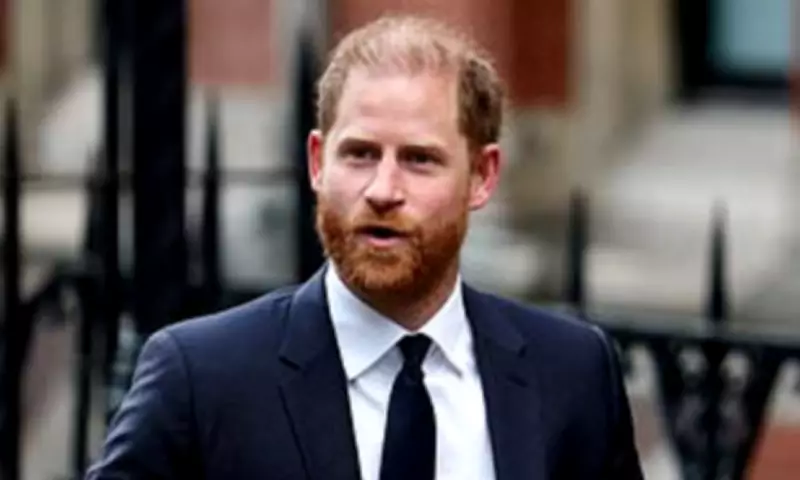
The High Court heard on Monday that Prince Harry and other prominent figures are pursuing 'very substantial' damages over allegations of wrongdoing by newspapers. The Duke of Sussex claims he was specifically targeted by journalists from the Daily Mail and The Mail on Sunday, who allegedly commissioned private detectives to hack his voicemail messages.
Claims and Counterclaims in the Legal Battle
Harry is joined by six other public figures in this legal action, including Baroness Lawrence, the mother of murdered teenager Stephen Lawrence. All claimants are seeking damages based on allegations of unlawful information gathering by the newspapers. Associated Newspapers, which publishes both the Daily Mail and The Mail on Sunday, strongly denies these claims and insists its journalists relied solely on legitimate information for their reporting.
During the closing speech of the 11-week trial, lawyers for Prince Harry, 41, and the other claimants argued they had 'made good' their case against the newspapers. In written legal arguments, David Sherborne, representing the claimants, stated: 'Each of the claimants is entitled to a very substantial award of damages to compensate them for wrongs committed.'

Newspapers Defend 'Ordinary, Legitimate Journalism'
In contrast, lawyers for the newspapers contended that the articles in question were the product of 'ordinary, legitimate journalism' rather than any unlawful activity. Antony White KC, representing the newspapers, highlighted that more than 40 Associated journalists—described as 'respectable, mature, career journalists of good character'—had been accused of commissioning unlawful hacking.
Mr White told the trial it seemed 'improbable to vanishing' that these journalists not only carried out unlawful acts but were then all willing to give evidence at the High Court. He argued: 'Ordinary, legitimate journalism... is usually more likely than phone hacking, or phone tapping, or other forms of unlawful information gathering.'
Allegations of a 'Political Campaign' and Recruitment of 'National Treasures'
In written legal submissions, Mr White suggested the privacy claim was part of a 'political campaign' by the press reform group Hacked Off. He claimed the group was driven by an ambition to lobby the government to reopen the Leveson Inquiry into press standards and had recruited 'national treasures' to win public sympathy.
Other claimants in the case include musician Sir Elton John and actress Liz Hurley. Baroness Lawrence, 73, was described by Mr White as a 'trophy claimant' for the group. He noted she was recruited based on a purported 'confession' by private investigator Gavin Burrows, who has since denied ever working for either the Daily Mail or The Mail on Sunday.
Mr White told the court there was no evidence Mr Burrows had ever worked for the newspaper group and that the most serious allegations had 'effectively fallen away'. However, Mr Sherborne countered that they did not need to prove how their private information was unlawfully accessed.
Judicial Scrutiny and Burden of Proof
Trial judge Mr Justice Nicklin intervened, stating that such an approach 'looks perilously close to reversing the burden of proof'. He questioned how journalists could be expected to prove they had not used unlawful practices, especially for articles published over 20 years ago. The judge told Mr Sherborne: 'It is for you to demonstrate that there has been a wrong.'
The trial is expected to conclude on Tuesday, with a ruling anticipated later this year. This case highlights ongoing tensions between press freedom and privacy rights, drawing significant public and legal attention.