
A phone engineer has alleged on his deathbed that police threatened him with prison unless he edited call data used to convict two men of the Essex Boys murders. Lee Shaw, a witness in the prosecutions of Michael Steele and Jack Whomes, made the admission in a letter written last year while dying of cancer. The letter was given to private investigation firm TM Eye, which believes Steele and Whomes were victims of a miscarriage of justice.
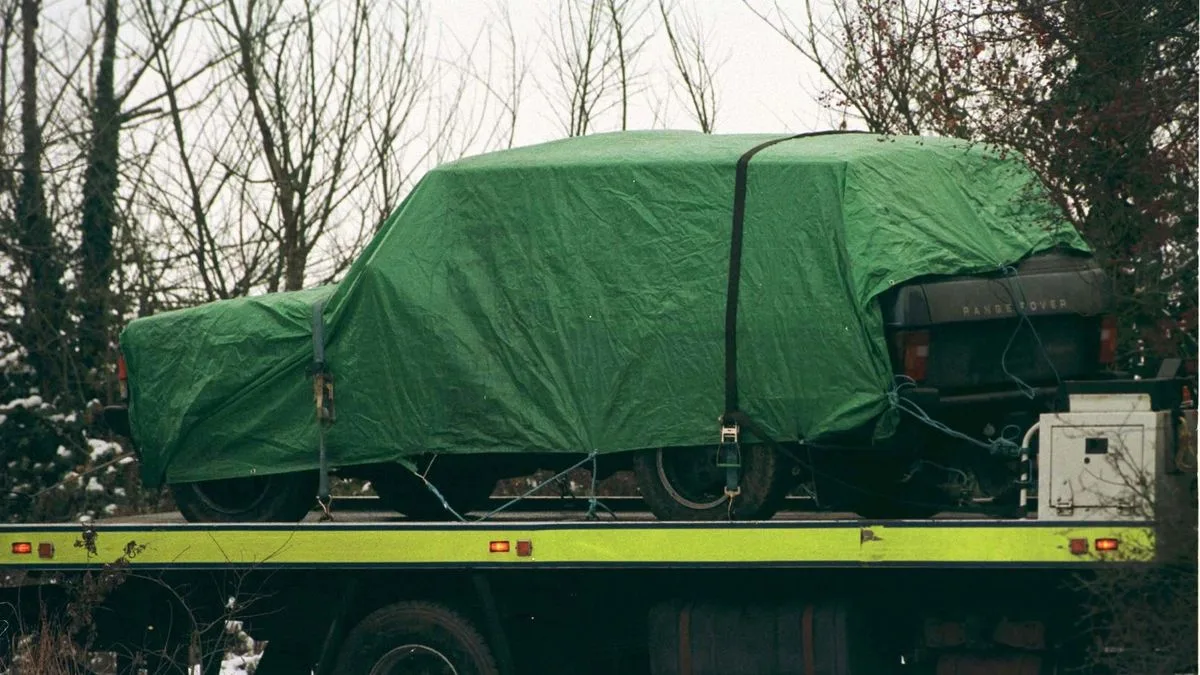
The new evidence relates to the killings of drug dealers Tony Tucker, Pat Tate and Craig Rolfe, whose bodies were found in a Range Rover on a farm track in Rettendon, Essex, on December 7, 1995. Steele and Whomes were convicted but have since been released from jail. Former police officer turned private investigator David McKelvey said Shaw's letter is highly significant, adding: 'We have real concerns about the telephone data and the manipulation of that data.'
Shaw worked for Telewest in Southend, Essex, which produced some of the evidence. In his letter, he wrote: 'I was told that there had been murders and the police needed phone logs, but also that the data needed to be edited. The old software we used back then allowed our data to be manually corrected.' He claimed police threatened him with up to seven years in prison for car thefts unless he cooperated.
Shaw added: 'Years later I started hearing stories suggesting the two men in jail might be innocent... What if I'd helped convict innocent people?' TM Eye investigator Richard Burgess, a former Essex detective sergeant, believes the phone evidence was 'incorrectly obtained', making it inadmissible. The force was under pressure to solve the case when informant Darren Nicholls turned supergrass, later receiving a lenient sentence and new identity. Appeal Court judges noted Nicholls had a 'corrupt' relationship with his police handler.




