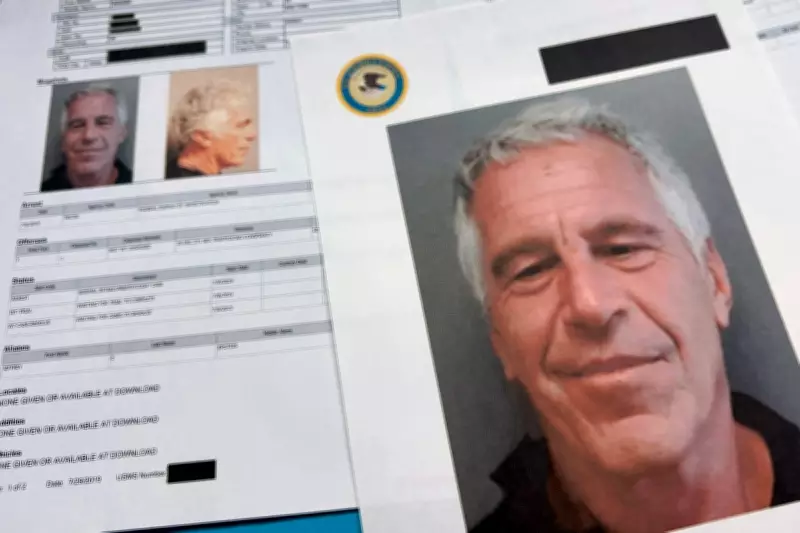
The US Justice Department has made public a substantial new tranche of documents from its extensive investigative files concerning the late financier Jeffrey Epstein and his associate Ghislaine Maxwell. This latest disclosure, published on the department's official website, forms part of an ongoing effort to comply with legislative mandates aimed at unveiling governmental knowledge of Epstein's criminal activities.
Transparency Act Drives Further Document Release
These records are being released under the provisions of the Epstein Files Transparency Act, a law enacted following sustained public and political pressure. The legislation specifically requires federal authorities to open their files pertaining to Epstein and Maxwell, his former girlfriend and confidante, to public scrutiny.
Having initially missed a congressional deadline set for 19th December, the Justice Department has now resumed its disclosures. Officials stated that hundreds of lawyers have been tasked with the monumental review process, necessary to redact or black out information that could compromise the identities of sexual abuse victims.

Scale of the Review and Previous Disclosures
The volume of material under review has expanded significantly, now encompassing approximately 5.2 million pages, including duplicates. This follows a pre-Christmas release of tens of thousands of pages, which included photographs, interview transcripts, call logs, and various court records. Many documents in that initial batch were either already in the public domain or heavily censored.
Among the previously released records were flight logs indicating that Donald Trump had travelled on Epstein's private jet during the 1990s, prior to their relationship deteriorating. Several photographs of former President Bill Clinton were also included. It is important to note that neither Trump, a Republican, nor Clinton, a Democrat, has been publicly accused of any wrongdoing in connection with Epstein, and both have stated they were unaware of his abuse of underage girls.
Historical Context of Epstein and Maxwell Cases
Jeffrey Epstein took his own life in a New York jail cell in August 2019, just one month after being indicted on federal sex trafficking charges. His criminal history includes a 2008-2009 jail term in Florida after pleading guilty to soliciting prostitution from a minor. At that time, investigators possessed evidence of Epstein sexually abusing underage girls at his Palm Beach residence; however, a controversial non-prosecution agreement was reached.
In 2021, Ghislaine Maxwell, a British socialite, was convicted by a federal jury in New York on sex trafficking charges for her role in recruiting underage victims for Epstein. She is currently serving a 20-year prison sentence at a facility in Texas, having been transferred from Florida. Maxwell maintains her innocence.
Allegations and Civil Proceedings
While US prosecutors have not charged any other individuals in direct connection with Epstein's abuse, one of his most prominent accusers, Virginia Roberts Giuffre, brought civil lawsuits alleging he arranged for her to have sexual encounters as a teenager with numerous powerful figures. All those named, including Britain's Prince Andrew, have denied the allegations.
Prince Andrew, now known as Andrew Mountbatten-Windsor after being stripped of his royal titles, settled Giuffre's lawsuit for an undisclosed sum, while denying any sexual contact. Tragically, Virginia Roberts Giuffre died by suicide at her farm in Western Australia last year at the age of 41.
The newly released files also include transcripts of grand jury testimony from FBI agents, detailing interviews with several girls and young women who stated they were paid to perform sex acts for Epstein. The Justice Department's continued release of documents underscores the lasting legal and public interest in a case that entangled figures from politics, business, and academia in one of the most notorious sex abuse scandals of recent decades.