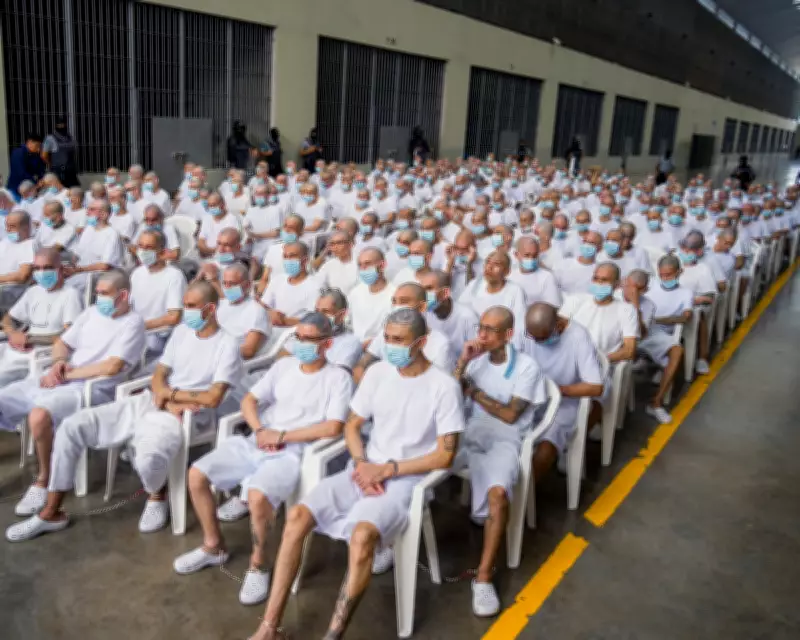
In a landmark legal proceeding, El Salvador has commenced a collective trial for approximately 486 alleged members of the notorious Central American gang Mara Salvatrucha, commonly known as MS-13. The Attorney General's office and courts announced the trial on 20 April, marking one of the largest mass prosecutions under President Nayib Bukele's aggressive crackdown on gang violence through controversial emergency powers.
Unprecedented Scale of Charges
Prosecutors have presented charges spanning more than 47,000 crimes allegedly committed by the defendants between 2012 and 2022. These include a particularly violent weekend that stands as El Salvador's bloodiest period since its civil war. The charges encompass a range of serious offenses, such as homicide, femicide, extortion, and arms trafficking, reflecting the gang's extensive criminal activities over the past decade.
Human Rights Concerns Raised
Human rights organizations have issued strong warnings about the collective prosecutions, arguing they violate fundamental due process rights and effectively block defendants from accessing adequate legal counsel. The Inter-American Commission on Human Rights reiterated these concerns on Tuesday, highlighting human rights violations stemming from the long-extended state of emergency.

The commission called for an end to using the emergency regime as a crime-fighting strategy, noting that it suspends rights to legal defense and inviolability of communications while extending administrative detention timelines. These measures, critics argue, undermine judicial fairness in pursuit of security objectives.
Emergency Powers and Detention Conditions
Under the state of emergency implemented in 2022 and repeatedly renewed, Salvadoran security forces have detained more than 91,500 individuals. Congress passed a decree specifically allowing for mass trials, facilitating the current proceedings. The defendants in this case are being held across five prisons, including Cecot, a maximum-security facility opened by the Bukele administration in 2023 that has become emblematic of El Salvador's zero-tolerance approach to gangs.
Evidence and Potential Sentences
The Salvadoran prosecutor's office has compiled extensive evidence for the trial, including autopsies, ballistic analyses, and witness testimony. Prosecutors have requested the judge impose maximum prison sentences for each crime, with individual defendants potentially facing up to 245 years imprisonment if found guilty on multiple charges. Among those facing prosecution are alleged longstanding gang leaders who participated in the 2012 to 2014 truce between the government and gangs during former President Mauricio Funes's administration.
Impact on Crime Rates
The Bukele government maintains that its gang crackdown under emergency powers has significantly reduced violence, pushing the homicide rate down to 1.3 per 100,000 people last year compared to 7.8 in 2022. This dramatic decrease represents a central justification for the continued use of extraordinary measures, though it comes alongside persistent concerns about human rights protections and judicial process integrity.
As the trial progresses, it represents a critical test case for El Salvador's approach to combating organized crime, balancing security imperatives against fundamental legal safeguards in a nation grappling with deep-seated gang violence.