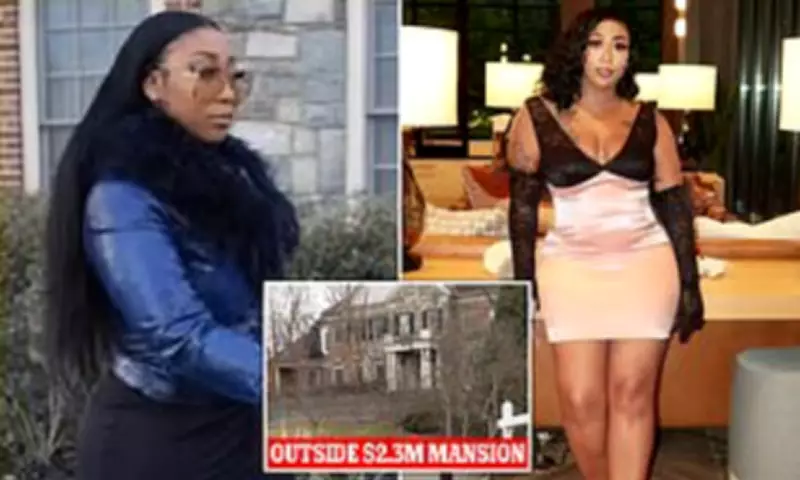
A brazen squatter who occupied a luxurious $2.3 million mansion in Maryland for over nine months has walked away with what many consider to be a remarkably lenient sentence, despite her conviction on serious criminal charges. Tameika Goode, who became notorious for her glamorous social media posts while illegally residing in the Bethesda property, was handed just a $500 fine and three months behind bars after being found guilty of burglary and breaking and entering.
Courtroom drama and designer defiance
Goode made a striking appearance at Montgomery County District Court, arriving in fashionable green designer trousers and carrying a Saint Laurent Paris handbag. Her courtroom attire contrasted sharply with the serious nature of the charges against her. As she left the courthouse following her sentencing, Goode was captured on camera berating an ABC7 reporter, telling them to "get out of my face" in a moment of visible frustration.
Neighbour-led prosecution and community concerns
The case against Goode was unusual in that it was spearheaded not by law enforcement officials, but by her 19-year-old neighbour, Ian Chen. Chen explained that he felt compelled to take action after discovering Goode was squatting just a few doors down from his family home. "I felt it was my civic duty to do the right thing," Chen stated, adding that he and his parents received no assistance from authorities when they first reported the illegal occupation.

Chen expressed feeling "disheartened" by the government's failure to intervene promptly, noting that Goode's presence had made "all of us scared" in what was previously considered a quiet, secure neighbourhood. The identity of the mansion's original owner remains unclear, adding another layer of complexity to this unusual property dispute.
Political frustration over "soft-on-crime" laws
Maryland State Senator Ron Watson voiced significant anger over what he perceives as inadequate penalties for squatting offences. "This is a million-dollar property, and the fine is five hundred dollars," Watson fumed to reporters, describing the punishment as "not enough" for the severity of the crime. Watson has been particularly vocal about what he sees as Maryland's laws heavily favouring tenants and potential squatters over property owners.
The senator has introduced several anti-squatting bills and is working to shorten wrongful detainer timelines that currently allow squatters to remain in properties for extended periods. Watson advocates for treating serious squatting cases as "grand theft housing," drawing a parallel with how vehicle theft is prosecuted as grand theft auto. "We do not have the tools yet in place legislatively to enable our law enforcement folks to take action," he lamented.
Growing squatting problem in Maryland
Local residents and officials report that squatting has become an increasing concern across Maryland, with property owners often told their cases are "civil matters" rather than criminal offences. This classification can significantly delay eviction processes and limit law enforcement involvement. The Bethesda case has brought renewed attention to what many see as a systemic problem requiring legislative reform.
Divergent political perspectives on solutions
While some politicians focus on strengthening penalties, Maryland State Delegate Teresa Woorman, whose district includes the Bethesda neighbourhood where Goode was squatting, offered a different perspective. When asked about Goode's conviction, Woorman shifted the conversation toward addressing underlying causes. "I think we need to look at how it is happening across our state, and figure out how to best address not just people breaking in, but the underlying issues people are having when they have that need to seek shelter," she explained.
Woorman emphasised the importance of focusing on "both aspects" of the situation - both as a deterrent and to understand "why they had to break in in the first place." When questioned whether she believed Goode's case should be treated as a criminal matter, Woorman responded that it was "hard to say" and expressed relief that she wasn't in a judicial position to make that determination.

Social media evidence and lifestyle flaunting
Throughout her nine-month occupation of the mansion, Goode frequently posted content to social media platforms including TikTok, showcasing what appeared to be a luxurious lifestyle. In videos, she could be seen wearing designer clothing and posing with the property as if it were her own. This public display of her occupation added to the frustration felt by neighbours and officials who were attempting to have her legally removed from the premises.
The case has highlighted significant tensions between property rights, criminal justice, and social policy in Maryland. As legislators debate potential reforms and community members express concerns about neighbourhood security, the story of Tameika Goode's occupation and light sentencing continues to spark debate about how society should address the complex issue of squatting.