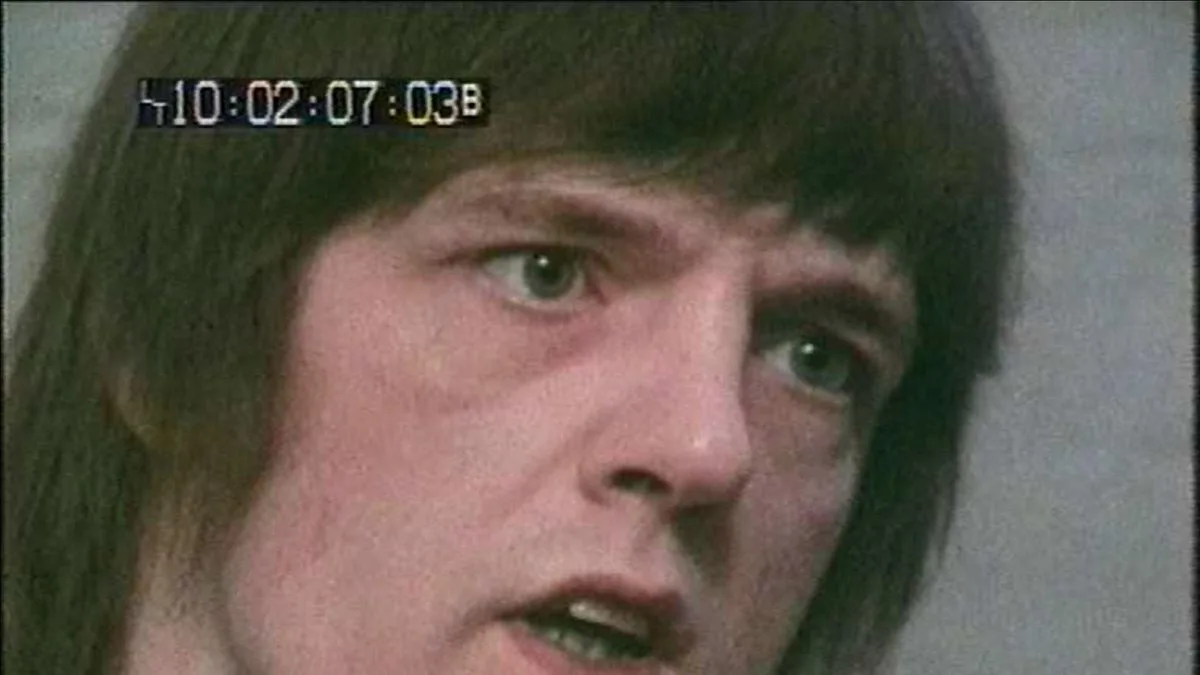
To his family, he is affectionately known as 'Uncle Bob' – a 72-year-old man who enjoys classical music, chess, and is described by a psychiatrist as an 'intelligent, very cultured' individual with untapped potential. Yet this pensioner, Robert Maudsley, is not spending his golden years in peaceful retirement. Instead, he is costing British taxpayers an estimated half a million pounds annually as one of the nation's most notorious prisoners, having spent nearly half a century in solitary confinement for a series of brutal murders behind bars.
The Infamous 'Hannibal the Cannibal'
Maudsley earned the chilling nickname 'Hannibal the Cannibal' after garrotting a sex offender in his cell, with reports suggesting the victim was found with a spoon protruding from his skull. This was just one of four killings committed by Maudsley, who has been described as Britain's 'most dangerous' man. His crimes include the murder of a paedophile client in 1974, followed by three more killings while incarcerated – one at Broadmoor Hospital and two at HMP Wakefield.
Decades of Solitary Confinement
For over 40 years, Maudsley was widely believed to be held in a dramatic bulletproof 'glass dungeon' beneath HMP Wakefield, kept under constant surveillance like a character from a Hollywood thriller. However, the Daily Mail has recently uncovered that this account was not entirely accurate. While there was no glass box, Maudsley was indeed held in a special segregation cell with a Perspex door and furniture made from compressed cardboard to prevent weapon creation.
This arrangement contributed to what is believed to be a world record: 47 years in solitary confinement. Recently transferred to HMP Whitemoor's special unit for dangerous offenders with personality disorders, Maudsley continues to be monitored under extreme security measures, with four officers required whenever he leaves his cell.
A Troubled Path to Violence
Maudsley's descent into violence began with a difficult childhood in Liverpool's deprived Toxteth area. Taken into care due to neglect and later returned to an abusive home, he ran away to London at 16, where he survived through prostitution. His first murder occurred at age 21 when he strangled client John Farrell after discovering photographs of abused children. Deemed unfit for trial, he was sent to Broadmoor Hospital, where he killed again in 1977 alongside another patient.
Family Perspectives and Psychological Analysis
Despite his horrific crimes, Maudsley's family maintains surprising views about his actions. One relative described him as a 'hero' for targeting paedophiles, dismissing connections between his childhood trauma and violent behavior. However, Maudsley himself told his 1979 trial: 'When I kill, I think I have my parents in mind. If I had killed my parents in 1970, none of these people need have died.'
Psychiatrist Dr. Bob Johnson, who has worked with dangerous offenders, offers a contrasting perspective. He describes Maudsley as 'very intelligent' and 'cultured,' with a love for Schubert's music, suggesting society has wasted his potential. While not advocating for his release, Dr. Johnson believes Maudsley could have contributed to victim compensation programs rather than remaining in costly isolation.
Life in Confinement
Maudsley's daily existence has been marked by extreme restrictions and personal struggles. He famously plays chess against himself, reads extensively, and has staged hunger strikes over confiscated possessions. In poignant letters to prison officials, he described his solitary confinement as being 'buried alive in a concrete coffin' and once requested either a pet budgie or a cyanide capsule to end his suffering.
Family Campaign and Legal Battles
Maudsley's family, primarily his brothers and nephew Gavin Robert Mawdsley (named after him), have maintained contact despite the challenges of visiting distant prisons. They are now fundraising to publish a book based on over 200 letters Maudsley has written from his cell, aiming to share his story of 'torture' in isolation. However, with only £833 raised of their £30,000 target, the project faces significant hurdles.
Legal attempts to improve his conditions or seek death have been consistently denied. In 2021, he lost an appeal to spend Christmas with others and was told he would remain incarcerated until death. His transfer to Whitemoor last year followed weeks of hunger strikes, yet his family reports he struggles in the new environment, with elderly brothers unable to travel the distance to visit.
The Cost of Containment
The financial burden of Maudsley's incarceration – approximately £500,000 annually – raises questions about the balance between public safety and rehabilitation. While prison staff describe him as unremarkable in controlled settings, his history of violence makes any relaxation of security unthinkable. As Britain's longest-serving prisoner continues his isolated existence, his story remains a stark reminder of the complex intersections between childhood trauma, criminal justice, and the limits of human containment.