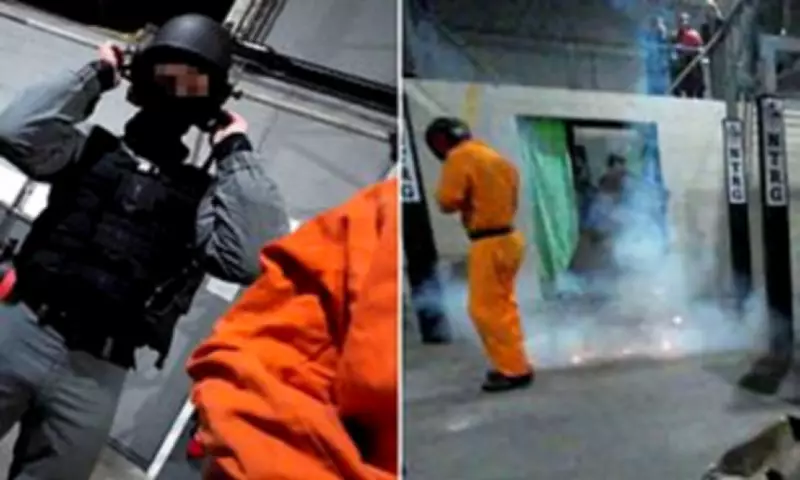
In a tense, simulated prison cell scenario, a furious inmate brandishes a makeshift weapon while screaming threats, holding a terrified hostage captive. Desperate prison officers attempt negotiations, but all efforts collapse, leaving the captive's life hanging in the balance. Suddenly, the lights cut out. Without warning, explosions shatter the air as four officers storm the cell, wrestling the inmate to the ground in a controlled takedown.
Specialist Unit on Constant Alert
This high-stakes, high-drama situation represents the daily training reality for the National Tactical Response Group (NTRG), an elite unit permanently on call to handle critical incidents across prisons and immigration detention centres in England and Wales. Their operational scope encompasses everything from riots, barricades, and rooftop protests to potential terror attacks.
Fortunately, this particular hostage scenario was merely a demonstration. However, it falls far short of representing the most severe incidents these specially trained officers routinely confront. The Daily Mail recently gained rare access to their operations during an extensive tour of the Oxfordshire headquarters belonging to the Operational Response and Resilience Unit (ORRU), of which the NTRG forms an integral component.

Geographical Deployment and Response Protocols
The NTRG comprises 120 officers divided between two strategic locations. Half are stationed in Kidlington, Oxfordshire, covering the southern region up to Leicester, while the other half operate from Doncaster, managing the northern territory. Officers on call must be mobile and on the road within thirty minutes of receiving an alert.
In 2025 alone, the unit was deployed 480 times. These call-outs ranged from serious disturbances where regular guards were forced to retreat from prison wings to non-violent incidents involving inmates climbing walls or jumping on netting. Due to the extreme dangers they face, the identities of all NTRG officers remain strictly confidential.
Advanced Training and Equipment
Justice Secretary David Lammy recently observed officers reenacting a hostage scenario inside a mock prison constructed within their high-security Oxfordshire compound, a site surrounded by imposing tall fences. Handpicked from the prison service's finest, these officers—including both men and women—undergo approximately one year of intensive training before becoming eligible for deployment. This training continues throughout their careers to adapt to evolving threats.
Their protective gear includes stab-proof, flame-resistant vests, armoured gloves, and helmets. They are equipped with pepper spray, smoke bombs, shields, and batons. Following the hostage demonstration, Mr. Lammy witnessed other ORRU capabilities, including their specialised dog unit.
Canine and Taser Demonstrations
Sid, a formidable German Shepherd, was unleashed on a man simulating an armed threat, clamping his jaws onto the assailant's protected arm. In a separate scenario, specialist officers demonstrated Taser deployment on a violent inmate. These ORRU officers became the first prison staff equipped with Tasers as part of a trial launched in July last year, responding to shocking assaults like Manchester Arena plotter Hashem Abedi's attack on staff at HMP Frankland using boiling oil and homemade weapons.
Expert officers now receive advanced Taser 10 models, capable of striking targets at 45 feet—nearly double the 25-foot range of previous Taser 7 models. The Taser 10 can fire ten electrode probes, requiring just two connections to create a circuit that induces immediate neuromuscular incapacitation.
Drone Threats and Technological Countermeasures
Officers responding to prison security incidents are also being equipped with drones for aerial monitoring. Mr. Lammy observed a demonstration of a smaller, £160 model designed for indoor use, capable of searching landings, corridors, and cells prior to raids. Recent inspection reports have highlighted frightening violence levels at prisons like HMP Woodhill in Milton Keynes and HMP Swaleside in Kent.

Chief Inspector of Prisons Charlie Taylor has repeatedly warned that a tinderbox atmosphere inside jails is being exacerbated by drugs and weapons smuggled via drones. Statistics reveal 1,712 drone incidents at prisons across England and Wales between April 2024 and March 2025.
Government Investment and Future Preparedness
Mr. Lammy confirmed the government has invested £6.5 million to research anti-drone technology. "We've got to bear down on the drone issue," he stated. "We're also building more prison places to reduce overcrowding." In an exclusive interview, the Deputy Prime Minister praised the unit: "It's hugely important we have tactical support teams that can enter prisons rapidly during serious incidents. These staff have years of training and run toward danger to keep our prisons safe."
Richard Vince, executive director at the Prison Service's directorate of security, emphasized the NTRG's readiness for future challenges. "We've seen violence increasing—that is public record—and these officers must respond when things go wrong. They are extremely highly trained and constantly update their tactics. If you're inside a prison dealing with an incident, seeing them arrive with their skills and equipment is hugely reassuring."