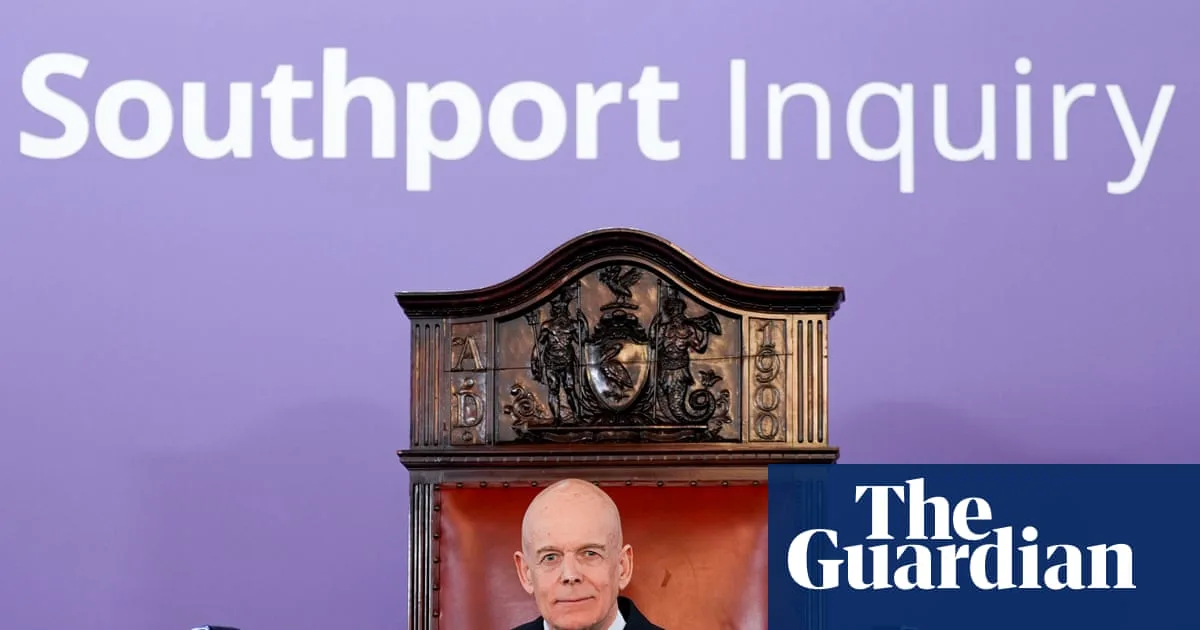
A damning inquiry into the Southport attack has found that Axel Rudakubana was able to murder three young girls and stab ten others due to 'catastrophic' failures by multiple agencies and the 'irresponsible and harmful' role of his parents. The inquiry chair, Sir Adrian Fulford, condemned the 'inappropriate merry-go-round' of state bodies passing responsibility and said the attack was not a 'bolt of lightning out of a clear blue sky' but had been 'clearly, repeatedly and unambiguously signposted over many years'.
Rudakubana, who was 17 at the time, carried out the attack on 29 July 2024 at a Taylor Swift-themed holiday club in Southport, Merseyside. The victims were Bebe King, six, Alice da Silva Aguiar, nine, and Elsie Dot Stancombe, seven. The teenager had been on the state's radar for nearly five years, but Fulford said there was a 'fundamental failure' by any organisation to take ownership of the risk he posed.
The inquiry also criticised Rudakubana's parents, Alphonse Rudakubana and Laetitia Muzayire, who discovered weeks before the attack that their son was building a lethal arsenal of weapons but failed to report it to police for fear he would be arrested or taken into care. Fulford said that if the full extent of their concerns had been shared with authorities, 'it is almost certain this tragedy would have been prevented'. Merseyside police investigated the parents but said the evidence did not meet the criminal threshold for prosecution.
Fulford also highlighted a repeated tendency of professionals to 'excuse' Rudakubana's increasingly violent behaviour on the basis of his suspected autism, calling this 'unacceptable and superficial'. He urged ministers to establish a dedicated agency to oversee complex offenders like Rudakubana. Prime Minister Sir Keir Starmer described the findings as 'truly harrowing and profoundly disturbing', while Home Secretary Shabana Mahmood announced a new law to criminalise mass-casualty attacks without a terrorism motive.
The bereaved families called for 'immediate action, clear accountability and real change', and parents of 22 surviving girls demanded 'whole-scale system reform across health and social care, education and policing'. The second phase of the inquiry is due to report next spring.