South Africa's President Cyril Ramaphosa has taken the extraordinary step of authorizing a yearlong deployment of the army to combat crime in several of the nation's most violence-stricken regions. This decisive action underscores the severe challenges facing Africa's leading economy as it grapples with persistently high rates of violent criminal activity.
Key Statistics of the Military Deployment
Soldiers Deployed: 2,200
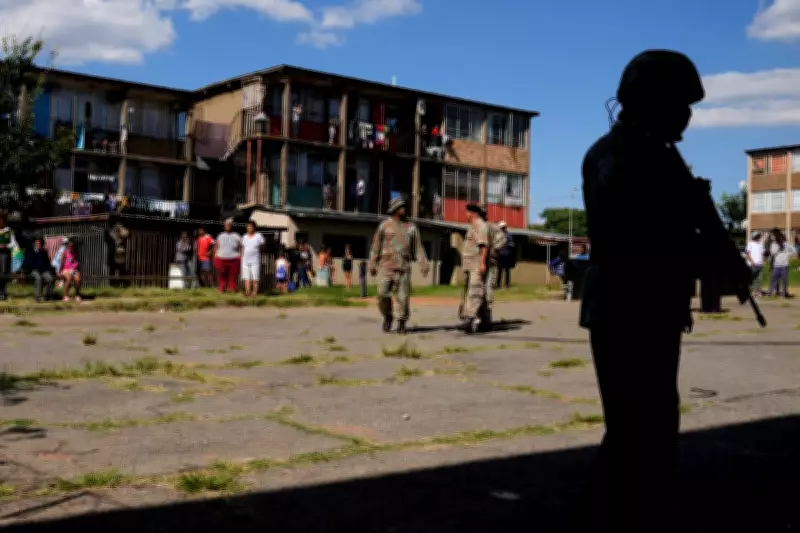
In accordance with South Africa's constitutional requirements, President Ramaphosa formally advised Parliament of his order to deploy military forces. A notice to lawmakers confirmed that 2,200 soldiers have been mobilized to assist police in law enforcement operations. Their mission specifically targets two major criminal threats: gang-related violence and illegal mining operations run by sophisticated criminal syndicates.
Duration of Deployment: 13 Months
The military presence on South African streets commenced on March 1 this year and is scheduled to continue through March 31, 2027, according to presidential statements. This represents one of the longest sustained military deployments for domestic crime-fighting purposes in recent South African history.
Cost: $49.2 Million
While some opposition parties initially raised questions about the financial implications of this extensive operation, Ramaphosa's decision has generally received broad support. In crime-weary communities, residents actually cheered when soldiers first appeared on the streets of Johannesburg, the nation's largest city, during the initial deployment phase last week.
Number of Provinces: 5
The military deployment spans five of South Africa's nine provinces, covering significant economic and population centers. These include Gauteng province, which serves as the country's economic hub and contains Johannesburg, and the Western Cape province, home to the second-largest city of Cape Town. Additional provinces receiving military support include North West, Free State, and Eastern Cape.
Problem Crimes Targeted: 2
President Ramaphosa emphasized that this deployment will concentrate specifically on assisting police with two particularly destructive criminal enterprises. Gang violence claims hundreds of lives annually in South Africa, particularly in impoverished neighborhoods like the Cape Flats on the outskirts of Cape Town, the country's premier tourist destination.
Meanwhile, authorities estimate approximately 30,000 illegal miners operate within some of South Africa's 6,000 abandoned gold and other mineral mines. These mining gangs frequently employ armed violence to protect their territories and are controlled by organized criminal syndicates. Ramaphosa identified both gang violence and illegal mining as the two organized crimes posing the greatest threat to South Africa's democratic stability and economic development.
Operational Objectives: 4
Police authorities, who will maintain operational command over the soldiers during this law enforcement deployment, have outlined four primary objectives for the mission:
- Reduce criminal activity in designated problem areas
- Arrest offenders involved in targeted crimes
- Recover illegal firearms and explosives
- Confiscate narcotics and other contraband
Previous Deployment: 3 Years Ago
This military intervention represents neither the first nor the only instance of South Africa utilizing army forces for domestic crime-fighting purposes, though it does constitute the most extended deployment in recent years. In 2023, President Ramaphosa deployed over 3,000 soldiers for a one-month period to specific crime hotspots. Later that same year, the military was again deployed following a series of truck burnings on major highways that raised concerns about potential wider civil unrest.
The current 13-month deployment signals a significant escalation in the government's approach to combating organized crime, reflecting both the severity of the challenges and the determination to restore security in affected communities across multiple provinces.