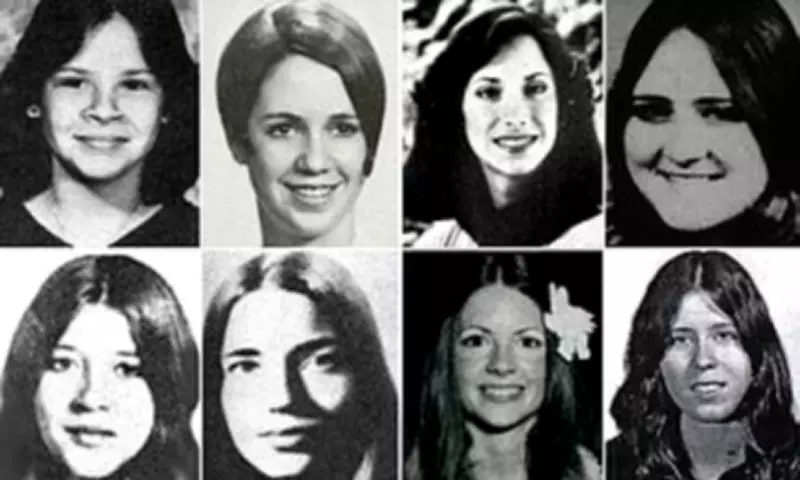
Serial Killers Often Target Victims Who Resemble Their Mothers, Study Confirms
It may seem like serial killers strike at random, but a groundbreaking new study reveals there is often a chilling method to their madness. Experts have confirmed that notorious murderers such as Ted Bundy and Ed Kemper are likely to select victims who share similar facial features with their mothers, a pattern driven by lingering childhood trauma.
Linking Childhood Trauma to Victim Selection
Researchers explain that many serial killers seek out individuals who physically resemble an opposite-sex parent or close family member who inflicted harm during their formative years. This phenomenon has been observed in high-profile criminal cases where offenders target those who represent a person who previously wronged or hurt them.
In the study published in The Police Journal: Theory, Practice and Principles, the team wrote: "Studies have shown that features of the victimology such as age, sex, class and elements of physical appearance do influence an offender's choice of victim. It is also common that many serial killers seek out victims with similar physical characteristics to an opposite-sex parent or close family member who inflicted childhood trauma."

Case Studies: Ted Bundy and Ed Kemper
Observers have long noted an eerie similarity between Ted Bundy's victims and his mother, Louise Bundy, as well as his first serious girlfriend. His targets frequently had long, centre-parted hair, mirroring the hairstyle his mother wore during his youth. Experts suggest this targeting may stem from a traumatic childhood incident where Bundy was raised believing his mother was his sister, only discovering the truth in his teens.
The researchers noted: "Theodore Bundy has been reported as having a proclivity for a particular hair colour (brunette victims), notably with their hair parted in the middle."
Similarly, Ed Kemper, known as the 'Co-ed Killer', had an intensely abusive and emasculating relationship with his mother. He openly admitted that his murders of female college students who looked similar were, in his mind, attempts to "kill his mother over and over again."
New Forensic Intelligence Tool for Cold Cases
To assist police in linking victims from unsolved 'cold cases', scientists from Murdoch University have developed an innovative forensic intelligence tool. This software analyzes facial appearance by examining 55 precise facial measurements from photographs, including the corners of the eyes, edges of the lips, chin, and nose tip.
Lead author Professor Brendan Chapman stated: "These measurements could be used to find differences or similarities in the facial structure of victims, even with imperfect photos. An automated system could screen large numbers of victim images quickly and reliably, giving investigators valuable leads in cases where evidence is scarce."
The tool can detect subtle facial geometry shared by victims that might otherwise be overlooked, providing a new starting point for investigations. While it does not replace DNA evidence, it can flag potential links in cases where DNA is unavailable or degraded.
Types of Serial Killers
According to the study, serial killers are typically categorized into several types based on their motives:
- Visionary killers - have psychosis and are driven by hallucinations or delusions.
- Mission-oriented killers - believe they must eliminate specific groups of people, such as certain races or professions.
- Thrill killers - gain pleasure and excitement from the act of killing.
- Power/control killers - derive satisfaction from achieving total dominance over their victims, frequently through sexual abuse.
- Lust killers - crimes are mainly fueled by sexual urges related to paraphilias.
This research underscores the importance of scientific rigor in criminal investigations, moving beyond casual observations to provide actionable insights for law enforcement.