Reggie Kray Introduced Me to Real Killer, Says Man Wrongly Jailed for 1972 Murder
A man who insists he was wrongly imprisoned for a gangland murder over five decades ago has revealed that notorious East End gangster Reggie Kray introduced him to one of the actual perpetrators while they were both incarcerated.
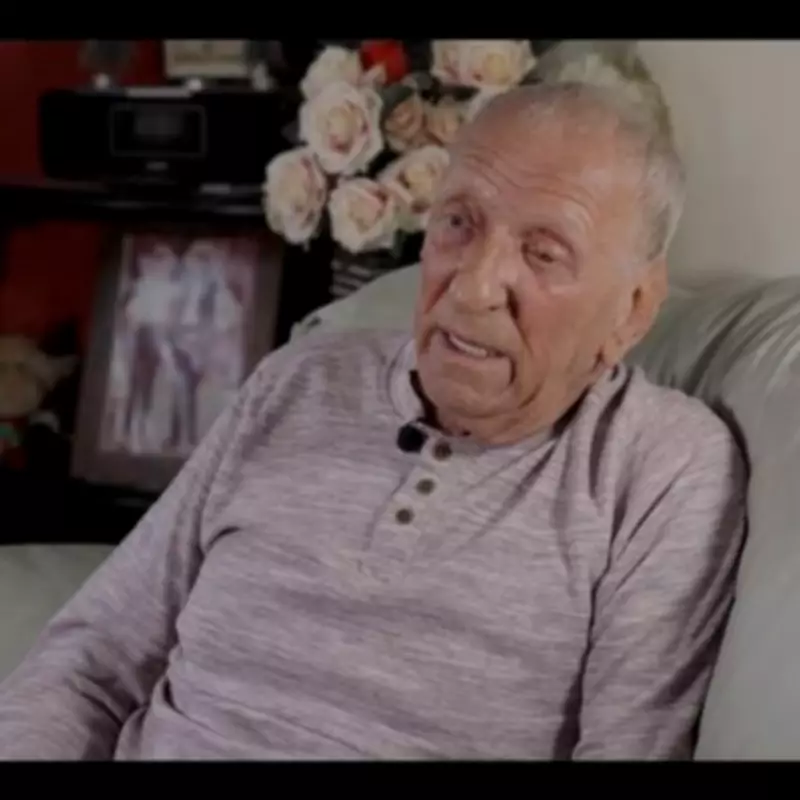
Paul Cleeland, now 84, served 26 years in prison for the shooting of his underworld associate Terry Clarke, who was killed outside his Hertfordshire home on Bonfire Night in 1972. Cleeland maintains his innocence and is pinning his hopes on a fresh miscarriage of justice investigation, with forensic scientists currently conducting new tests on his clothing and shotgun cartridges.
Prison Meeting Arranged by Reggie Kray
Cleeland asserts that an Essex gangster hired two assassins to murder Clarke because he was suspected of becoming a police informant. He claims he met one of these killers through Reggie Kray during the 1980s when both were inmates at HMP Parkhurst on the Isle of Wight.

Speaking from his home in Folkestone, Kent, Cleeland recounted the encounter to the Daily Mirror: "Reggie Kray says to me: 'Paul, there's a bit of a problem here. We've got a fella in here that was on Terry Clarke's murder. He's come to me because I know his father and his family and he said to me if you find out he's in the prison then you're going to go in and all that. Reg said to me he knows all about it, he was arrested for it but he don't want you attacking him.'"
Kray, who was serving a 30-year sentence for the 1969 murder of Jack 'The Hat' McVitie, allegedly facilitated a meeting with the individual, whom Cleeland has declined to name. Cleeland described the man as ginger-haired and said their conversation in a prison cell was tense but revealing.
"I meet this fella, he's ginger haired. I go into the cell with him and I said: 'Listen mate, whatever happened, happened. You never set out to frame me, I became a victim of this but what I want to know is exactly what happened that night.' He said to me: 'No hard feelings?' I said: 'Mate, it's too late for hard feelings because no one's going to believe me if I stick you're name up are they?'"
Claims of Flawed Forensic Evidence
Cleeland was convicted in 1973 of murdering his best friend Clarke after a second trial; the first had resulted in a hung jury. Clarke was shot from behind as he exited his car in Stevenage. Notably, Cleeland did not match the description of the gunman provided by Clarke's wife, Pat, who was present in the vehicle at the time.
The conviction heavily relied on forensic evidence presented by John McCafferty, the principal scientific officer at the Metropolitan Police Forensic Laboratory. McCafferty testified that he had detected lead particles from a double-barrelled shotgun discharge on Cleeland's jacket.
However, defence forensic experts contested this, arguing the particles could have resulted from environmental contamination. Cleeland now claims the test employed by McCafferty was fundamentally flawed and that McCafferty lacked the proper qualifications to conduct it.
Ongoing Review by Criminal Cases Review Commission
The case is among thousands being re-examined by the Criminal Cases Review Commission (CCRC) following the high-profile exoneration of Andrew Malkinson, who spent 17 years in prison for a rape he did not commit. The CCRC faced severe criticism for its handling of Malkinson's case, leading to the resignation of its chair, Helen Pitcher, last year.
Since 1998, the CCRC has rejected six applications to refer Cleeland's case to the Court of Appeal. A recent forensic examination of Cleeland's jacket commissioned by the CCRC identified a "high amount of characteristic [gun shot residue]" but noted the garment had been stored alongside bullet cartridges and spent cartridge cases, raising significant contamination concerns.
The scientist concluded in January: "Given the history of this coat, in my opinion no reliance can be placed on this finding as evidence the coat was worn in proximity of a firearms discharge, unless it can be established that the coat could not have become contaminated during prior examination."

Disputed Murder Weapon and New DNA Tests
Cleeland has consistently denied prosecution claims that a Gye & Moncrieff shotgun was the murder weapon. He argues that the actual weapon was one of two shotguns discovered dumped in a weir in Harlow, Essex, shortly after the shooting.
Last month, the CCRC informed Cleeland that it is conducting tests on two spent Blue Rival shotgun cartridges found in the breech of the Gye & Moncrieff shotgun. The commission hopes DNA profiling "may assist to establish who placed the cartridges" in the weapon.
Nevertheless, a 2019 report by independent expert Dudley Gibbs presented to the CCRC stated: "Given that the shot size of the pellets in the body was No 7s, the No 6 shot in the Blue Rival cartridges found with the Gye and Moncrieff shotgun did not kill the man."
Legal Representation and Calls for Urgent Action
Cleeland's solicitor, Ricky Arora, emphasised the compelling evidence they have submitted over the years. "For many years, we have provided the Criminal Cases Review Commission with compelling evidence, including expert reports, demonstrating that there is no forensic link between the alleged murder weapon and Mr Cleeland in the killing of Mr Clarke," Arora stated.
"The CCRC has faced sustained criticism in its handling of cases such as this, and it is right that it now reviews Mr Cleeland’s case as a matter of urgency and refers it to the Court of Appeal. We firmly believe there is a real possibility, in line with the CCRC’s statutory test, that the conviction will be overturned."
A CCRC spokesperson confirmed that Cleeland's case is being assessed under the Forensic Opportunities Programme established in response to the Malkinson scandal. The spokesperson added: "Mr Cleeland has made a number of applications to the CCRC, which have been subject to thorough reviews. One of those applications resulted in the CCRC referring Mr Cleeland’s conviction to the Court of Appeal, which upheld it. Other reviews concluded that there was no real possibility his conviction would be quashed if it were to be referred to the Court of Appeal. Mr Cleeland sought judicial review of the decisions not to refer and was unsuccessful."