Reality TV Star Appeals £500k Falcon Death Ruling in Neighbour Dispute
A reality television personality is embroiled in a high-stakes legal battle at the Court of Appeal, contesting a ruling that ordered him to pay over £500,000 to his neighbours after construction work allegedly caused the stress-induced deaths of their valuable racing falcons.
Barnes Thomas, a former art dealer who appeared on Bear Grylls' survival series The Island in 2018, argues it is "unfair" to hold him responsible for the demise of what he describes as "incredibly sensitive" birds of prey. The dispute centres on his property near the Cornish village of St Just, close to Land's End, where he resides adjacent to falcon-breeding brothers Martin and Scott Nicholas.
The Origins of a Bitter Feud
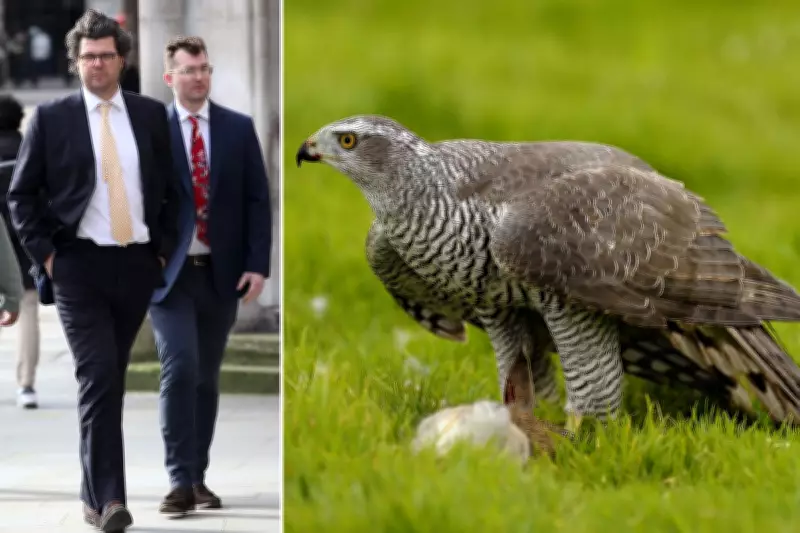
The conflict erupted when the Nicholas brothers, who operate their business Raptors of Penwith Ltd on adjoining land, claimed that noisy building activities related to Mr Thomas' barn construction and scaffolding enterprise terrified their gyr and peregrine falcons. These birds, bred for prestigious falcon races in Dubai, are reportedly so sensitive that even the sight of a kite in the air can cause extreme distress.

Following a nine-day High Court trial last year, Judge Jonathan Russen KC found that Mr Thomas' actions had directly led to the death of three gyr falcons. The judge ordered him to pay approximately £300,000 in compensation and interest, plus over £180,000 towards his neighbours' legal costs, on top of his own substantial legal bills.
Contentious Legal Arguments
During the recent two-day appeal hearing, Mr Thomas' legal team, led by barrister Tom Weekes KC, presented a striking analogy to challenge the ruling's implications. They argued that requiring their client to "tip-toe around" during the birds' breeding season would be akin to "London Zoo moving its giraffes to a Kilburn housing estate and telling the locals to be quiet."
The core legal argument centres on whether ordinary land use can constitute a nuisance when it interferes with an exceptionally sensitive neighbouring business. Mr Weekes contended that erecting a barn and operating a scaffolding business represent "common and ordinary use of land" that should not be restricted simply because adjacent property hosts a particularly delicate enterprise.
"The learned judge should have dismissed ROP's nuisance claim on a straightforward application of the common law principle that 'a man cannot increase the liabilities of his neighbour by applying his own property to special uses, whether for business or pleasure'," Mr Weekes told the Court of Appeal.
The Neighbours' Counter-Arguments
Representing the Nicholas brothers and their company, Jonathan Seitler KC maintained that the activities on Mr Thomas' land went beyond ordinary use. He described operations involving a 10-meter truck-mounted crane that posed a "visual threat" to the birds, along with "excessive noise" from diggers, JCB excavators, and granite unloading that caused "the entire aviary to vibrate."
Mr Seitler argued that these disturbances would have constituted "substantial interference" even for more conventional livestock, such as cows during calving. He emphasized that the rural character of the area, where Judge Russen found an aviary to be an "ordinary" land use, informed the assessment of what constituted unreasonable interference.
"Simply complaining that ROP’s use of its land is for a 'sensitive' purpose does not grant the appellants immunity from liability in private nuisance," Mr Seitler stated, asserting that the ruling properly balanced competing neighbourly interests.
Broader Implications and Personal History
The case has highlighted tensions beyond the immediate dispute. Judge Russen noted in his original judgment that Mr Thomas had "proved to be a controversial neighbour," having created a lake on his land, temporarily removed a public footpath stile, and described himself as "the most hated man" in his former village of Mousehole after pre-empting community Christmas light displays.

Mr Thomas, who grew up on a cattle farm before working as an art dealer and later establishing himself as a farmer, participated in The Island in what he later called "the worst experience of my entire life." His misadventures on the show included packing inappropriate clothing and accidentally burning his socks over a fire.
The appeal judges—Lord Justice Moylan, Lord Justice Nugee, and Lady Justice Whipple—have reserved their decision on whether to overturn the substantial financial judgment against Mr Thomas. Their ruling will determine not only the fate of this particular neighbourly dispute but could establish important precedents regarding land use rights and responsibilities in rural communities.