Former Prince Andrew's Police Custody Experience: Standard Procedures Applied
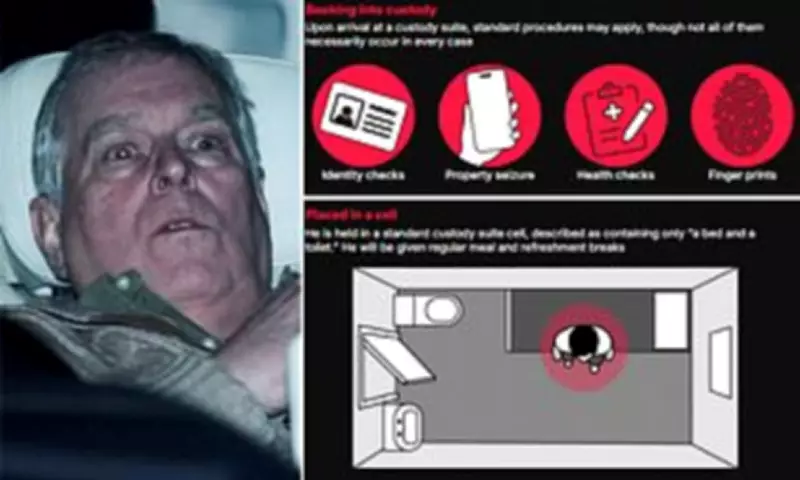
Former Prince Andrew Mountbatten-Windsor faced comprehensive police processing during his 12-hour detention on Thursday, undergoing standard arrest procedures that included having his mugshot taken, fingerprints recorded, and DNA samples collected. The former Duke of York, arrested on suspicion of misconduct in public office, received no special treatment during his custody stay at Aylsham Police Station in Norfolk, according to criminal justice experts familiar with standard arrest protocols.
The Custody Process: From Arrest to Release
Andrew's ordeal began shortly after 8am when police descended on Wood Farm in Sandringham, Norfolk, where he had been residing for the previous fortnight. Following his arrest, he was transported to an undisclosed location for questioning before being processed through the formal custody system. The arresting officer formally stated the reason for arrest, the time of detention, and the location, while Andrew was asked if he understood why he had been taken into custody.
Standard rights were read to the former prince, including his entitlement to legal representation and the right to have someone informed of his arrest. He would have been offered access to a duty solicitor if unable to contact his own legal counsel. Following this initial processing, Andrew underwent a thorough search and medical assessment, during which custody officers inquired about any medications, physical conditions, or mental health concerns.

Custody Conditions: No Special Treatment
Retired Metropolitan Police sergeant Graham Wettone, author of How To Be A Police Officer, described the likely conditions Andrew experienced during his detention. "There's no facility for any preferential treatment in any custody suite I've ever been in," Wettone explained. "You can't have an upgraded room, you can't get upgraded meals - you get what's there. Microwaved."
The cell itself would have been sparse, containing only a toilet partially obscured by a half-height wall and a vinyl-covered mattress approximately three inches thick on a knee-high bench. Andrew would have been provided with a blue blanket for warmth. Modern custody suites typically feature CCTV monitoring, and the heavy cell doors create a loud, distinctive sound when closing.
Personal items including belts, ties, and shoelaces would have been confiscated as standard safety procedure, regardless of the perceived risk level of the detainee. Wettone emphasized that even individuals who appear low-risk undergo this process because custody officers cannot fully assess potential dangers based solely on initial interactions.
Investigation Background and Royal Response
Thames Valley Police arrested Andrew on suspicion of misconduct in public office following an investigation into his conduct as a UK trade envoy. The probe examines allegations that he shared confidential information with convicted sex offender Jeffrey Epstein, including reports from official visits to Hong Kong, Vietnam, and Singapore. Additional allegations suggest Andrew may have facilitated access to Buckingham Palace for a woman potentially trafficked to Britain on Epstein's private jet.
King Charles issued an unprecedented statement following his brother's arrest, expressing "deepest concern" while affirming that "the law must take its course." The monarch pledged "full and wholehearted support and co-operation" with police investigators. Buckingham Palace sources indicate the royal household received no advance notice of the police operation.
Broader Investigation Context
Multiple police forces are examining allegations related to trafficking that have emerged from documents concerning Jeffrey Epstein's activities in the United Kingdom. The Metropolitan Police confirmed it has begun "initial inquiries" into allegations involving close protection officers formerly assigned to Andrew, though no wrongdoing has yet been identified.

The former prince features prominently in released Epstein documents, including photographs apparently showing him in Epstein's New York residence. Andrew has consistently denied all allegations of wrongdoing, including claims by the late Virginia Giuffre that she was forced to have sexual encounters with him on three occasions in the early 2000s.
Andrew's arrest occurred on his 66th birthday, with the majority of the day spent in police custody before his release under investigation on Thursday evening. The royal continues to face pressure to provide testimony to the ongoing US congressional investigation into Epstein's trafficking network, while maintaining his residence at Wood Farm on the Sandringham estate under police protection.