The Home Secretary's ambitious blueprint to dramatically reduce the number of police forces across England and Wales has encountered significant resistance from a leading policing body, which warns the proposals risk creating a dangerous separation between officers and the communities they serve while proving "complex to deliver."
Radical Overhaul Proposed to Tackle Crime Epidemic
Home Secretary Shabana Mahmood is preparing to unveil what government insiders describe as the most substantial policing transformation in decades this coming Monday. The reforms aim to confront what official sources term "an epidemic of everyday offences" that has plagued communities nationwide.
In a video statement released on social media platform X on Friday, Ms Mahmood asserted that "crime is changing" while "policing hasn't kept pace," promising to introduce a "whole new model" for law enforcement across the country. The proposed changes would see the current structure of 43 separate forces consolidated into a significantly smaller number of regional entities.

Two-Tier Policing Structure Envisioned
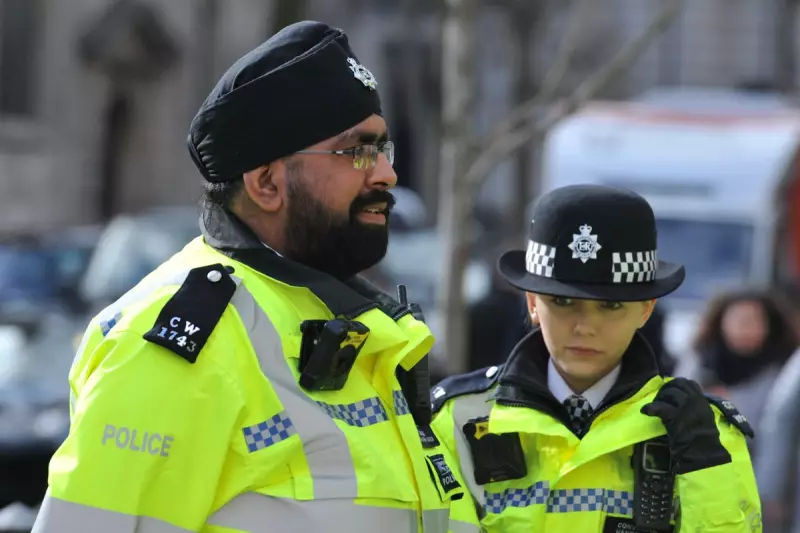
The reform package envisions a two-tier system where newly created regional forces would concentrate on serious and organised crime alongside complex investigations such as homicides. At the local level, each town, city and borough would form distinct "local policing areas" with neighbourhood officers focusing on community-level offences including shoplifting and anti-social behaviour.
Ms Mahmood has previously characterised the existing arrangement of 43 forces across England and Wales as "irrational," a position that finds some support among police chiefs who have themselves advocated for radical restructuring towards fewer, larger force areas.
Policing Body Raises Serious Concerns
The Association of Police and Crime Commissioners (APCC) has responded to the anticipated announcement with substantial reservations. The organisation warns that establishing regional forces would prove expensive, time-consuming, and potentially "derail" the very ambitions driving the reform agenda.
Police and Crime Commissioners Matthew Scott and Clare Moody issued a joint statement emphasising that "the public want neighbourhood policing" while noting "there is no evidence to suggest the public would welcome bigger forces." They cautioned that in terms of public accountability, consolidation "risks creating a separation between police forces and the local communities they serve."
The commissioners further argued that larger force structures would complicate responses to local policing needs while severing the crucial connection between local taxpayers and the police services they increasingly fund directly through the policing precept. They added that any financial savings from creating larger force areas "could be outweighed by very significant set-up costs" and contested "the principle behind it – that bigger forces are necessarily better which is not borne out by experience and force performance comparisons."
Government Rationale and Opposition Response
Government sources indicate Ms Mahmood believes the current system, which requires each of the 43 forces to maintain separate headquarters and administrative staff, wastes substantial resources that could be redirected toward crime fighting. The reforms are expected to generate savings by merging back-office functions, theoretically freeing up resources for additional police officers.
The changes also aim to address performance disparities between forces, with ministers concerned that smaller forces lack sufficient resources to manage major incidents effectively. A government source referenced Wiltshire Police's need for support from 40 other forces during the 2018 Salisbury poisonings response, alongside significant variations in charge rates for certain offences across different jurisdictions.
"Under this new structure, all forces – regardless of where they are – will have the tools and resources they need to fight serious crime," the source stated. "Where you live will no longer determine the outcomes you get from your force."

Conservative shadow home secretary Chris Philp countered that "no evidence" exists suggesting force mergers would reduce crime or enhance performance. "Top-down reorganisation risks undermining efforts to fight crime, inevitably leading to centralised control that will hit towns and villages across the country hardest," he argued, noting that "the biggest force, the Met, has the lowest crime solving rates and falling police numbers. Big is not necessarily better."
Implementation Timeline and Historical Precedent
The proposed changes will require considerable time to implement, with mergers not expected to conclude until the end of the next Parliament in the mid-2030s. The precise number of forces that will remain post-reform remains undetermined, with an independent review tasked with deciding both the quantity and geographical distribution of the new entities.
Similar consolidation efforts have been attempted previously. In March 2006, then-Labour home secretary Charles Clarke announced plans to reduce police forces to 24, but his successor John Reid abandoned the proposals just four months later after the planned merger of Lancashire and Cumbria police forces collapsed amid opposition from senior officers.
Allies of Ms Mahmood have emphasised her commitment to the reforms, describing the Home Secretary as "a moderniser" who is "not scared of bold reform and a political fight."
Police Federation and Additional Reforms
The Police Federation of England and Wales acknowledged that fewer forces "doesn't guarantee more or better" community policing but welcomed the Home Secretary's willingness to make difficult decisions. A spokesperson for the representative body noted that "policing's current structure has entrenched a postcode lottery in what the public see but also how officers are led, supported and treated."
"Fewer forces doesn't guarantee more or better policing for communities," the spokesperson continued. "Skills, capabilities and equipment need significant investment if the public and officers are going to see reform deliver in the real world. Any proposals must be driven by evidence and best practice, not lowest cost, and must strengthen rather than weaken frontline, investigative and specialist capability, neighbourhood policing and public confidence."
Separately, ministers have already announced intentions to abolish police and crime commissioners in 2028, anticipating savings of at least £100 million to help fund neighbourhood policing initiatives. Under these parallel plans, mayors and council leaders would assume responsibility for policing arrangements currently managed by commissioners.