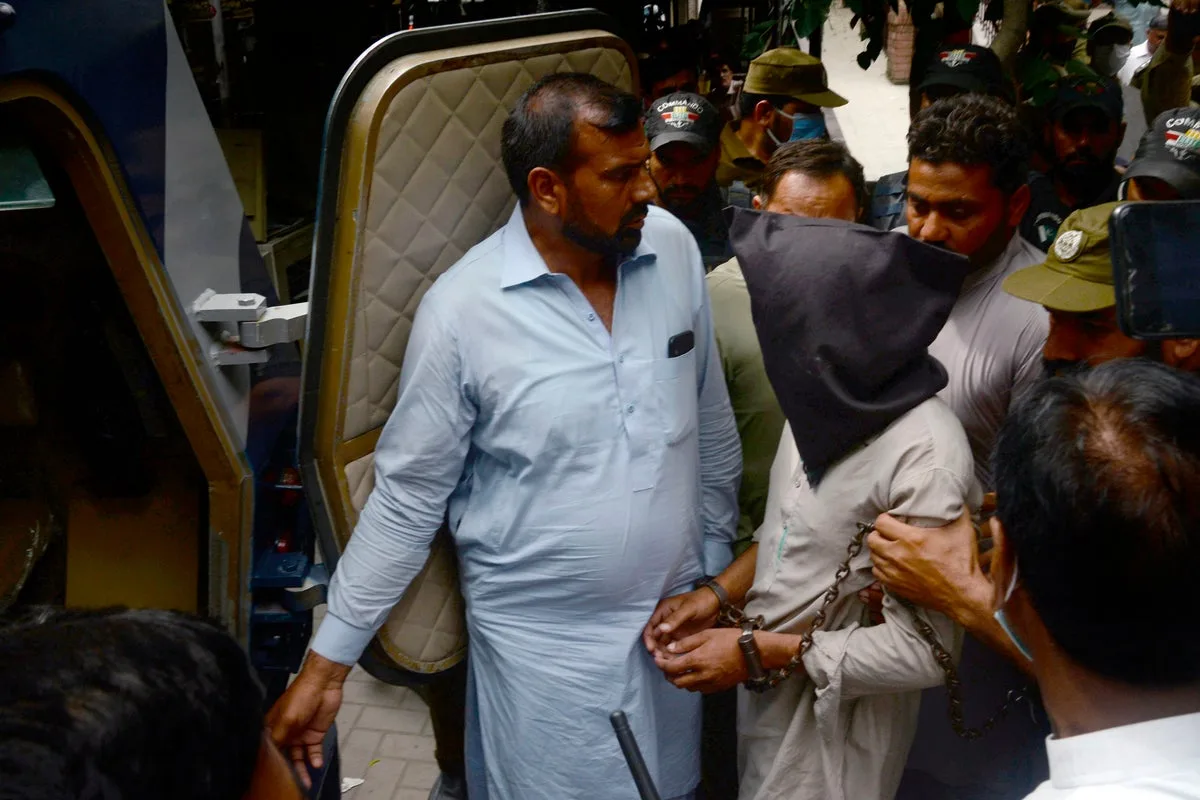
A Pakistani court has confirmed the death sentences of two men convicted of raping a French woman in front of her children on a motorway in 2020. Abid Ali and Shadqat Ali were found guilty of assaulting the 32-year-old tourist after her car ran out of fuel on the Lahore-Sialkot motorway.
The men broke the car windows, dragged the woman and her children to a nearby field, and sexually assaulted her. They were initially sentenced to death in March 2021 but appealed to the Lahore High Court. Justices Syed Shahbaz Ali Rizvi and Tariq Mehmood Bajwa rejected their plea on Wednesday.
The case sparked widespread outrage in Pakistan and led to calls for stronger anti-rape legislation. Public anger intensified after a senior police official criticised the victim for driving alone at night, saying she “mistook Pakistani society to be just as safe” as her country.

In response, Pakistan introduced a new anti-rape law that established special courts to expedite trials and allowed for the chemical castration of serial rapists. The move was backed by then Prime Minister Imran Khan, though activists questioned its deterrent effect.