New South Wales Police to Receive Enhanced Powers Against Illegal E-Bikes
Police in New South Wales are set to gain extra powers to seize and destroy illegal electric bicycles, as authorities move to address growing concerns that these devices are fuelling dangerous and anti-social behaviour on the roads. The state government has announced it will follow Western Australia's lead by enabling law enforcement to crush non-compliant, high-powered e-bikes, including so-called 'fat bikes' and other throttle-only models that do not meet legal standards.
Rising Numbers and Safety Concerns
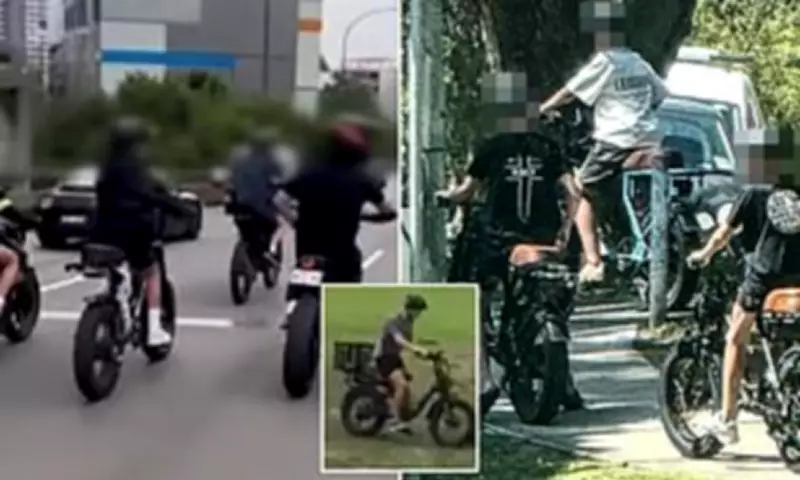
Recent government data reveals there are approximately 1.35 million e-bikes and e-scooters on NSW roads, with about 600,000 households owning at least one e-bike. Alarmingly, up to 21 percent of these vehicles are estimated to be illegal versions, posing significant risks to public safety. The crackdown comes in response to a controversial social media video that went viral, showing a group of 40 e-bike riders and motorcyclists driving recklessly across the Sydney Harbour Bridge earlier this week.
The convoy was filmed speeding past cars and performing wheelies on the iconic landmark, sparking widespread condemnation and urgent calls for action against illegal devices. Transport Minister John Graham emphasised the community's concerns, stating, 'We've heard loud and clear the concern in the community about souped-up e-bikes and the anti-social behaviour that seems to go hand in hand with them.' He added, 'We hope to crush one bike and educate 1000, but we'll keep going until people get the message. We need to get these illegal bikes off our roads.'

Legal Standards and Enforcement Measures
Under current regulations, e-bikes must not exceed 500 watts in power, operate solely as pedal-assist vehicles, and cut out when reaching a speed of 25km/h. Any device that surpasses these limits is required to be registered as a moped or motorcycle, with police already possessing the authority to seize vehicles that are not road-legal. The new powers aim to simplify seizure laws originally designed for cars and motorbikes, forming part of a broader reform package to tackle unsafe e-bikes through on-road testing and impoundment of non-compliant units.
NRMA spokesman Peter Khoury welcomed the tough response, asserting, 'This has to stop. It is an expensive proposition to have the bike confiscated and crushed, but paying for a funeral is more expensive.' However, opposition transport spokeswoman Natalie Ward criticised the timing, noting that the proposed laws would not be introduced before August and fail to immediately address rider behaviour. The Minns government has attributed part of the issue to Ward's previous tenure, claiming she approved e-bikes with up to 500-watt output in 2023, a limit that has since been reduced to 250 watts.
Broader National Context and Calls for Harmonisation
E-bikes, many retailing for over $2000, have become a focal point of controversy across Australia, with incidents highlighting the dangers of unlicensed vehicles. In Perth, a teenage boy is awaiting trial for manslaughter after allegedly killing a 59-year-old while riding an unlicensed electric motorbike in a park last July. Meanwhile, Queensland police seized at least 100 illegal devices and issued 2100 fines during a crackdown in December, with Premier David Crisafulli pledging to legislate 'the strongest response in the nation' to ensure public safety.
Bicycle NSW CEO Peter McLean expressed a desire to collaborate with state and federal governments to align regulations with community education efforts. 'Ultimately, we want harmonised legislation,' he said. 'We want kids to be able to ride from Albury to Wodonga, Tweed Heads to Coolangatta, and Queanbeyan into Canberra and not have five sets of legislation to be mindful of.' This call for standardised rules underscores the complexity of managing e-bike use across jurisdictions, as authorities strive to balance innovation with road safety and social order.