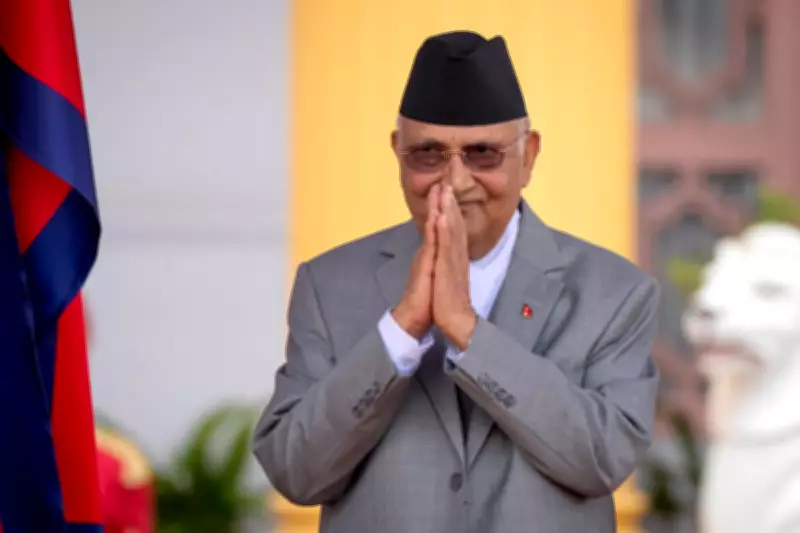
Police in Nepal have made high-profile arrests in connection with the violent protests that rocked the nation last September, detaining former Prime Minister Khadga Prasad Oli and former Home Minister Ramesh Lekhak. The arrests, carried out early on Saturday, 28 March 2026, relate to the deaths of dozens of individuals during demonstrations that ultimately led to the collapse of the government and triggered new elections.
Arrests Conducted at Residences
Authorities apprehended the influential communist leader, Khadga Prasad Oli, at his home on the outskirts of the capital, Kathmandu. Simultaneously, Ramesh Lekhak, who served as home minister during the protests and has been accused of ordering security forces to open fire on demonstrators, was also taken into custody. The operation involved several trucks of police officers equipped in riot gear, who executed the arrests before transporting the men to the Kathmandu District Police office for processing.
Government Statement on Justice
Current Home Minister Sudan Gurung publicly announced the arrests via social media, emphasising a commitment to the rule of law. "No one is above the law. We have taken former Prime Minister KP Sharma Oli and former home minister Ramesh Lekhak under control," Gurung stated. He further clarified that "this is not revenge against anyone, it is just the beginning of justice" for those affected by the September unrest.

Investigation and Recommended Punishments
A government-established commission has conducted a thorough investigation into the protest deaths, resulting in recommendations for severe penalties. The commission has called for prison sentences of up to 10 years for Oli, Lekhak, and the chief of police who was in office at the time of the protests. This move underscores the new administration's focus on accountability for the tragic events.
Political Context and New Leadership
The arrests occur just one day after a new government, led by rapper-turned-politician Balendra Shah, was sworn into office. Shah's Rastriya Swatantra Party secured a landslide victory in parliamentary elections held earlier this month, marking a significant political shift. Both Shah and Home Minister Gurung have pledged to deliver justice for the victims killed and wounded during the protests.
Background on the September Protests
The September protests, which took place on 8 and 9 September, were youth-led demonstrations against widespread corruption and poor governance. The unrest resulted in 76 fatalities and over 2,300 injuries, with angry mobs setting fire to key government buildings, including the offices of the prime minister and president, as well as police stations and the homes of top politicians. Many officials were forced to evacuate via army helicopters amid the chaos.
Fueled by activism from "Gen Z" participants, the demonstrations led to the appointment of Nepal's first female prime minister, Sushila Karki, on 12 September. Karki, a retired Supreme Court judge, served in a transitional capacity to oversee the period leading up to the recent elections, which were the country's first since the protests erupted.