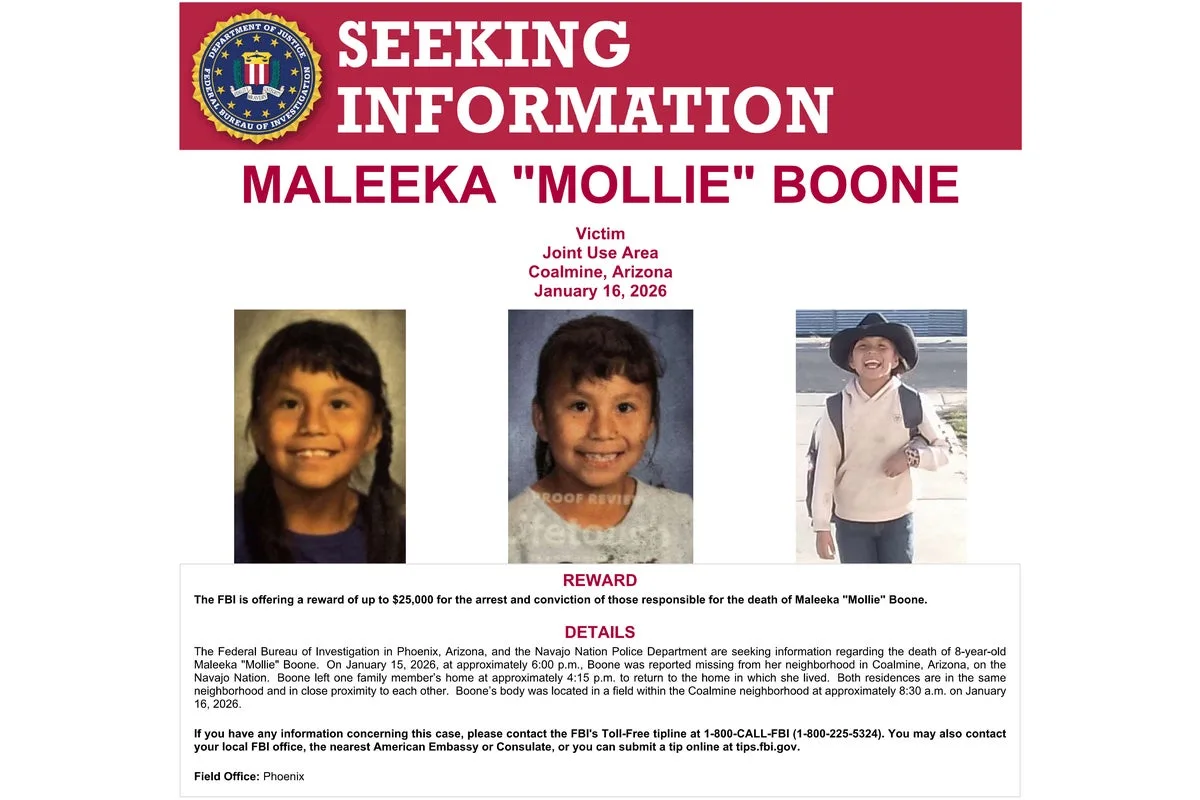
The body of an eight-year-old girl reported missing on tribal lands in northern Arizona has been discovered, bringing a tragic end to a search that prompted a specialised alert for missing Native Americans.
Discovery and Investigation
Authorities confirmed the devastating discovery on Friday, January 16. The girl, identified as Maleeka Boone, was last seen on the evening of Thursday, January 15, in the remote Coalmine Canyon area. This region lies approximately 240 miles north of Phoenix within the vast Navajo Nation.
The Federal Bureau of Investigation is leading the inquiry in conjunction with tribal police. An FBI spokesperson has declined to release specific details surrounding the circumstances of her death at this early stage of the investigation.
A Community in Mourning
In a heartfelt video message shared on social media, Navajo Nation President Buu Nygren expressed the profound grief felt across the community. "This tragedy weighs heavy on my heart," President Nygren stated, describing Maleeka's death as utterly devastating for her family and the entire Nation.
The urgent search for Maleeka led to the activation of a Turquoise Alert. This is a state-specific alert system designed to publicise cases involving missing Native American individuals, aiming to accelerate search efforts through public awareness.
The Legacy of Emily's Law
The Turquoise Alert system in Arizona exists largely because of a previous tragedy. The legislation that established it is known as "Emily's Law," named in honour of Emily Pike.
Emily Pike was a Native American woman whose remains were discovered on February 14 more than 100 miles from a group home she had left in Mesa, Arizona. Her death reignited activism and legislative action focused on the disproportionately high number of disappearances and violent deaths affecting Indigenous communities.
This activism was instrumental in amending the bill to create the alert system, seeking to address a crisis that has persisted for decades. The tragic case of Maleeka Boone now underscores the continued urgency of this issue.