Metropolitan Police Commissioner Sir Mark Rowley has announced plans to deploy drones across every London borough within the next year, as part of a broader strategy to use advanced technology to combat crime. In a speech delivered in London on Wednesday, Sir Mark called for greater freedom for police chiefs to adopt new tools to keep pace with criminals.
Current Drone Operations and Expansion
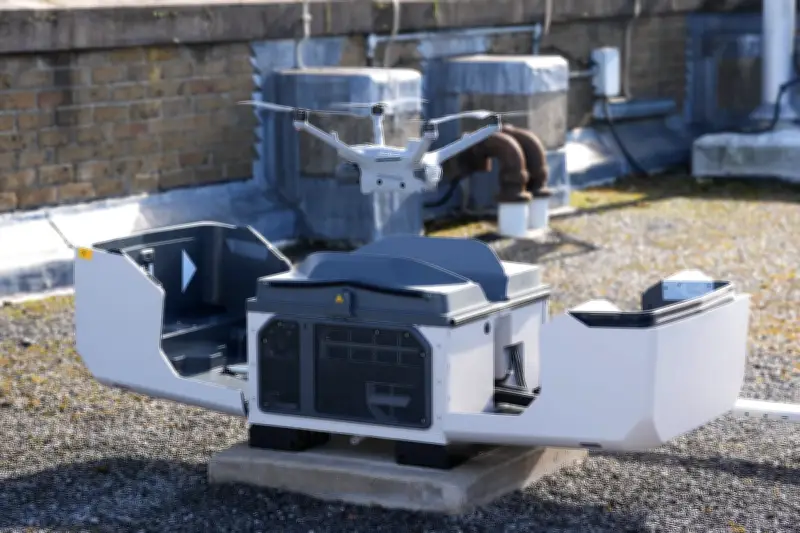
The Met currently operates three drone sites with nine devices, responding to approximately 200 incidents per week. The force aims to expand this coverage to all 32 London boroughs by this time next year, and is also working to establish a shared network with other emergency services, including the London Fire Brigade and ambulance services.
Sir Mark stated: "Drone deployments are growing, deploying to around 200 incidents a week. Response times are around two minutes, compared to the nine minute average response time for our response officers. And so in many cases, drones now arrive first. Providing live intelligence. Tracking suspects. Supporting officers before they reach the scene."

National Context and Pilot Schemes
The Met's expansion follows a national scheme that has tested drones as first responders over the past two years. Pilot programs in areas like Norfolk—where access to National Police Air Service helicopters is limited due to distance—have demonstrated the effectiveness of remotely operated drones in gathering rapid incident information, tracking suspects, and assessing resource needs.
The Met's own trial began in October last year, with drones deployed in Islington, the West End, and Hyde Park. According to Sir Mark, drones are already proving their worth: "We are seeing them pursue offenders, locate missing people and reduce risk in real time."
Integration with Emergency Services
Sir Mark emphasized the importance of collaboration across blue-light services. "We intend to work with London’s blue light services such as the London Fire Brigade to build a London-wide emergency services drone network, ideally built on shared infrastructure that covers the whole city," he said. This would involve sharing drones, airspace management, launch sites, connectivity, and data systems to create a seamless operational framework.
He added: "This should not just mean sharing drones. It should mean sharing the underlying infrastructure that makes them effective... Our aim should be a single, secure, coordinated infrastructure that allows police, fire and ambulance services to operate seamlessly as we protect the public."
Facial Recognition and AI Expansion
In addition to drones, Sir Mark highlighted plans to expand the use of live facial recognition (LFR) and artificial intelligence. The force is currently increasing its static LFR camera deployment, a move that has drawn criticism from human rights group Liberty, which called for a legal framework before further rollout.
However, Sir Mark argued that waiting for separate legislation for each technological advance is not viable. He concluded: "You can see our determination in the announcements today on LFR and drones to regain the advantage over criminals. I have been clear on the help we need to keep pace. We have a choice. Policing already holds the data that could identify victims sooner, stop offenders earlier and prevent harm. But without the right technology, that insight remains hidden."