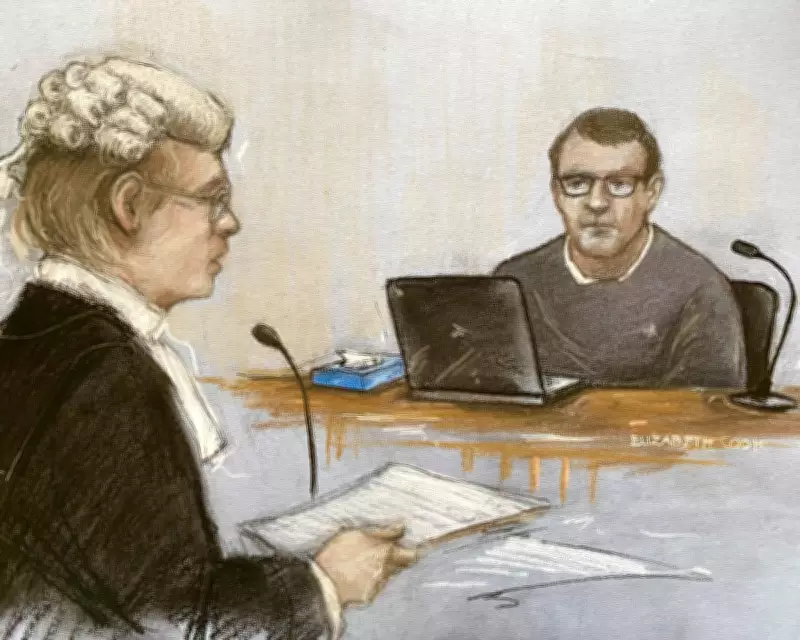
Manchester Rape Trial Defendant Claims Ignorance Over DNA Evidence
Paul Quinn, a 51-year-old man accused of a 2003 rape that resulted in an innocent person being imprisoned for 17 years, has testified in court that he does not know how his DNA came to be discovered on the victim's clothing. Quinn, who is a father of six children, was arrested in December 2022 after new forensic analysis connected his genetic material to the assault victim. During his evidence at Manchester Crown Court, Quinn acknowledged that his DNA was identified on the woman's vest and bra but insisted he had no acquaintance with her.
Unanswered Questions Over Phone Searches and DNA Database Inquiries
Under questioning from his barrister, Lisa Wilding KC, Quinn stated he could not provide an explanation for how his biological traces appeared on the garments. When Wilding asked if the DNA was present because he had raped and attacked the woman, Quinn firmly responded, "No." The court proceedings revealed that Quinn had submitted a DNA sample to police in December 2012, a full decade after the incident occurred, and he had subsequently searched online to determine how long such samples are retained on official databases.
Prosecutor John Price KC pressed Quinn on his internet browsing history, which included searches in 2019 for "Andrew Malkinson"—the man whose rape conviction was overturned in 2023—and "wrongly convicted cases UK." Quinn attributed these inquiries to a personal interest in true crime programming, but Price suggested they indicated Quinn was aware of Malkinson's wrongful conviction long before it became public knowledge. Quinn denied this allegation, maintaining his innocence throughout the cross-examination.

Defendant's Personal Life and Changing Browsing Habits Scrutinised
Quinn described himself as "very promiscuous" around the time of the 2003 attack, proposing that this behaviour might account for the DNA evidence. In police interviews, he admitted to being unfaithful to his former wife, Catherine Quinn, during their 20-year marriage, which ended in separation in 2016. He characterised his actions as "disgraceful" and "disgusting," citing unprotected sexual encounters with strangers. At the time of his arrest, Quinn was residing in Exeter and involved in a new relationship.
The prosecution highlighted a significant shift in Quinn's online activity during late summer 2022, noting an "exponential" increase in visits to the Manchester Evening News homepage. Price suggested this change coincided with reports that fresh DNA testing had identified a new suspect in the rape case, implying Quinn was monitoring developments. Quinn rejected this interpretation, attributing the altered browsing patterns to modifications in his work schedule and break times.
Legal Context and Additional Charges in the Ongoing Trial
Earlier in the proceedings, Quinn entered a not guilty plea to two charges of indecent assault that have been appended to the indictment. These additional charges reflect a dispute between the prosecution and defence regarding the original two counts of rape. Justice Bright KC informed the jury that, under the legal framework in place in 2003, rape specifically required penetration by a penis. Sexual assaults involving penetration with other objects, while criminal if non-consensual, do not constitute rape under that definition.
The trial continues as the court examines the complex evidence surrounding this case, which has already seen one wrongful conviction overturned. Quinn's testimony and the forensic findings remain central to determining the truth behind the 2003 assault in Manchester.