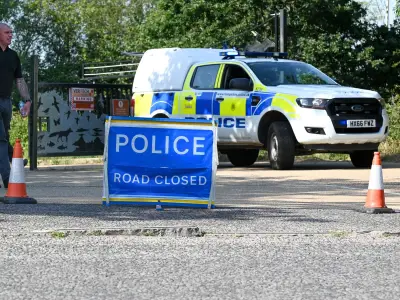
The Metropolitan Police has reignited a long-running feud with former US President Donald Trump after publishing new data showing homicides in London have dropped to their lowest level in a decade. Senior officers used the figures to robustly defend the capital's safety record, directly challenging claims it has 'no-go' areas.
Historic Lows in Violent Crime
Official statistics released today show there were 97 unlawful killings in London in 2025, an 11% reduction from the 109 recorded in 2024. This represents the lowest annual total since 2014, when there were 95, despite the city's population having grown by over half a million people since then.
The rate now stands at just 1.07 homicides per 100,000 residents. This is the lowest rate since comparable records began in 1997, when the figure was more than double at 2.38. A particularly stark improvement was seen in violence affecting young people, with only 18 victims under 25 years old last year, down from a previous low of 31 in 2024 and a peak of 69 in 2017.

Police Leadership Hits Back at Critics
Metropolitan Police Deputy Commissioner Matt Jukes stated that London 'does not deserve the reputation which it is sometimes given', in a clear rebuttal to Donald Trump's repeated criticisms of the city and its Mayor, Sadiq Khan. While claiming he would not 'get involved' in political commentary, Jukes insisted the facts spoke for themselves.
'Our message, not just to Londoners, but to the world, is that the facts speak for themselves. London is safe and getting safer,' Jukes told reporters. He paid tribute to the 'relentless work' of officers, which has seen roughly an extra 1,000 arrests made each month and over 21,000 disruptions against organised crime groups in the past year.
Commissioner Sir Mark Rowley added: 'The results speak for themselves - fewer lives lost, fewer families shattered. Every murder is a tragedy, but we will continue to use every tool at our disposal to drive down serious violence.'
Crackdown on Gangs and Systemic Challenges
The progress is attributed to a focused crackdown on organised crime. Last week, the Met's Tactical Support Group conducted coordinated dawn raids across north-west London, storming eight properties linked to violence and drug dealing. Several suspects in their 20s and 30s were arrested, with five subsequently charged.
During the raids, officers discovered a cache of weapons, including a large 'Rambo' knife hidden under a pillow, a significant quantity of suspected Class A and B drugs, and over £10,000 in cash in a suspected dealer's bedroom.
Despite these successes, Deputy Commissioner Jukes expressed frustration with the wider criminal justice system, describing a 'revolving door' for some offenders due to prison overcrowding and a lack of remand spaces. He also highlighted the Met's shrinking workforce, which has lost more than 1,700 officers since 2024, forcing tough choices to prioritise areas like serious violence.
Mayor Sadiq Khan, who has frequently been the target of Trump's ire, concluded: 'Many people have been trying to talk London down, but the evidence tells a very different story.' The Mayor's Violence Reduction Unit is credited with supporting the Met's work by tackling the root causes of crime.