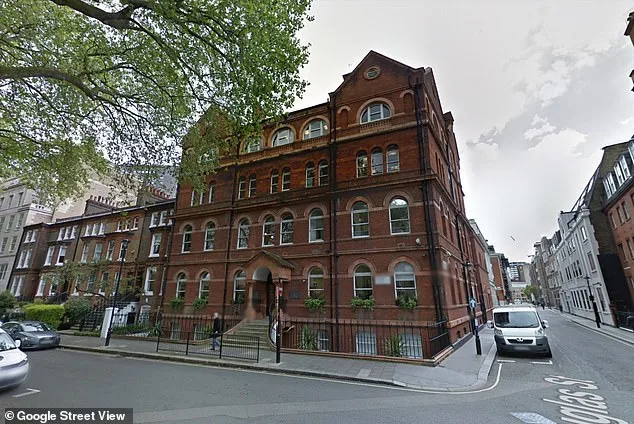
A 66-year-old man who subjected a lollipop lady to a campaign of racist abuse outside a prestigious London prep school attended by Jacob Rees-Mogg is due to be sentenced next month. Mukesh Vala repeatedly targeted crossing attendant Julie Khames as she helped children cross the road near Westminster Under School, leaving her too frightened to work.
Vala's harassment included running over Ms Khames' feet with his shopping trolley, throwing her lollipop stick to the ground, and shouting obscenities. On one occasion, he told her she was 'disgusting'. The abuse took place between September 25 and October 14 this year, often in full view of pupils at the £41,000-a-year school, whose alumni include the Commons Leader, composer Andrew Lloyd Webber, and Labour MP Hilary Benn.
When the school's deputy head, Michael Woodside, confronted Vala and told him to leave Ms Khames alone, Vala replied: 'I'm going to kill you and one of us is going to die today.' He also made lewd sexual gestures in the street and, on another occasion, called an ambulance and screamed abuse at paramedics, making Nazi salutes and shouting 'Heil Hitler'. He also called his GP surgery and introduced himself as Jack the Ripper.

Vala, of Hide Tower, Regency Street, Westminster, admitted a string of offences including racially aggravated assault, racially aggravated harassment, assaulting an emergency worker, outraging public decency, and committing an offence while subject to a suspended sentence. He was due to be sentenced at Southwark Crown Court on December 22, but the case was adjourned until January 22 for further psychiatric reports.