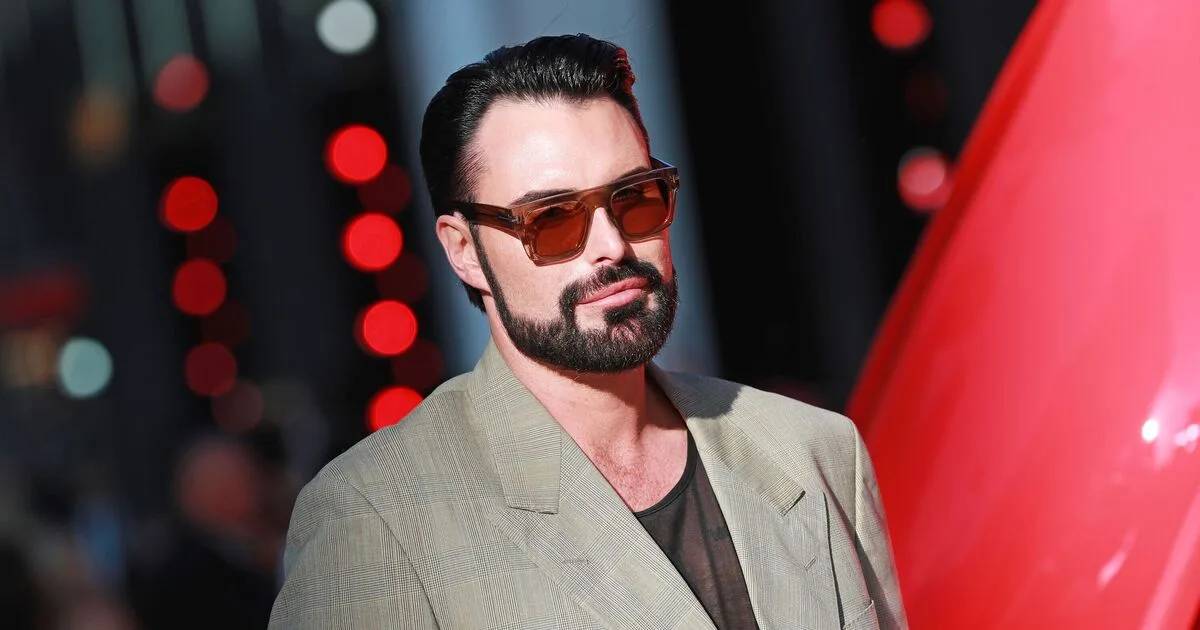
Rylan Clark received widespread praise from Eurovision viewers during Tuesday's semi-final after he directly addressed the ongoing controversy surrounding Israel's participation in the song contest. This year, several countries have boycotted the competition following the decision to allow Israel to continue competing.
Israel's Act Advances Amid Boos
Israel's act, Noam Bettan, successfully reached the grand final despite being booed by pro-Palestine supporters during his performance. Austrian broadcaster ORF confirmed in a statement that several audience members were removed by security for disruptive behavior.
Rylan's Remarks on Withdrawals
Early in the show, Rylan, who was commentating alongside Angela Scanlon, informed viewers that five nations—Spain, Ireland, the Netherlands, Slovenia, and Iceland—had declined to participate this year. He stated, "As I'm sure you're aware, this year Eurovision has faced one of its most challenging years; five countries have withdrawn following the continued participation of Israel, which leaves us with 35 acts competing in this year's live shows."
Fans lauded Rylan for referencing the controversy, with many taking to social media to express their support. Comments included: "Rylan immediately starting off with mentioning 5 countries withdrawing because of Israel... honestly wasn't expecting it," "Big on Rylan for mentioning the withdrawals and that is because of Israel," and "The BBC and Rylan actually acknowledging withdrawn countries and their reason?"
Bettan's Performance and Audience Reaction
Bettan performed the pop song "Michelle" and faced a mixed reception, with some audience members booing and shouting anti-Israeli slogans while others chanted his name in support. The negative reaction was audible on the TV broadcast. ORF and Eurovision organizers the EBU stated that one audience member was "close to a microphone" and "loudly expressed their views" before and during the performance, and was later removed by security. Three other individuals were also removed for disruptive behavior.
Qualifiers and Eliminations
The semi-final, held at Vienna's Wiener Stadthalle, saw 10 countries qualify for Saturday's grand finale, including Finnish duo Pete Parkkonen and Linda Lampenius, who are current favorites. Portugal, Georgia, Montenegro, Estonia, and San Marino were eliminated. San Marino's entry featured Boy George performing the song "Superstar," which he co-wrote.
Financial and Political Implications
The boycotts represent a financial blow to Eurovision, which is funded largely by participating broadcasters. Many public broadcasters are under financial pressure from government funding cuts and competition from social media. The contest has struggled to separate pop and politics in recent years, with Russia expelled in 2022 after its invasion of Ukraine. Tensions escalated after Hamas' October 7, 2023, attack on Israel and the subsequent Israeli campaign in Gaza, which has resulted in over 70,000 deaths.
The last two Eurovision contests have seen pro-Palestine protests both outside and inside venues, forcing organizers to clamp down on political flag-waving. Several performers and countries have called for Israel's exclusion, though Israel has competed since 1973. The 2024 contest in Malmo, Sweden, and the 2025 event in Basel, Switzerland, saw protests calling for Israel's expulsion over its war conduct and allegations of rule-breaking marketing campaigns.
Voting Rule Changes
In response to vote-rigging allegations, the European Broadcasting Union has tightened voting rules, halving the number of votes per person to 10 and increasing safeguards against suspicious voting activity. Israel received 83% of its points from the public last year for its song "New Day Will Rise" and came second overall. The 2025 winner, Austria's "Wasted Love," received only 41% of votes from the public, relying on national juries for victory.
Posts from Israel's X account, run by the foreign ministry, encouraged voting up to 20 times during last year's semi-final. Eurovision Song Contest Director Martin Green described this as "disproportionate marketing and promotional activity" and stated that new rules were implemented, though he did not directly reference the posts.
Security Measures
Several pro-Palestine demonstrations are planned in Vienna during Eurovision week, with heightened security measures in place. Police officers from across Austria have been deployed, supported by forces from neighboring Germany.