Los Angeles Council President Alleges Racial Profiling During Traffic Stop
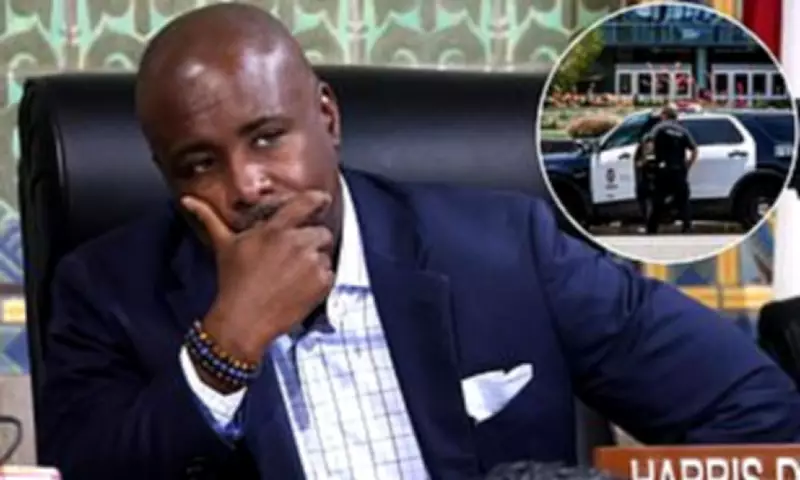
Marqueece Harris-Dawson, the president of the Los Angeles City Council, has made serious allegations of racial profiling following a recent traffic stop, claiming he was targeted by police officers because he is Black. The incident occurred last week and was discussed during a council meeting focused on pretextual traffic stops, where officers use minor violations as a pretext to investigate other suspected crimes.
Emotional Testimony Details the Encounter
During his testimony, Harris-Dawson became visibly emotional as he described the encounter, stating it was "traumatic" and brought back memories of similar experiences from his youth. He alleged that officers stopped him without cause and immediately began questioning him about his vehicle and occupation.
"The first question was, 'roll down your windows.' The second question was, 'how do you have this vehicle?'" Harris-Dawson recounted to the council. "The third question was, 'well, you work for the city. What job do you do for the city?'"

Harris-Dawson responded by identifying himself as the council president, explaining he had to provide this information "on the corner of Main and 25th Street" while trying to reach a committee meeting. He emphasized that such stops are often based solely on race and create traumatic experiences for people of color.
Police Provide Different Account of the Stop
However, authorities have presented a different version of events. According to officials who spoke to The New York Post, the traffic stop was conducted by the Los Angeles School Police Department, not the LAPD as Harris-Dawson claimed. The stop occurred during morning school drop-off hours and was prompted by an observed moving traffic violation in the vicinity of a high school.
"During our morning school drop-off, a Los Angeles School Police Department officer conducted a traffic stop based on an observed moving traffic violation in the vicinity of one of our high schools and issued the driver a citation," a spokesperson explained.
Broader Context of Pretextual Traffic Stops
The allegations emerged during a Los Angeles City Council discussion about pretextual traffic stops, which are legal under federal law but frequently criticized as tools for racial profiling. Harris-Dawson argued that data consistently shows racial bias in these practices.
"In Los Angeles, every single time data is collected on pretextual traffic stops, they are grossly racially biased," he declared, adding that approximately 85 percent of such stops in the city involve Black and brown drivers.
Social Media Reaction and Further Details
Following the council meeting, Harris-Dawson doubled down on his claims through social media, sharing a video of his testimony on Facebook. In his post, he revealed this was not an isolated incident, writing: "As a Member of the Council, driving in a government-issued vehicle with an E-plate, I have been stopped four times. Four times."
The post attracted significant attention with over 200 comments reflecting divided opinions. Some users questioned discrepancies in Harris-Dawson's account, particularly his failure to mention receiving a citation during the recent stop.
"You forgot to tell us why you were pulled over in the first place," one commenter wrote, while another asked: "Why did they pull you over, what was your infraction? I think you forgot to say that part."
However, many others expressed support for Harris-Dawson, sharing their own experiences with law enforcement. One user wrote: "I ALWAYS get randomly stopped in almost every state. I also ALWAYS get padded down, singled out at the airports. I am a brown 100 percent Native American."
Another supporter shared: "Yes. It can be traumatic. I too in North Carolina was pulled over several times in a state vehicle without any violations or probable cause."
Ongoing Debate About Police Practices
The incident highlights the ongoing national debate about racial profiling and police practices, particularly regarding traffic stops that disproportionately affect minority communities. While Harris-Dawson maintains he was targeted because of his race, law enforcement officials insist the stop was routine and based on observable traffic violations in a school zone.

The conflicting accounts have sparked discussions about transparency, police accountability, and the psychological impact of such encounters on individuals who feel targeted by law enforcement. As both sides stand by their versions of events, the case underscores the complex relationship between community leaders and police departments in major American cities.