Winter Olympics Opening Marred by Railway Sabotage and Major Protests
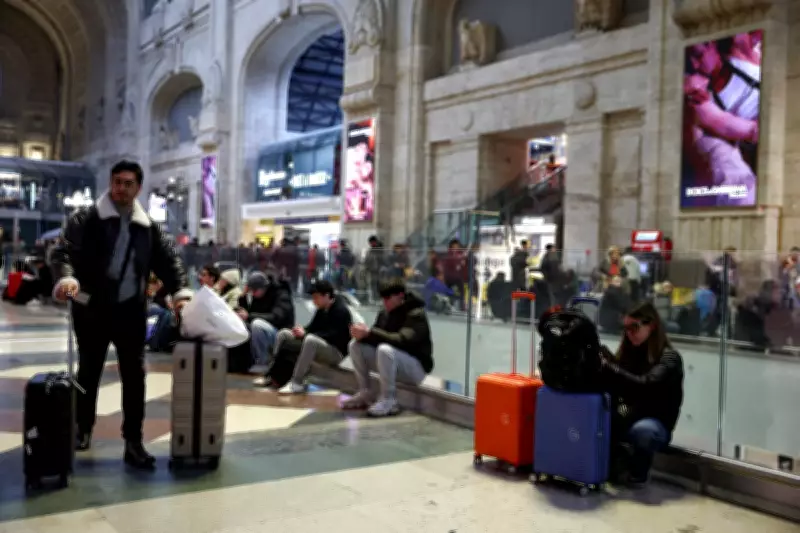
Italy's Winter Olympics opening day was disrupted by suspected coordinated sabotage attacks on the national railway network, causing significant travel chaos across the country. Police reported three separate incidents targeting critical rail infrastructure, resulting in delays of up to two-and-a-half hours for high-speed, Intercity, and regional train services during what should have been a celebratory national moment.
Coordinated Sabotage Attacks Target Critical Infrastructure
Italian authorities confirmed three distinct sabotage incidents occurring at different locations across the rail network on Saturday morning. Near the Adriatic city of Pesaro, a cabin housing a track switch was deliberately set on fire before dawn. Several hours later, in the critical transport hub of Bologna, electrical cables used to detect train speeds were found severed. At a nearby location, authorities discovered a rudimentary explosive device placed dangerously close to railway tracks.
The state-owned railway company Ferrovie dello Stato (FS) was forced to temporarily close its high-speed station in Bologna, a major junction connecting Italy's east-to-west rail lines and the key hub linking southern regions to northern cities including Milan and Venice. Milan serves as a co-host of the Winter Games alongside Cortina, which is accessible via train connections from Venice.

Government Response and Historical Parallels
The Transport Ministry, led by Deputy Prime Minister Matteo Salvini, strongly condemned the acts as "serious sabotage" and drew attention to similar incidents that affected France's high-speed TGV network during the opening day of the 2024 Summer Olympic Games in Paris. The ministry issued a statement asserting: "These actions of unprecedented seriousness do not in any way tarnish Italy's image in the world, an image that the Games will make even more compelling and positive."
Police confirmed that no individual or group had claimed responsibility for the coordinated attacks by Saturday afternoon, as rail traffic slowly began returning to normal across the affected network. The timing of the sabotage, coinciding precisely with the Winter Olympics opening ceremonies, suggested deliberate planning to maximize disruption during a high-profile international event.
Parallel Protests Over Housing and Environmental Concerns
While sabotage disrupted transportation networks, thousands of protesters took to the streets of Milan on Saturday to voice concerns about housing costs and environmental issues during the first full day of Olympic competition. The organized march, coordinated by grassroots unions, housing-rights groups, and social center community activists, sought to highlight what participants described as an increasingly unsustainable city model characterized by soaring rents and deepening inequality.
Protesters displayed banners with messages including "Let's take back the cities, let's free the mountains," reflecting dual concerns about urban living conditions and environmental impacts in mountain communities hosting Olympic events. Some groups specifically criticized the Olympics as a wasteful expenditure of public money and resources, pointing to infrastructure projects they claim have damaged fragile alpine ecosystems.
The Olympic Games cap a transformative decade for Milan that began with the 2015 World Expo and triggered a subsequent property boom. Local residents have faced increasing pressure from soaring living costs, exacerbated by an Italian tax scheme attracting wealthy new residents and Brexit-driven migration of professionals to the financial capital. These economic pressures formed a significant backdrop to the opening day protests coinciding with the international sporting event.