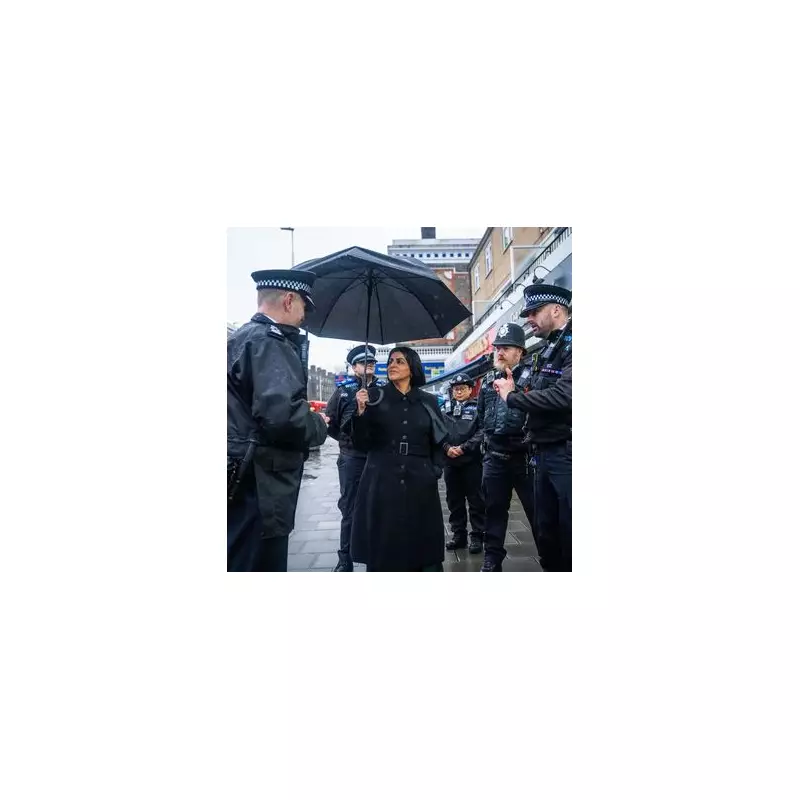
Home Secretary Shabana Mahmood is poised to unveil a groundbreaking new police force, informally termed the 'British FBI', aimed at tackling serious crime, fraud, and terrorism across the United Kingdom. This high-tech initiative represents a significant shift in policing strategy, designed to address the overstretched resources of local forces and enhance national security.
A New Era in Policing
The announcement, scheduled for tomorrow, will introduce the National Police Service, a centralised body focused on apprehending Britain's most dangerous criminals. Ms Mahmood argues that the current policing model, established over two centuries ago, is ill-equipped to handle complex modern crimes such as online child abuse, organised criminal gangs, and sophisticated fraud schemes.
Relieving Local Forces
By creating this new service, the Home Secretary aims to free up the 43 police forces in England and Wales from nationwide and international crime networks. This will allow chief constables to concentrate on local issues like anti-social behaviour, drug dealing, and shoplifting, thereby improving community safety and responsiveness.

Sweeping Reforms and Regional Hubs
The reforms include the launch of Regional Crime Hubs, which will target criminals operating across borders and committing the most serious offences. These hubs will facilitate coordinated efforts against complex crime, leveraging shared technology and intelligence to enhance operational efficiency.
Ms Mahmood stated, "The current policing model was built for a different century. Some local forces lack the skills or resources they need to fight complex modern crime. We will create a new National Police Service – dubbed 'the British FBI' - deploying world-class talent and state-of-the-art technology to track down and catch dangerous criminals. In doing so, local forces will be able to spend more time fighting crime in their communities."
Integration of National Resources
The Home Office confirms that the National Police Service will consolidate the powers of several existing agencies, including:
- The National Crime Agency
- Counter Terrorism Policing
- Regional Organised Crime Units
- Police helicopters
- National Road Policing
This integration aims to streamline operations and improve the use of technology, such as facial recognition cameras, ensuring each force has access to the best tools available. The service will be led by a National Police Commissioner, who will become the country's most senior police officer.
Expert Endorsement
Former head of counter-terrorism policing, Neil Basu, welcomed the move, saying, "A national police service will bring long-needed integration of multiple agencies, processes, systems, and decision-making bodies. It will be far more capable as one national security system, dealing more effectively with major crime, organised crime, and terrorism in all its forms."
He added, "The road to such a fundamental change is clearly a long one with many obstacles, but it is brilliant to see a Home Office and Home Secretary willing to get back in the driver's seat and think long-term in the best interests of a safer UK."
Addressing Fragmentation
Ms Mahmood will inform MPs that policing is currently too fragmented, with responsibilities spread across various forces. For instance, London's Metropolitan Police handles counter-terrorism, West Yorkshire manages police helicopters, and Sussex oversees National Roads Policing. These duties will now be unified under the new National Police Service.
On Monday, the Home Secretary will present her comprehensive blueprint for tackling crime, which the Home Office has labelled as the largest reform since the police service was founded 200 years ago. This initiative underscores a commitment to modernising law enforcement and enhancing public safety across the nation.