Gerry Adams IRA Lawsuit Dropped as Victims End Symbolic £1 Claim
Three victims of bombings in England carried out by the Irish Republican Army have brought an abrupt end to their damages claim against former Sinn Féin leader Gerry Adams. The civil trial, which was scheduled to conclude on Friday, was discontinued after proceedings developed overnight, according to the claimants' legal representative.
Sudden End to High Court Proceedings
On what was supposed to be the final day of the two-week civil trial at the U.K.'s High Court in London, lawyer Anne Studd announced the claim would be discontinued. She indicated the development was related to an argument concerning "abuse of process." The case had been brought against Adams for allegedly being directly responsible and complicit in decisions by the Provisional IRA to detonate bombs in England in 1973 and 1996.
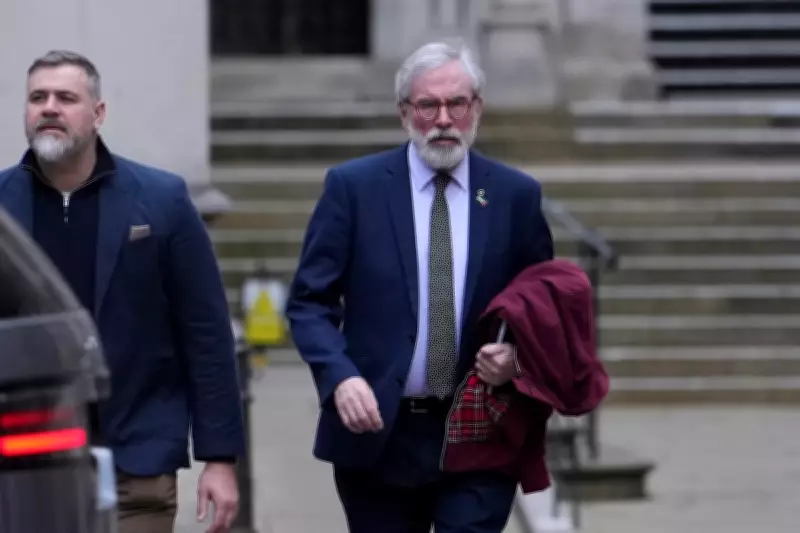
The lawsuit sought only a symbolic £1 (approximately $1.34) in damages, making it a primarily symbolic legal action rather than a financial claim. Adams, who is 77 years old, had given evidence during the trial but was not present in court on Friday when the case was dropped.

Adams Welcomes Decision
Soon after the case was discontinued, Gerry Adams released a statement welcoming the claimants' decision. "I attended the civil case out of respect for them," he said. "This decision brings to an emphatic end, a case that should never have been brought." Adams has consistently denied being a member of the IRA, though some former colleagues have stated he was one of its leaders during the conflict.
Adams remains one of the most influential figures from Northern Ireland's decades of conflict, known as "the Troubles." He led the IRA-linked political party Sinn Féin from 1983 to 2018 and played a crucial role in brokering the 1998 Good Friday peace accord, which helped bring an end to widespread violence.
Background of the Claimants and Allegations
The three claimants alleged that Adams was a member of the IRA's decision-making Army Council and was as responsible as the individuals who planted the explosives. The bombings occurred during the three decades of violence involving Irish republican and British loyalist militants, along with U.K. soldiers. Approximately 3,600 people were killed during this period, most in Northern Ireland, though the IRA also conducted bombings in England.
- John Clark, a police officer, sustained shrapnel injuries to his head and hand from the 1973 Old Bailey courthouse bombing in London.
- Jonathan Ganesh suffered psychological trauma from the 1996 London Docklands bombing.
- Barry Laycock was left 50% disabled, experienced emotional distress, and faced financial struggles following the 1996 Arndale shopping centre bombing in Manchester.
In their evidence, the three men explained they had not pursued claims earlier due to several factors:
- They were unaware they could bring such a claim.
- They could not afford the legal costs.
- They were suffering from mental or physical injuries.
- They feared violent reprisals.
Legal History and Context
Gerry Adams has never been charged with the bombings or even arrested on suspicion of involvement. He was charged with being an IRA member in 1978, but the case was later dropped due to insufficient evidence. More recently, Adams won a £100,000 (approximately $116,000) libel verdict against the BBC last year over a claim in a television documentary that he authorized the killing of an informant within the Irish republican movement.
The discontinuation of this lawsuit marks another chapter in the complex legal and historical narrative surrounding one of Northern Ireland's most prominent political figures and the legacy of the Troubles.