Fighter Jets Intercept Wizz Air Flight Following WiFi Prank Alert
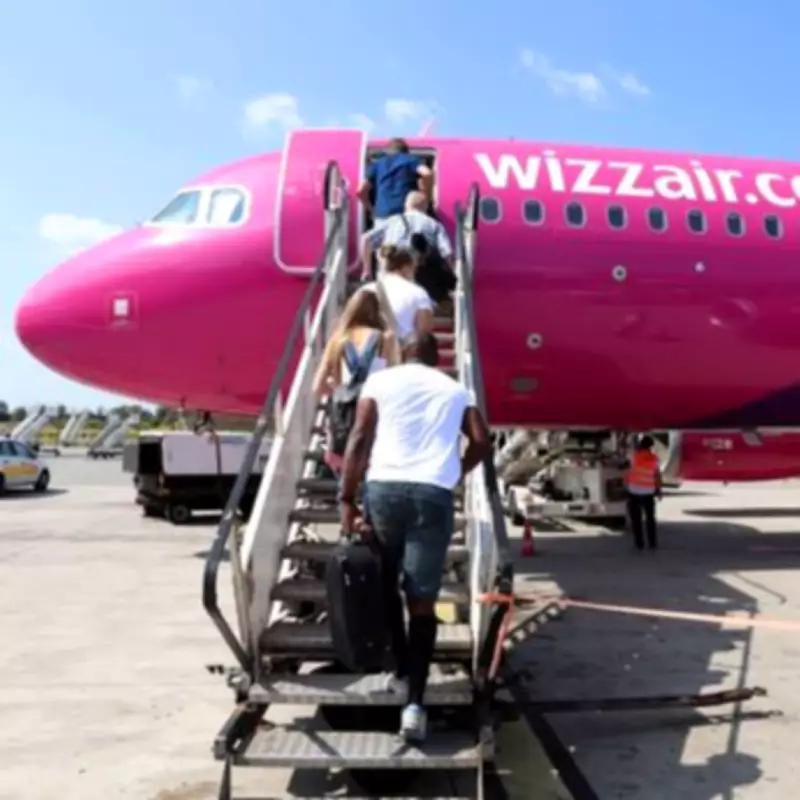
A routine Wizz Air flight from Luton Airport to Tel Aviv was dramatically intercepted by military fighter jets after a child reportedly renamed an onboard WiFi hotspot to 'terrorist', sparking a significant international security incident. The W95301 service, operated by the Hungarian low-cost carrier, was approaching Ben-Gurion Airport in Israel when cabin crew raised the alarm over suspicious activity detected among passengers' personal devices.
Security Scramble Over Mediterranean Airspace
Israeli security officials immediately mobilised defence forces upon receiving reports of potential threatening messages being broadcast within the aircraft's cabin. According to flight tracking data from FlightRadar, the Airbus A321 neo executed three complete circular manoeuvres over the Mediterranean Sea, approximately south of Cyprus, as security assessments were conducted mid-flight. Military aircraft patrolled the surrounding airspace throughout the tense period until the commercial jetliner was cleared for landing procedures.
The Israel Airports Authority subsequently confirmed the security scare proved completely baseless, with a spokesperson telling media outlets: "The aircraft landed safely, and thorough investigations determined there was no actual incident or credible threat present." All passengers and their personal belongings underwent meticulous security screening upon arrival, with bomb-sniffing canine units deployed as standard precautionary measures.

Disruption to Air Traffic Operations
The security response caused temporary suspension of both inbound and outbound flights at Ben-Gurion International Airport, creating minor disruptions to Israel's air traffic network before normal operations resumed. Aviation authorities emphasised that all security protocols were followed appropriately given the initial threat assessment. "Due to suspicion of suspicious behaviour onboard the aircraft, security forces activated standard procedures for such scenarios," stated the Airports Authority in their official incident report.
This alarming episode follows a remarkably similar incident that occurred just last month involving a Turkish Airlines flight. That aircraft was forced into an emergency landing at Barcelona-El Prat Airport accompanied by NATO fighter jets after a passenger established a personal WiFi hotspot named: 'I have a bomb, everyone will die.' The Spanish Civil Guard evacuated 148 passengers and seven crew members during that security operation, which also concluded without discovery of any explosive materials.
Aviation Security Protocols Under Scrutiny
Both incidents have highlighted the sophisticated security measures implemented across international aviation networks, including Quick Reaction Alert (QRA) systems coordinated through NATO alliances. The rapid deployment of fighter jets to intercept commercial aircraft demonstrates the high-priority response activated when potential threats are identified during flight operations. Aviation experts note that such protocols, while occasionally triggered by false alarms, remain essential for maintaining passenger safety in an era of evolving security challenges.
The recent proliferation of personal electronic devices and mobile connectivity options aboard aircraft has introduced new dimensions to in-flight security monitoring. While the Wizz Air incident appears to have originated from a child's misguided prank rather than malicious intent, it underscores how seemingly minor actions can trigger substantial security responses with serious operational consequences for airlines, airports, and military resources.