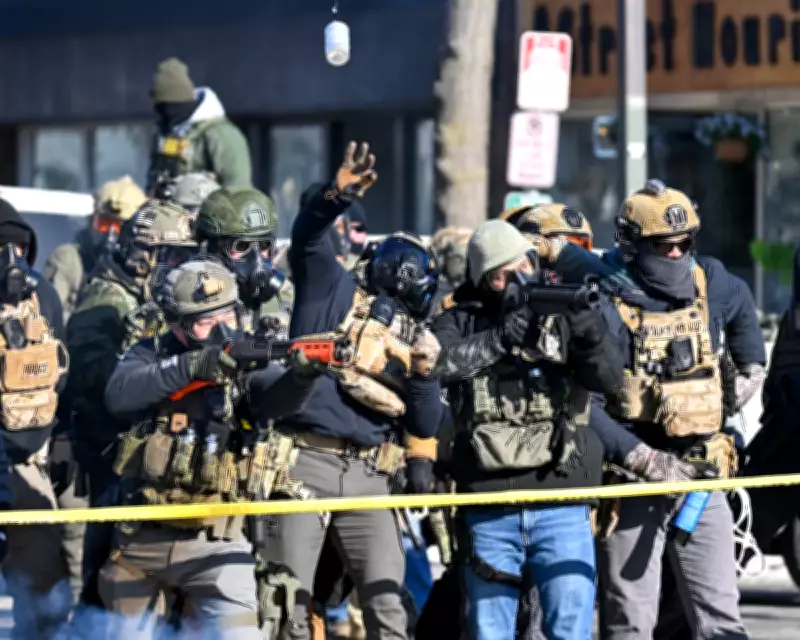
Federal officers have been documented throwing tear gas canisters and firing so-called "less-lethal" rounds at protesters in Minneapolis, sparking widespread debate and criticism. The incident, captured in photographs, underscores the ongoing tensions between law enforcement and demonstrators in the United States.
The Intimidating and Farcical Nature of ICE's Performance
Emma Brockes, in her analysis, describes the scene as echoing "camp fascism," drawing parallels to musical comedies like The Producers and Operation Mincemeat. She argues that ICE's mission to intimidate is matched by an aesthetic that borders on the absurd, with officers clad in gear reminiscent of theatrical costumes.
Costumes and Incompetence on Display
Border Patrol Chief Greg Bovino was seen in a long green trenchcoat, prompting California Governor Gavin Newsom to remark it looked "as if he literally went on eBay and purchased SS garb." Minnesota Attorney General Keith Ellison described ICE agents as "prancing about in full battle rattle," highlighting the vests, fatigues, and goggles that contribute to a militarised appearance.

Brockes notes that this spectacle is compounded by instances of incompetence, such as videos of officers slipping on ice, adding a "darkly slapstick layer" to the serious events. She suggests that while laughing in their faces risks retaliation, the farcical elements invite ridicule behind their backs.
Cultural Echoes and Audience Reactions
The article references how recent events have impacted audiences at Broadway shows like Operation Mincemeat, where a line about blindly following orders has sparked standing ovations in the US. This cultural response underscores the broader implications of ICE's actions, linking them to themes of fascism and resistance in popular entertainment.
Political and Celebrity Alignments
In a related development, Nicki Minaj publicly declared herself "probably the president's number one fan" while appearing with Donald Trump in Washington DC. This move places her in a tradition of cultural icons whose political shifts disappoint fans, akin to figures like Kanye West and David Mamet.
Meanwhile, Scottish band Deacon Blue distanced themselves from Reform UK's Malcolm Offord, who referenced their song Dignity in a speech. The band stated it "appalls us" to see their lyrics used to support an ideology contrary to their beliefs, highlighting the contentious use of art in political campaigns.
Light Relief and Grim Realities
For a break from world events, Brockes discusses Caroline Fraser's book Murderland, which explores the link between lead poisoning and serial killers in the 1970s Pacific Northwest. She pairs this with David Fincher's Mindhunter on Netflix, noting the challenge of readjusting to daily life after immersing in such grim content.
Sports and Cultural Highlights
At the Australian Open, Coco Gauff's racket-smashing incident after a quarter-final loss provided a cathartic moment for viewers, with Brockes suggesting it served as a public service for those overwhelmed by the news cycle. In entertainment, Sundance Film Festival attendees wore "ICE Out" badges, while a White House event for a Melania documentary drew tech executives like Tim Cook, prompting calls for consumer caution.
Overall, the events in Minneapolis and their cultural reverberations highlight the complex interplay between law enforcement, politics, and public perception in contemporary society.