Retired Police Captain Challenges Official Narrative on Kurt Cobain's Death
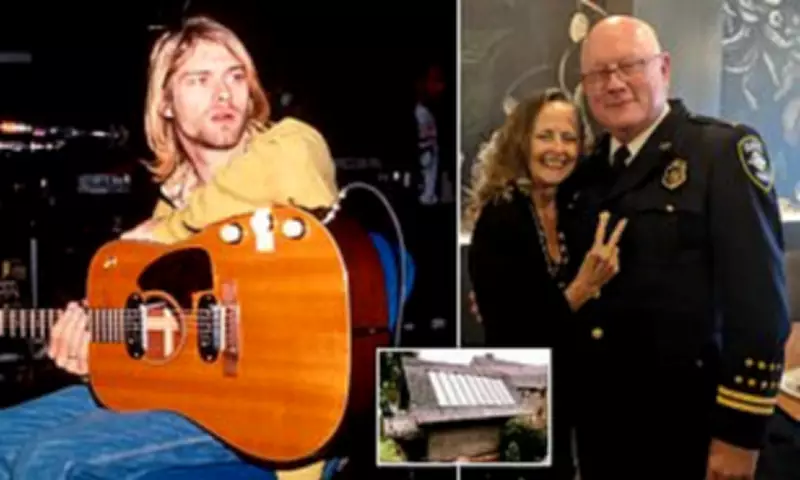
A retired Seattle Police captain with five decades of service has publicly declared that the physical evidence from Nirvana frontman Kurt Cobain's 1994 death scene "does not add up" to suicide. Neil Low, who spent 50 years with the Seattle Police Department (SPD), alleges the investigation was mishandled and potentially staged to appear as a suicide, calling for the case to be reopened as a potential homicide.
Decades of Doubt from Law Enforcement Veteran
Neil Low, who retired in 2018 after rising to the rank of captain, was asked by his chief to conduct an audit of the Cobain case in 2005. During this review, he was granted full access to Cobain's complete file and all evidence collected at the death scene. "I just am not buying that Kurt did that to himself," Low told the Daily Mail, describing the SPD investigation as "botched."
While Low did not participate in the initial 1994 investigation, his extensive law enforcement background gives weight to his concerns. He served as a commander for the South Precinct at the time of Cobain's death before being promoted to captain approximately a decade later.

Anomalies in Evidence and Investigation Procedures
Low cited numerous anomalies that he believes undermine the suicide ruling. He pointed to what he described as inconsistencies in blood evidence, the extreme violence of the shotgun wound, and alleged discrepancies in how the scene was documented and processed. Photographs from the scene appear to show Cobain's hands unusually clean, a finding inconsistent with a self-inflicted shotgun wound of that magnitude.
"The birdshot went into his skull and really did a number," Low explained. "All the pellets were accounted for, but the impact would have been so forceful that it would have produced a significant spray, not just a little, a large spray."
Early Assumptions Shaped InvestigationLow criticized what he called premature conclusions by investigators. He noted that SPD spokesperson Vinette Tishi declared the death a suicide to reporters shortly after Cobain's body was discovered, walking down the driveway with Medical Examiner Dr. Donald Reay. "It was obvious this man is dead from a shotgun wound to the head… Now there was a suicide note left inside the, then house," Tishi said in a recorded interview.
"Such determinations should have come from the medical examiner's office rather than police spokespeople," Low argued. He emphasized that investigators must follow strict standards and avoid drawing evidentiary conclusions without proper qualifications, because early assumptions can shape the entire investigation direction.
Discrepancies in Official Documentation
The retired captain highlighted significant inconsistencies between various official reports:
- The autopsy mentions a handwritten note in black ink found in Cobain's pocket referencing ammunition and the Remington shotgun
- The official 1994 SPD report only noted a receipt for the gun with a friend's name, Dillon Carlson, written on it
- A 1994 SPD report described a Gray Top Cabs driver picking up a passenger from Cobain's residence who "did not match with the residence"
- The same report noted the driver and passenger were unable to locate a store to buy ammunition
- A 2014 SPD report claiming to include previously unseen details omitted both the passenger mismatch and ammunition issue entirely
Independent researcher Michelle Wilkins, working with a team of forensic scientists, has been re-analyzing the case and supports Low's concerns. "The original report explicitly says the passenger didn't match the residence. That alone suggests it may not have been Kurt," Wilkins said. She also noted that Cobain, an experienced gun owner, would likely have known where to buy ammunition, making the reported confusion unusual.
Forensic Procedures and Scene Preservation Concerns
Low raised serious questions about whether proper forensic procedures were followed at the death scene. He expressed concerns about whether investigators collected DNA evidence, scraped Cobain's nails for potential evidence, or adequately preserved the scene from contamination.

The situation resembled "prime scene tourism," according to Low, with too many personnel allowed inside the greenhouse where Cobain's body was found. An SPD report indicates at least 12 officers went in and out of the room where the rock star's body was discovered, potentially compromising evidence integrity.
Medical Evidence Raises Additional QuestionsMedical records indicated that the amount of heroin found in Cobain's system was roughly three times a lethal dose. Low questioned how someone could inject that volume without assistance, given the sheer quantity involved. "Why do the shotgun-to-the-face thing?" he asked. "He was not a violent person. I think he would have been satisfied with a less violent way."
Official Position Remains Unchanged
When asked what processes were conducted to determine whether Cobain's death was a suicide before toxicology and autopsy results were completed, the SPD told the Daily Mail: "Kurt Cobain died by suicide in 1994. This continues to be the position held by the Seattle Police Department."
Cobain died on April 5, 1994, at age 27 from a shotgun wound to the head. His body was found three days later by an electrician installing security lighting at his Seattle home. The King County Medical Examiner ruled his death a suicide by a Remington Model 11 20-gauge shotgun, as the weapon was found in his arms and a suicide note in a nearby potted plant.
That conclusion has been upheld for more than three decades, despite recurring alternative theories surrounding the rock star's death. Low's comments echo some of those theories but are unusual coming from a senior law enforcement figure who says he initially accepted the suicide ruling. "I've read the case, and I can tell you what the evidence says because that's what I did for a living, and it does say not suicide," Low concluded.