In a tearful 999 call during the summer of 2010, Ian Stewart told emergency operators, "My wife had a fit, she's in the garden." At the age of 47, Diane Stewart was believed to have suffered an epilepsy-related death at her home in Hertfordshire. Despite not experiencing a seizure for 18 years, her sudden passing was initially ruled unsuspicious by an inquest.
The Uncovering of a Chilling Truth
It would take twelve long years to uncover the horrifying truth about what really happened to the beloved school secretary on that fateful day. In 2016, Stewart strangled his second partner, Helen Bailey, before concealing her body in the cesspit of their sprawling £1.5 million home in Royston, Hertfordshire.
Helen Bailey, a celebrated children's author known for the popular Electra Brown book series, lay undiscovered alongside her deceased miniature dachshund Boris for three months until police investigators made the grim discovery. When Stewart was convicted of Helen's murder, alarm bells were raised about the death of his first wife Diane seven years earlier and her statistically improbable "1 in 1000" fatal epileptic fit.
A Desperate Charade Unravels
In a desperate attempt to evade justice, Stewart claimed in court that he had returned home to find his wife collapsed in the garden and made frantic efforts to "save her life" with CPR. He had opted for Diane's body to be cremated, but her brain was donated to medical science with his blessing—a decision that would ultimately lead to his conviction for her murder.
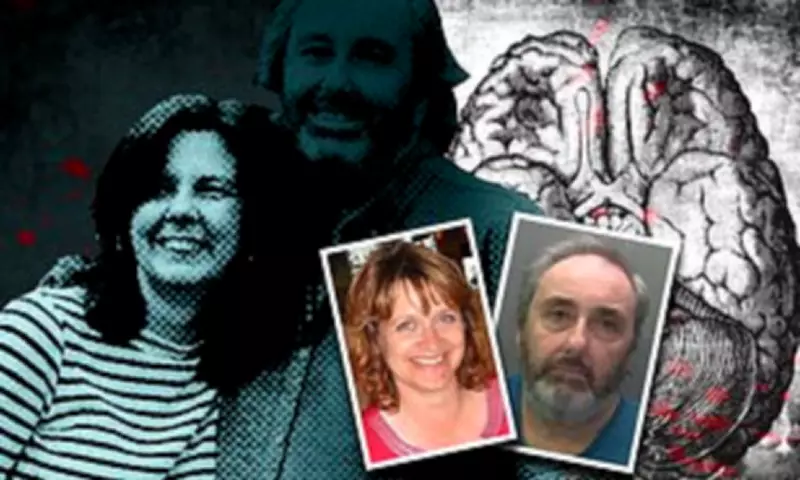
Following an extensive re-examination of Diane's preserved brain tissue, consultant neuropathologist Professor Safa Al-Sarraj discovered that Diane had suffered brain changes consistent with early ischemia rather than an epileptic seizure. The acclaimed expert defined this as "damage to the cells due to a lack of oxygen and blood supply," suggesting she likely died from restricted breathing "for 30 minutes plus."
Consultant neuropathologist Dr. Kieren Allinson also found "no positive evidence of a recent seizure," though he noted he could not completely rule out SUDEP (Sudden Unexpected Death in Epilepsy). These groundbreaking scientific findings would help secure Stewart's conviction more than a decade after the crime.
The Forensic Breakthrough
In February 2022, Stewart was found guilty of murdering Diane at their home in Bassingbourn, Cambridgeshire, and received a whole-life order. At Huntingdon Crown Court, Mr. Justice Bryan described Stewart's feigned 999 call as "harrowing" and "a charade from start to finish."
The Stewart case has since raised crucial questions about post-mortem brain examination and the potential indicators of suspicious deaths. According to former forensic pathologist Dr. James Grieve, patterns of "neurology changes," "blood pressure changes," and even "tiny scars" or "brain injuries" could serve as possible indicators.
The Scottish-based expert, who conducted over 550 post-mortem examinations annually, explained that specialists "look for patterns and distributions of neuronal changes or if someone has suffered a significant brain injury such as a cerebral haemorrhage." He added, "Other things include blood pressure changes to the blood vessels or a tiny scar or tiny tumour."
The Critical Examination Technique
Dr. Grieve noted that the specialist beta-APP staining technique, often used in homicide investigations, can help neuropathologists recognize brain changes and patterns. This method can indicate whether a brain injury—such as head trauma, shaking, or blunt force—occurred within approximately 35-60 minutes before death.
Explaining the challenges of brain examination, he said, "The difficulty in examining a fresh brain is that the consistency of a brain is like jelly, which means it is quite difficult to cut. By no means impossible, but it takes a little bit of skill and care." Despite these challenges, he emphasized that the brain "is a terribly important and vital organ" that must be examined carefully when "subtle changes" or abnormalities are suspected.
Tracy Alexander, director of forensic services for the City of London Police, explained that Professor Safa Al-Sarraj would have examined "the brain tissue with a microscopic examination in order to say what he thought that the range and distribution of the injuries are." Alexander, who played a key role in the Stephen Lawrence murder investigation, acknowledged the Stewart case was a "rarity."
A Freak Set of Circumstances
"If he hadn't been found guilty of Helen's death then he probably would have gotten away with both," Alexander noted. "Nobody would have looked at her brain because why would you? It was a freak set of circumstances, but aren't we glad that he got convicted eventually."
While the circumstances were certainly unusual, Stewart's double conviction highlighted the critical importance of forensic brain examination in solving Britain's most serious crimes. Dame Professor Dawson, head of the Centre for Forensic Soil Forensic Science at the James Hutton Institute, told The Daily Mail, "The particular significance of the Diane Stewart case was that it showed how evidence preserved for medical, not forensic, reasons can later become pivotal in a criminal investigation."
"The examination of her brain provided objective, scientific proof of poisoning that could not be explained away and ultimately overturned as an apparent natural death," she added.
Financial Motives Revealed
While Stewart's heinous crimes may never be fully understood, Judge Mr. Justice Simon Bryan declared during Diane's trial in 2022 that he was "satisfied that the major motive for her murder was for financial gain." The killer received £96,607.37 after Diane's death from life insurance payouts and her savings, while he also stood to gain £1.8 million if Helen Bailey died.
Stewart had first contacted Helen Bailey through an online bereavement group while supposedly grieving his first wife's death. Helen, who had lost her husband when he drowned in front of her during a Barbados holiday, had coped with her grief through writing. Her blog Planet Grief was turned into a successful book, When Bad Things Happen In Good Bikinis, which was serialized in The Daily Mail.
Within two years of making contact, the couple sold their respective homes and purchased a stunning Arts and Crafts house with an outdoor pool and an acre of land in Royston, Hertfordshire. Believing Stewart to be her "happy ending" with her writing career flourishing, Helen thought she had finally found contentment—shortly before he strangled her.
The Ultimate Downfall
Stewart denied murdering his wife and described his conviction for Helen Bailey's murder as a "miscarriage of justice" during the trial at Huntingdon Crown Court. Ultimately, his careless decision to allow the donation of Diane's brain led directly to his conviction for his second crime.
During the sentencing hearing, Judge Justice told Stewart, "You successfully passed off a murder as an epileptic fit in the circumstance I have identified playing out an elaborate, and indeed sophisticated, charade over a period of time. A charade that succeeded at the time, and would have succeeded for all time but for your subsequent murder of Helen Bailey."
"It no doubt never crossed your mind that the donation of Diane's brain for teaching and research would lead to your ultimate downfall and your conviction today for the murder of Diane Stewart," he added. In 2022, Stewart successfully appealed against his whole-life order, which was reduced to life with a 35-year minimum term.