Fugitive Cop Killer Dezi Freeman Shot 27 Times in Dramatic Standoff
The body of fugitive Dezi Freeman was reportedly riddled with bullet holes, resembling 'Swiss cheese', after he was shot up to 27 times during a tense confrontation with heavily armed police officers. The incident occurred at an isolated off-grid compound in rural Victoria, bringing a dramatic end to a seven-month manhunt.
Early Morning Confrontation at Remote Farm
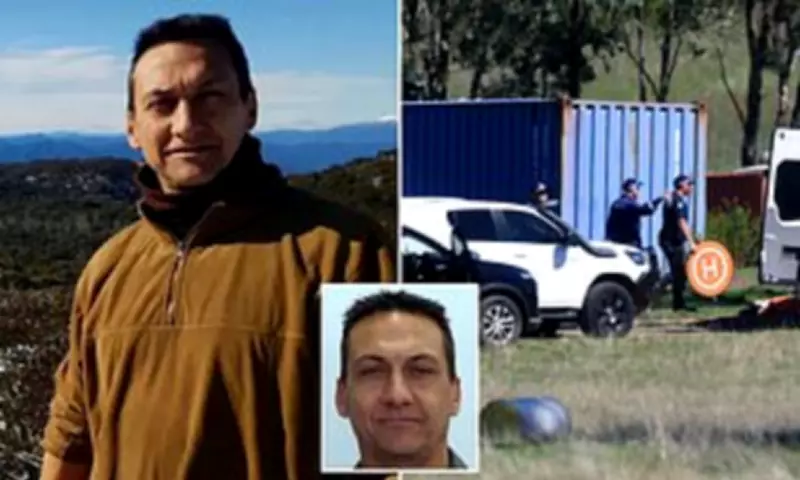
The fatal shooting took place at approximately 8:30am on Monday at Tholo Farm near Walwa, located approximately 188 kilometers northeast of Porepunkah. Freeman had been discovered hiding inside a 'long caravan' at the property, which authorities described as a makeshift campsite within a shipping container.
Footage from the scene showed Freeman emerging from the container wrapped in a blanket before suddenly pulling a firearm from underneath the covering and pointing it directly at police officers. This action triggered the deadly response from the tactical team.

Background of a Violent Fugitive
Dezi Freeman had been on the run since August 26 last year after he fatally shot two police officers: Detective Leading Senior Constable Neal Thompson, aged 59, and Senior Constable Vadim de Waart-Hottart, aged 34. For months, there had been no confirmed sightings of the fugitive until a local resident from Thologolong reportedly spotted him at the camp near the Victoria-New South Wales border and alerted authorities.
'He looked like Swiss cheese,' a police source told the Herald Sun, describing the aftermath of the shooting. The confrontation marked the conclusion of one of Australia's most extensive manhunts in recent memory.
Questions Surrounding the Operation
Accounts of how the police operation unfolded have varied, with Victoria Police confirming that an independent investigation will be conducted as per standard protocol. The Daily Mail reported that police may have fired as many as 27 rounds during the early morning showdown.
Significant questions have emerged about who alerted police to Freeman's location, particularly after a $1 million reward had been offered for information leading to his capture. Victoria Police Chief Commissioner Mike Bush stated that any details about potential tip-offs would remain confidential and declined to address speculation about what prompted the operation.
Communications During the Manhunt
Additional communications from Freeman during his time as a fugitive have come to light as scrutiny intensifies on the seven-month search. Hours after fleeing the scene where he killed the two officers, Freeman reportedly sent a text message to his wife, Mali, stating 'see you in heaven'.
This communication initially helped detectives establish a search area of approximately 10 to 15 kilometers from the couple's home in Porepunkah. A few days later, Freeman made a call to an associate in which he reportedly said he 'f***ed up', but police were unable to determine his location despite intercepting the call.
Seven months later, Freeman was discovered 180 kilometers away from the original search area, raising questions about how long he had been hiding at the 35-hectare farm property.
Coronial Investigation to Follow
As the massive police search concludes, a coroner will now take over the investigation and examine the circumstances surrounding the seven-month period Freeman was on the run. The coroner will investigate the deaths of both police officers and Freeman in detail to establish how they died and what could be done to prevent similar tragedies in the future.
Queensland University of Technology forensic criminologist Claire Ferguson explained that the coronial process will involve compiling a brief of evidence, calling witnesses to give testimony, and examining Freeman's final moments along with the police decision to use lethal force.
'They'll have a full reconstruction of what actually occurred, and that might be establishing people's exact positioning in the scene and forensic evidence,' Dr. Ferguson told AAP.

Technological Reconstruction of Events
The investigation will utilize highly technological 3D reconstruction supported by statements from officers involved, analysis of Freeman's actions and appearance, examination of firearms present, and review of the decision-making process that led to the shooting.
Minute details including bullet trajectories and medical response procedures will be documented to provide the coroner with a comprehensive understanding of events. 'They will be doing this investigation in as much detail as possible, and then the coroner will make recommendations based on that,' Dr. Ferguson added.
Unanswered Questions and Future Transparency
It remains unknown whether Freeman fired his weapon before multiple officers discharged their firearms, as the footage has not been released to the public or press. Bond University criminologist Terry Goldsworthy noted that whether this video will ever be made public depends on whether the coroner believes transparency and accountability would be served by its release.
'It's not beyond the realm for the coroner to think this footage will show police did all they could and to make sure that there's no conspiracy theories that Freeman was unlawfully shot,' he said.
Additional Allegations and Closure for Families
Child sexual abuse allegations previously leveled against Freeman will be investigated as part of the coronial process to inform understanding of why police initially attended his property, though no finding of guilt will be made through this avenue, according to Dr. Goldsworthy.
For the families of both the slain police officers and Freeman, the coronial process represents a potential path toward closure. 'This will be the final stage of closure for them when the coroner holds the inquest and delivers a finding,' Dr. Goldsworthy concluded.
During the three-hour siege that preceded the shooting, police used loudspeakers to communicate with Freeman before deploying flash-bang grenades and gas in an attempt to resolve the situation without further violence.