US Army Veteran Faces Espionage Charges Over Delta Force Leaks
A retired United States Army veteran has been formally charged with disclosing highly classified information concerning the elite Delta Force commando unit to a journalist. The case, which has ignited fierce debate about whistleblower protections and press freedom, centres on allegations that sensitive military secrets were published in both an article and a book.
Arrest and Allegations Against Courtney Williams
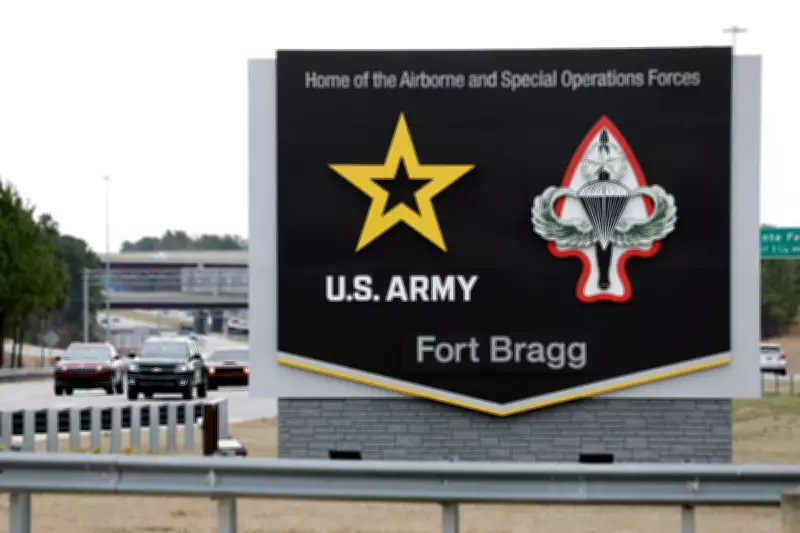
The Federal Bureau of Investigation arrested Courtney Williams, aged 40 and from Wagram, North Carolina, earlier this week. According to a detailed news release from the U.S. Department of Justice, Williams is accused of sharing classified details about a "special military unit" stationed at Fort Bragg, North Carolina, where she was employed between 2010 and 2016.
"Anyone divulging information they vowed to protect to a reporter for publication is reckless, self-serving and damages our nation’s security," stated Reid Davis, the FBI special agent in charge for North Carolina, in the official release. Federal prosecutors allege that from 2022 through 2025, Williams transmitted classified material that was subsequently utilised by a journalist in published works.

Williams, now charged with violating a specific provision of the Espionage Act, made an initial appearance in Raleigh federal court on Wednesday. The court ordered her to be held in custody by the U.S. Marshals Service pending a preliminary hearing scheduled for April 13th.
Connection to Journalist Seth Harp and His Publications
While the court documents do not explicitly name the journalist or the military unit involved, the provided dates and contextual details strongly correspond with an investigative article and a book authored by Seth Harp, which focus on the Army's secretive Delta Force. Williams was also prominently featured in a 2025 Politico article titled, "My Life Became a Living Hell: One Woman’s Career in Delta Force, the Army’s Most Elite Unit."
This Politico piece was published contemporaneously with the release of Harp's book, The Fort Bragg Cartel. The book profiles Williams and details her allegations of sustained sexual harassment and abuse during her tenure at Fort Bragg. In a statement provided to WRAL-TV, Harp defended Williams, calling her "a brave whistleblower and truth-teller" who is facing unfair prosecution.
"Former Delta Force operators disclose 'national defense information' on podcasts and YouTube shows every day, but the government is going after Courtney for the sole reason that she exposed sexual harassment and gender discrimination in the unit," Harp's statement continued. "This is a vindictive act of retaliation, plain and simple."
Broader Implications for Press Freedom and Whistleblowers
The case has drawn sharp criticism from press freedom and civil liberties advocates. Seth Stern, the chief of advocacy for the Freedom of the Press Foundation, argued that the systemic issues revealed in Harp's book pose a greater threat to national security than Williams's alleged actions.
"Ask anybody who has read 'The Fort Bragg Cartel' which they think is the real threat to national security: Seth Harp’s sources, or the rampant corruption and criminality they enabled him to document. The administration knows the answer to that question, and that’s why it wants to punish whistleblowers and chill investigative reporting by bringing cases like this one," Stern asserted.
Chip Gibbons, policy director for Defending Rights & Dissent, criticised the application of the Espionage Act, stating it enables "the surveillance of journalists even when they are not the target of a criminal investigation." He added, "The flimsy indictment appears to be based mostly on speculation, further suggesting that this is retaliation against a public critic of the U.S. military and an attempt to surveil a critical reporter."

The Justice Department's Case and Evidence
Contrasting these defences, the Justice Department outlines a methodical case. Officials state that during her employment from 2010 to 2016, Williams received specific "training as to the proper handling, safeguarding, and storage of classified information" and signed a binding nondisclosure agreement. This agreement explicitly confirmed her understanding that unauthorised disclosure could constitute a criminal offence.
Prosecutors allege that between 2022 and 2025, Williams engaged in over ten hours of phone calls and exchanged more than 180 messages with the journalist. In one communication, the journalist identified themselves as such and stated they were seeking information for an upcoming article and book. Following these interactions, the journalist published works naming Williams as a source and attributing statements to her, some of which prosecutors claim contained classified national defence information.
Notably, on the day the article and book were published, Williams exchanged messages with the journalist expressing concern "about the amount of classified information being disclosed." In a separate message to a third party, she wrote, "I might actually get arrested…for disclosing classified information," and later referenced the Espionage Act. When the journalist questioned how she knew of the potential legal consequences, Williams replied, "I have known my entire career," adding that "they tell you everyday…100 times a day." In another message, she stated, "I am probably going to jail for life."
The investigation is being conducted by the FBI's Charlotte Field Office, underscoring the serious national security dimensions of this unfolding legal drama.