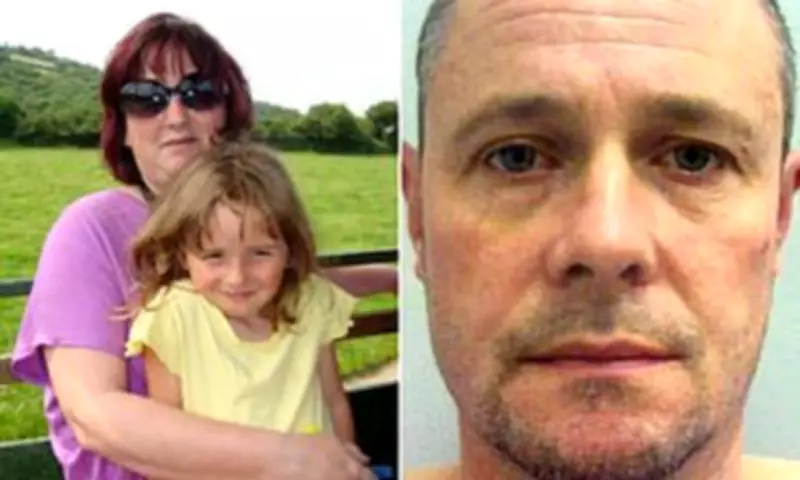
The mother of murdered schoolgirl April Jones has given her backing to proposed new legislation against body desecration, stating that her daughter remains 'still missing in the eyes of the law.' April was just five years old when she was abducted and murdered by paedophile Mark Bridger at her home in Machynlleth, Wales, back in 2012. Bridger, who is serving a life sentence for her murder, has never disclosed what he did with her body, leaving the family in a state of perpetual grief and uncertainty.
A Search That Yielded Little Closure
Despite an extensive search operation, only minor bone fragments from April's skull were discovered in Bridger's home, specifically within a fireplace. These fragments were later buried at her funeral. April's mother, Coral Jones, has since become a vocal supporter of calls to establish a new criminal offence of 'body desecration.' She expresses a deep, ongoing longing for the opportunity to lay her daughter to rest properly in a grave, a wish that remains unfulfilled due to the lack of her body.
Emotional Testimony in the Senedd
During a Senedd debate held on Wednesday, 28 January, Plaid Cymru MS Cefin Campbell quoted Coral Jones' poignant words: 'As she said, "My little girl is still missing in the eyes of the law."' He elaborated on the heart-wrenching reality faced by the family, noting that the funeral took place with an almost empty coffin. Inside were only a few small pieces of bone and some personal items that Coral had placed there herself. There was no body to lay to rest, no real goodbye, which has profoundly affected Coral's ability to find peace.

Mr Campbell revealed that Coral cannot bring herself to visit April's grave, knowing her daughter isn't truly there. Instead, she has created a garden at home, a personal sanctuary where she can feel close to her child, because the current law cannot provide her with that solace. He emphasised that she lives every day with the knowledge of what was done to her daughter's body after death, a knowledge that continues to haunt her, shaping her grief and damaging her health.
The Call for Legal Reform
Mr Campbell argued that the offences for which April's killer was convicted do not fully reflect the true horror of his actions. Coral conveyed to him her support for the creation of a new offence of desecrating a body, pointing out that while her daughter's killer will never be released, others might be. Families should not be forced to endure this added cruelty, which remains unrecognised and unnamed in law. Coral's words are simple yet devastating: 'I still want to put April to rest properly.'
The Tragic Case of April Jones
April was abducted by Bridger while playing outside with a friend on the evening of 1 October 2012. Her disappearance triggered the largest missing person search in UK police history, involving approximately 650 areas near her hometown and 45 police forces from across the UK. Bridger, who was 46 at the time, was arrested less than 24 hours after her disappearance on 2 October.
Initially, Bridger told police he had run April over while she was riding a bike with a friend and could not recall disposing of her body due to being drunk. However, his car showed no signs of a collision, and April's seven-year-old friend stated that she willingly got into Bridger's car. A subsequent search of Bridger's house revealed April's blood in his bathroom and living room, along with child pornography on his computer and Facebook pictures of April.
Trial and Sentencing
Bridger was tried for April's murder in April 2013 at Mold Crown Court and found guilty of three charges: murder, abduction, and unlawfully disposing of and concealing her body. Judge John Griffith Williams stated that Bridger sexually abused the schoolgirl before disposing of her body. At the end of the trial, April's family appealed for him to reveal where her body was, expressing that they would struggle to move on without recovering it. However, Bridger refused to disclose what he did with her body; it is believed he burnt her remains and scattered the ashes across the countryside near his house. He was sentenced to life imprisonment with a whole life order, making him ineligible for parole.

Current Legal Gaps and Proposed Changes
At present, there is no explicit offence of desecration of a dead body in England or Wales. The Law Commission, which is currently reviewing laws surrounding offences against dead bodies, has indicated that criminal law does not 'adequately deal' with the desecration of a corpse. It has identified several gaps in criminal law regarding the mistreatment of a deceased person's body.
These concerns relate to both sexual and non-sexual offences toward corpses, such as intimate image abuse, mutilation, and a killer's refusal to provide the location of the victim's body. The Commission seeks to modernise outdated laws surrounding desecration to protect the human dignity of the deceased, ensure legal clarity, and address gaps in how bodies are protected. This reform is seen as crucial for providing closure to families like Coral Jones', who continue to suffer due to legal shortcomings.