From contemporary terms like 'vibe-coding' to the digital shorthand '6,7', new slang emerges constantly in modern Britain. Yet linguistic fashion is cyclical, with forgotten phrases often resurfacing generations later. Now, a remarkable historical artefact offers a window into the secret language of London's streets over three centuries ago.
A Dictionary Born of Necessity
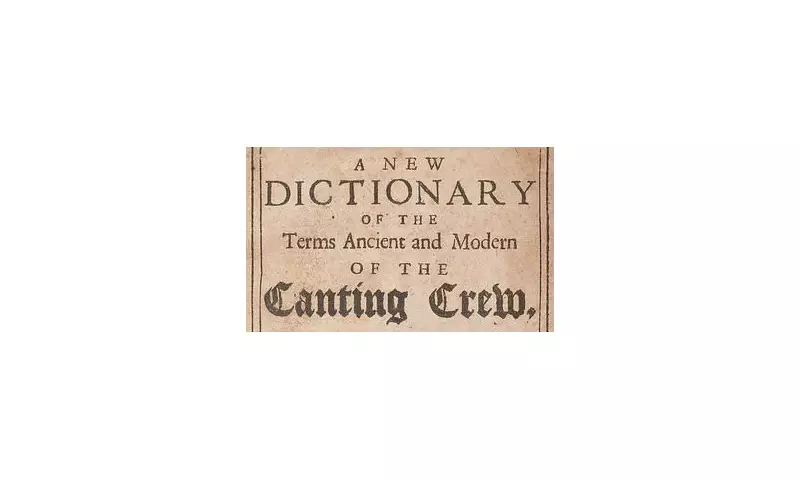
Published in 1699, the 'New Dictionary of the Terms of the Canting Crew' served a practical purpose: to protect unsuspecting visitors to the capital from robbery or worse. Author B.E. Gent meticulously documented hundreds of slang words employed by street criminals to communicate covertly. The dictionary's cover explicitly states it was 'useful for all sorts of people, especially foreigners, to secure their money and preserve their lives.' This wasn't merely an academic exercise but a survival guide for navigating perilous urban environments.
Lost Language of the Underworld
The majority of these colourful terms have vanished from common usage. Who today would recognise 'fuddle-cups' as describing a drunkard, or 'catch-fart' as a footboy? A 'fat cull' denoted a wealthy man, while 'muck' simply meant money. The dictionary reveals that an 'Adam-tiler' was a pickpocket's accomplice, and 'baggage' was a derogatory term for a sex worker. Some entries display the author's whimsical curiosity as much as linguistic documentation, including words that bear little relation to actual criminal cant.

Yet several documented words demonstrate remarkable longevity. 'Banter', 'mumble', and 'rabble' have seamlessly transitioned into modern English, their 17th-century origins largely forgotten. The dictionary explains that while 'cackling-farts' sounds vulgar, it merely referred to eggs. A 'jenny' was a specialised tool used by shoplifters to lift grates and steal from shop windows. One particularly vivid phrase advises: 'We'll go and suck our faces, but if they toute us, we'll take rattle and brush' – essentially meaning 'Let's go drink and be merry, but if the household notices us, we must flee.'
Rare Auction Opportunity
This extraordinarily rare first edition is scheduled for sale on January 28 at Dominic Winter Auctioneers in Cirencester, with an estimated value between £3,000 and £4,000. Auction house experts describe it as 'the first comprehensive dictionary of slang' and 'perhaps the most important dictionary of slang ever printed', noting its significant influence on later linguistic compilations. Little is known about the mysterious B.E. Gent beyond what his work reveals – likely an antiquarian with a fascination for the vernacular of England's underworld.
Historical Context and Modern Resonance
This discovery coincides with contemporary linguistic research highlighting a resurgence of regional slang. Language learning platform Preply recently identified dramatic increases in usage of terms like 'lass' (up 211%), 'owt', and 'scran'. Anna Pyshna, a Preply spokesperson, explains: 'Regional slang often holds unique cultural significance and identity. While traditionally confined to local communities, these terms are now spreading into wider everyday conversations, embracing the diversity of British regional dialects.'
The 1699 dictionary serves as more than just a linguistic curiosity; it's a fascinating piece of British social history. It captures the vibrant, dangerous atmosphere of Restoration London while demonstrating how language evolves across generations. As forgotten slang terms experience modern revivals, this historical document reminds us that today's trendy phrases might echo vocabulary used by criminals, traders, and ordinary Londoners over three centuries ago.