Major Cross-Border Operation Targets Illegal Amazon Gold Mining
In a significant international law enforcement effort, nearly 200 people have been arrested across four South American nations in a coordinated crackdown on illegal gold mining in the Amazon rainforest. The operation, which represents the first joint cross-border initiative of its kind, involved police and prosecutors from Brazil, French Guiana, Guyana, and Suriname working in unison to combat the escalating environmental and criminal threat.
Widespread Seizures and Arrests Across Remote Border Regions
The extensive operation, backed by Interpol, the European Union, and Dutch environmental crime specialists, involved more than 24,500 checks on vehicles and individuals across remote border areas. Authorities reported substantial seizures including cash, unprocessed gold, mercury, firearms, drugs, and specialised mining equipment. Among those detained were three men in Guyana suspected of gold smuggling and money laundering after officers confiscated unprocessed gold and approximately $590,000 in cash. Investigators believe these individuals may be connected to an organised crime group with potential links to a major gold exporting company operating within Guyana.
Toxic Mercury and Environmental Devastation
Authorities made particularly concerning discoveries of mercury cylinders valued at over $60,000 in Guyana and Suriname. This highly toxic substance is commonly employed in illegal gold mining operations to separate gold from other materials, but its use leads to severe contamination of rivers, wildlife, and local communities. Interpol revealed that the mercury had been concealed within solar panels and transported via bus, demonstrating the sophisticated methods employed by criminal networks. The environmental impact of these activities is profound, with illegal gold mining becoming a primary driver of deforestation and river pollution throughout the Amazon basin.

Coordinated Border Checks and Human Trafficking Concerns
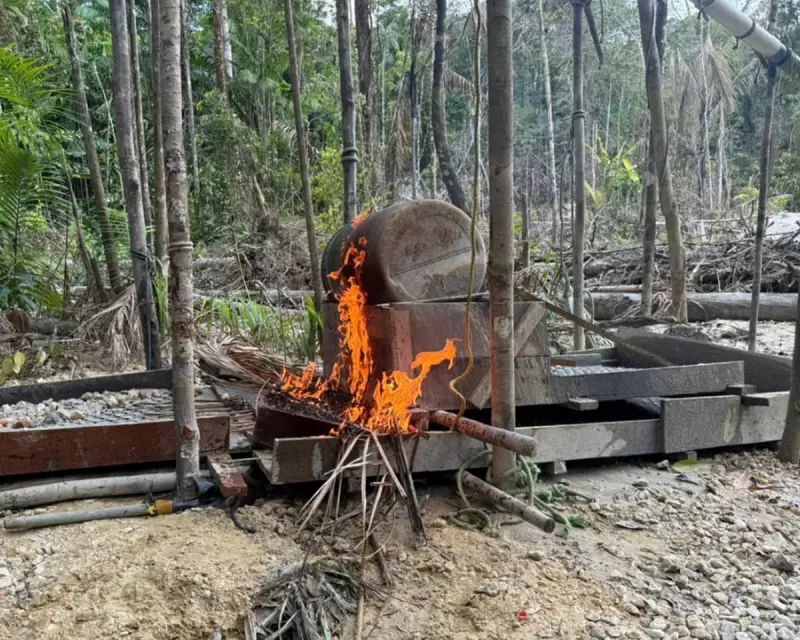
Police conducted meticulously coordinated checks along shared borders, including simultaneous inspections on both sides of rivers that separate the participating nations. Officers searched vehicles, boats, and small riverside establishments that supply fuel, tools, and other materials commonly used in illegal mining operations. Some of these shops are suspected of facilitating the cross-border smuggling of gold and mercury. During the operation, authorities also confiscated counterfeit medicines, alcohol, and cigarettes worth more than $40,000, alongside mining pumps, gold collection mats, firearms, and mobile communication devices.
Disturbingly, officers intercepted a bus carrying undocumented migrants, including several minors. Some of these children are suspected victims of forced labour or sexual exploitation, highlighting the severe human rights abuses associated with illegal mining networks. This discovery underscores the multifaceted human impact of these criminal enterprises beyond environmental destruction.
Growing Threat and International Cooperation
Illegal gold mining has expanded rapidly in recent years as global gold prices have approached record highs, pushing miners deeper into remote forest regions and transforming gold into one of the most profitable commodities for transnational organised crime. Interpol's Secretary General, Valdecy Urquiza, emphasised in an official statement that "illegal gold mining is growing rapidly and causing serious harm to the environment and local communities, especially in remote and fragile areas."
The operation, known as Operation Guyana Shield, marks a substantial advancement in regional cooperation against environmental crime in the Amazon, where dense rainforest, vast distances, and porous borders have historically complicated policing efforts. This collaborative approach demonstrates a growing international recognition of the urgent need to address the interconnected challenges of environmental degradation, organised crime, and human exploitation in one of the world's most vital ecosystems.