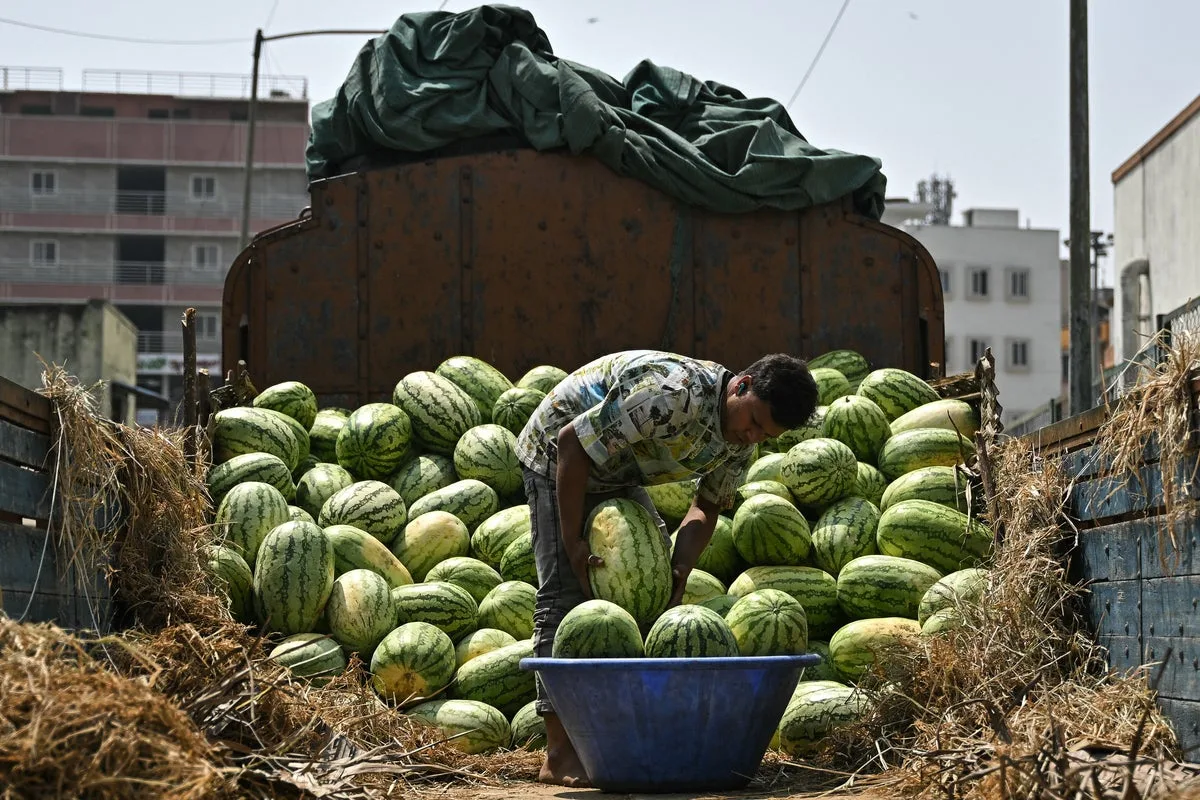
A family of four in Mumbai died after eating watermelon laced with rat poison, forensic investigators have confirmed. The deaths, which occurred on 27 April, initially sparked panic and caused watermelon prices to plummet in the region.
Abdullah Dokadia, 45, his wife Nasreen, 35, and their daughters Ayesha, 16, and Zainab, 13, died at their home in Pydhonie, Bhendi Bazaar. They had hosted nine guests for dinner and served biryani. After the relatives left, the family ate watermelon around 1am. By 5am, all were severely ill with vomiting, stomach pain and diarrhoea, and died soon after being taken to hospital.
None of the dinner guests, who had eaten the same biryani earlier, fell ill. Forensics tests confirmed the presence of zinc phosphide, a toxic chemical used in rat poison, in both the fruit and the victims' internal organs. Police said no other food tested positive for the toxin.
An unnamed forensics official noted that there was no indication of external contamination on the fruit; the poison was inside, making it unlikely to have entered via injection. The family had vomited out much of the toxin, requiring 54 rounds of testing to identify trace amounts.
Authorities in Maharashtra have not yet decided whether to register the case as homicide or an accident. Deputy police commissioner Pravin Mundhe stated that the report will be studied in depth and further investigation will continue. Police had initially registered a case of accidental death.
In the wake of the tragedy, demand for watermelon in the region fell by nearly 30 per cent, with traders selling the fruit for as little as Rs 5-7 (4-5p) per kilo, a fraction of the usual price.