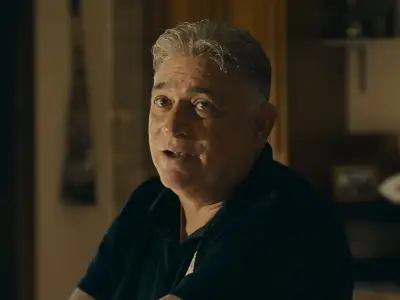
More than four decades on, the memory remains vivid for retired police chief Don Evans. In June 1983, he was called to a remote beach in Pembrokeshire, west Wales, to investigate a discovery so bizarre it seemed plucked from a spy novel.
A Discovery Straight From a Spy Film
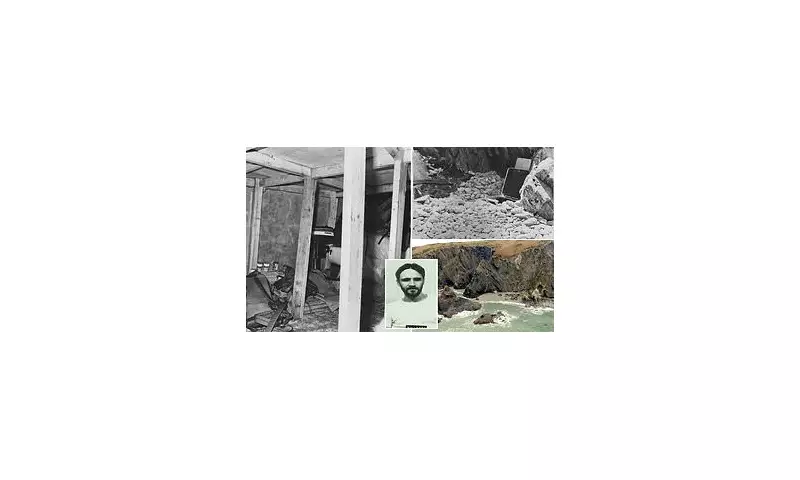
What awaited Detective Chief Inspector Don Evans and his colleague DCI Derek Davies on Traeth Cell Hywel beach, south of Ceibwr Bay, was extraordinary. Locals had found a yacht hatch, perfectly flush with the pebbles. Beneath it, a ladder descended into a man-made cavern hollowed from the rock and meticulously lined with fibreglass resin to keep it dry.
Inside was pristine boating equipment, including engines, laid out as if ready for immediate use. "It was unique – a work of art, no question," recalls Don Evans, now 88, speaking ahead of a new BBC documentary, Cannabis Cove: Operation Seal Bay. "We were absolutely amazed and shocked that anyone had been able to dig out all those pebbles and sink it at ground level."
The clandestine chamber's purpose was far from fantastical. Police quickly realised it was intended as a stash point for three tonnes of cannabis worth £7 million. This was the hub of a sophisticated international smuggling operation.
The Plot Unravels: From Local Tips to International Manhunts
The investigation, codenamed Operation Seal Bay, began to gain traction thanks to an alert local community. Months earlier, in November 1982, a bale of Lebanese cannabis worth £80,000 had washed ashore nearby, hinting at larger criminal activity.
Now, fishermen reported interference with lobster pots. One, Andy Burgess, discovered thousands of pounds worth of new boating gear hidden under a tarpaulin on Seal Bay. When he confronted a stranger, the man spun a tale about a secret expedition, raising suspicion.
Meanwhile, in Newport's pubs, mysterious newcomers were flashing £50 notes—a small fortune at the time—and ordering lavish meals. Flashy cars, including a Porsche and a white Rolls-Royce, appeared on quiet country lanes.
The breakthrough came on the very day the bunker was found. A tall, weary-looking stranger was spotted trespassing on a clifftop farm. Farmer John Weston-Arnold asked his 19-year-old daughter, Sue, to follow the man in their truck. "It felt quite exciting - like I was playing detective," Sue Warner recalls.
Police, given a description of the man in a blue anorak, soon arrested him. He gave his name as Robin Boswell. Crucially, his boots were coated in the same fibreglass resin used in the bunker.
Masterminds and Millionaire Traffickers Exposed
The net began to close. A local poacher had noted the registration of a white Range Rover seen fleeing the area. Police stopped it on the M4 and arrested the driver, Kenneth Dewar. He gave the same London address as Boswell and was also covered in fibreglass resin.
Another man, found sprinting near a remote caravan, claimed to be 'Sam Spanggaard' from Denmark. "He was quite a charming fellow... who smiled all the time," Don Evans remembers. Contact with Copenhagen police revealed the identity was stolen. The man in custody was in fact Soeren Berg-Arnbak, a notorious international drug trafficker and prison escapee who had been on the run for eleven years.
Nicknamed 'the man with the rubber face', Berg-Arnbak had lived a millionaire lifestyle across Europe. "They described him as one of the biggest traffickers in the world," says Evans.
Further inquiries linked the gang to Donald Henry Holmes, known as 'Safari Jo', who was already under investigation for cocaine dealing in London. A raid on his safety deposit box yielded more evidence.
The final, damning testimony came from a Welshman referred to as 'Jim'. In a marathon 36-hour interview, he laid out the entire plan: a mother ship would collect cannabis, swiftly unload it into the inflatable boats, which would then stash the haul in the secret beach bunker. "I couldn't believe it. It was stunning – a whole cave they'd built under the pebbles," Jim said.
The Verdict and Lasting Legacy
Despite never intercepting the main cannabis shipment, the circumstantial evidence was overwhelming. In 1984, at Swansea Crown Court, the ringleaders were convicted. Robin Boswell was jailed for ten years, Soeren Berg-Arnbak for eight, Kenneth Dewar for five, and Boswell's ex-wife Susan for eighteen months.
For Don Evans, who retired as Chief Superintendent in 1991, the case remains one of the most extraordinary of his career. It was cracked not by high-tech surveillance or international agencies, but by the vigilance of a close-knit Pembrokeshire community.
"This particular international drug smuggling was the largest in the UK at that time and the local community support was incredible," Evans reflects. "If it hadn't been for their being so observant we might never have known from the start who was involved."
From the farmer who spotted the wooden slat to the pub staff suspicious of lavish spenders, it was their watchfulness that exposed one of Britain's most audacious drug smuggling plots and prevented three tonnes of cannabis from flooding onto the streets.
Cannabis Cove: Operation Seal Bay airs on BBC One Wales at 9pm.