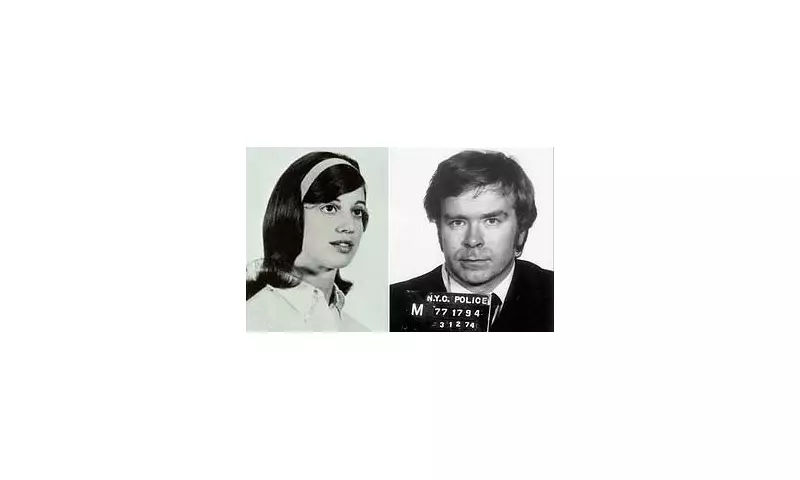
In a chilling breakthrough, one of America's most prolific serial killers has confessed to a murder that had remained unsolved for nearly sixty years. Richard Cottingham, infamously known as the 'torso killer', has admitted to the 1965 slaying of 18-year-old nursing student Alys Jean Eberhardt.
A Confession from the Brink of the Grave
The Fair Lawn Police Department in New Jersey made the startling announcement, revealing that the confession was secured on December 22, 2025. This was only possible after a critical medical emergency in October nearly claimed Cottingham's life. Investigative historian Peter Vronsky, who assisted detectives, described a 'mad dash' to extract the truth before the killer, now 79, could take his secrets to the grave.
Working alongside Sergeant Eric Eleshewich and Detective Brian Rypkema, Vronsky helped obtain the admission that closes the book on Eberhardt's murder. This case now stands as the earliest confirmed killing in Cottingham's horrific timeline, committed when he was just 19 years old.

The Brutal 1965 Attack
The details of the murder are harrowing. On September 24, 1965, Alys Jean Eberhardt left her dormitory at Hackensack Hospital School of Nursing early to attend her aunt's funeral. The tall, auburn-haired student drove to her family home in Fair Lawn, where she planned to meet her father before travelling to upstate New York.
Cottingham, who had spotted her in a parking lot, followed her home. Posing as a police officer with a fake badge, he knocked on the door. When Eberhardt informed him her parents were out, he asked for paper to leave a note. Seizing the moment she stepped away, Cottingham forced his way inside.
He grabbed an object from the family's garage and bludgeoned the teenager to death. In a sadistic and calculated act, he then used a rare souvenir dagger to make 62 shallow cuts on her chest and neck—intending to mimic the 52 cards in a deck—before stabbing her in the throat with a kitchen knife.
Her father, Ross, discovered her partially nude and battered body on the living room floor around 6 p.m. Cottingham had already fled through a back door, taking the weapons with him to discard elsewhere.
A Killer Without Remorse
During his confession last month, the elderly killer, serving multiple life sentences for up to 20 murders, showed little emotion. Sergeant Eleshewich noted that Cottingham 'doesn't understand why people still care'. The detective revealed that Cottingham admitted this early murder was 'sloppy', unlike his later, more methodical crimes, and that he was frustrated by Eberhardt's fierce resistance, which 'foiled his plans'.
Cottingham is suspected of killing between 85 and 100 women and girls, with the youngest victim aged just 13. Historian Peter Vronsky, who has authored books on serial homicide, asserts that Cottingham was a 'ghostly' predator for at least 15 years, whose methods were wildly varied. 'Cottingham's MO was no MO,' Vronsky told the Daily Mail. 'He stabbed, suffocated, battered, ligature-strangled and drowned his victims.'
Vronsky believes Cottingham began killing years before Ted Bundy, stating he 'was Ted Bundy before Ted Bundy was Ted Bundy', using similar ruses to abduct victims.
Closure for a Family After Six Decades
The case was reopened in the spring of 2021, leading to the recent confession. Upon learning the truth, police notified Eberhardt's family, finally ending a nightmare that began in 1965. They also informed a retired detective from the original investigation, who is now over 100 years old.
In a moving statement, Eberhardt's nephew, Michael Smith, spoke for the family: 'Our family has waited since 1965 for the truth... We will never know why, but at least we finally know who.' He expressed profound gratitude to the Fair Lawn Police for their persistence, which brought a 'long-overdue sense of peace'.
The confession was also a posthumous victory for Vronsky's late investigative partner, Jennifer Weiss, whose mother was one of Cottingham's victims. Weiss, who forgave Cottingham before her death from a brain tumour in 2023, was credited by Vronsky for her instrumental role in compelling the killer to confront his past. Her forgiveness, he said, had a 'profound effect' on Cottingham.