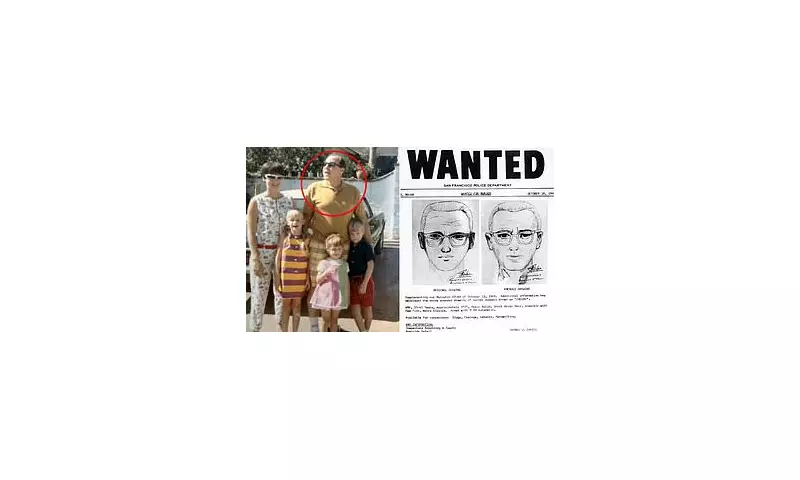
Nearly six decades after the Zodiac killer terrorised California, a new suspect has been identified by independent investigators, with his own family now revealing a history of deeply troubling behaviour. Marvin Merrill, a former US Marine who died in 1993, has been named as the potential perpetrator behind both the infamous Zodiac murders and the 1947 killing of Elizabeth Short, known as the Black Dahlia.
Family Portrait of a 'Pathological Liar'
Speaking exclusively to the Daily Mail on the 79th anniversary of the Black Dahlia murder, Merrill's relatives painted a portrait of a manipulative and unstable man. His niece, identified only as Elizabeth, described her uncle as a 'pathological liar' who repeatedly conned his own family. She recounted how he stole money from his mother and in-laws, and even sold artwork that belonged to his brother, her father.
'He borrowed money from his in-laws for a house. He was supposed to pay them back when he sold the house, and never did. That's the kind of man he was,' Elizabeth stated. She explained that Merrill would often 'disappear' for long periods, with family only able to trace his location through the Veterans Affairs hospitals where he collected medication.

The Evidence Linking Merrill to Historic Crimes
The identification of Marvin Merrill as a suspect stems from the work of cold case consultant Alex Baber. Baber decoded a cipher mailed to the San Francisco Chronicle by the Zodiac killer in 1970, which allegedly revealed Merrill's name. This breakthrough came after the Zodiac's two-year spree in the late 1960s, which included five murders and two woundings around the San Francisco Bay Area.
Furthermore, investigators uncovered a trove of evidence suggesting a link to the gruesome 1947 murder of aspiring actress Elizabeth Short, the Black Dahlia. Property records place Merrill in southern California during the 1960s Zodiac attacks. His military records, released from Black Dahlia investigatory files, show he was discharged on 50 per cent mental disability grounds, with notes describing him as 'resentful', 'apathetic', and having an affinity for 'aggression'.
Family Skepticism and a Legacy of Deceit
Despite the compelling connections, Merrill's family remain skeptical of his alleged involvement in the murders. Elizabeth pointed out that Merrill was newly married when the Black Dahlia was killed, casting doubt on a suggested romantic link to the victim. 'A lot of this is based on things that he said he did, that were lies,' she argued.
Other relatives described Merrill as 'mysterious and volatile' and 'mean', confirming his fractured relationships with his brothers. However, one family member cautioned that being volatile 'doesn't make him a murderer'. Elizabeth concluded, 'He was not a well man, but I don't believe in any way, shape or form, that he was a murderer.' The revelations add a complex, personal dimension to one of America's most enduring criminal mysteries, leaving more questions than answers in its wake.