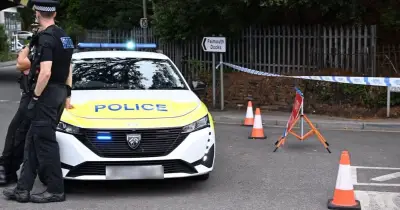
Experts have warned that the successful resolution of the 1967 murder of Louisa Dunne in Bristol may be a rare win, as budget cuts and a decline in forensic science capabilities threaten future cold case investigations. Avon and Somerset Police secured the conviction of 92-year-old Ryland Headley for the rape and murder of the 22-year-old, 58 years after the crime, but specialists highlight significant challenges ahead.
Professor Angela Gallop, a forensic scientist, described the state of forensic science in England and Wales as being in a 'graveyard spiral', with the loss of the national forensic science service and a collapsed commercial market. She noted that police budgets are so tight that funding current investigations is difficult, let alone old ones, leaving many cases waiting to be unlocked.
Carole McCartney, professor of law and criminal justice at the University of Leicester, pointed to haphazard cold case investigations across 43 police forces, each with different methods and budget constraints. She raised concerns about the integrity of evidence stored in police facilities, with some forensic scientists refusing to handle evidence from police stores due to doubts about its condition.
The cold case team that caught Headley consisted of only six part-time members, including two officers and four retired detectives, handling around 30 unsolved murders along with other cases. Glyn Maddocks KC, a solicitor, described the approach to evidence storage and testing across forces as 'quite chaotic', warning that in-house scientific investigations could lead to miscarriages of justice.
Despite the challenges, the Headley case has drawn global attention, highlighting the public fascination with cold cases. Ed Talfan, creative director of Severn Screen, noted that such investigations resonate because they offer victims' families a release from the pain of not knowing, even if closure remains elusive.