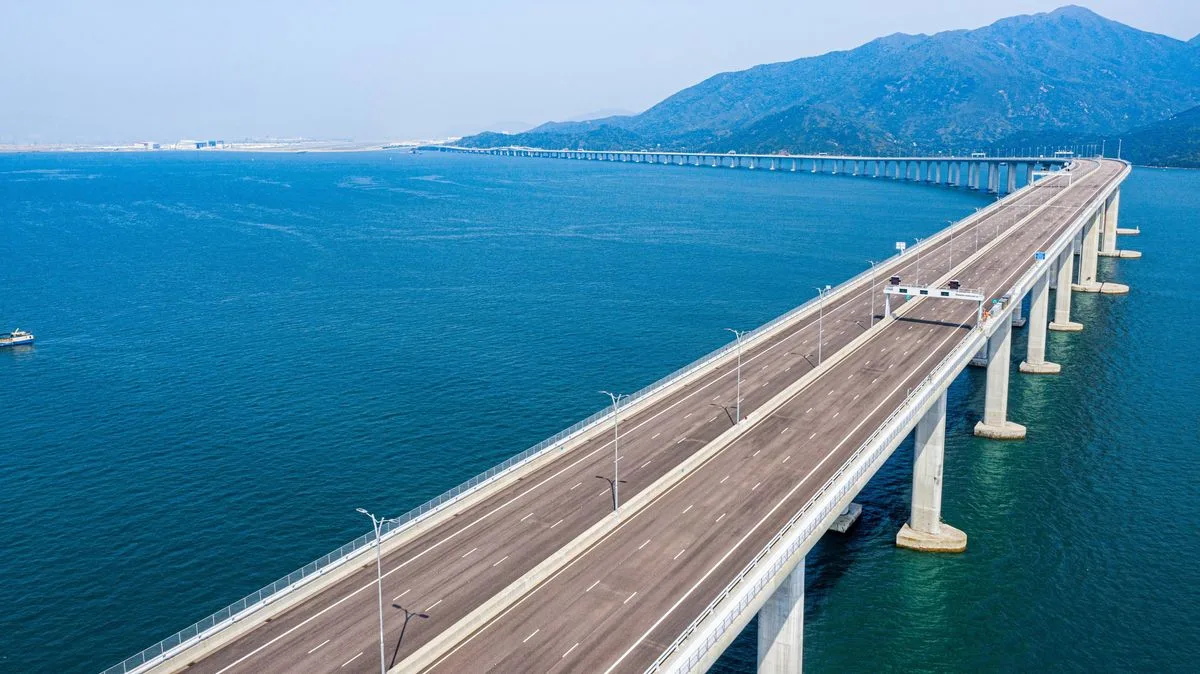
The world's longest sea crossing, the Hong Kong-Zhuhai-Macau Bridge, stretches 34 miles across the Pearl River Delta, transforming a previously hour-long ferry journey into a 40-minute drive. Opened to the public in October 2018, this 55-kilometre structure required nine years of construction at an estimated cost of around £15 billion.
Key Features and Construction
The bridge links the southern Chinese cities of Hong Kong, Zhuhai, and Macau, forming a vital part of a broader scheme to enhance transport connections throughout the Greater Bay Area, which Beijing aims to develop into a major economic hub. By connecting Hong Kong and Macau more directly with cities in Guangdong province, the crossing is expected to boost trade and mobility across the region.
Its construction includes multiple long-span bridges, artificial islands, and linking roadways. The principal section comprises three navigation channel bridges: Jiuzhou, Jianghai, and Qingzhou, designed to allow large vessels to navigate through one of China's busiest shipping areas. Engineers faced substantial challenges, including frequent typhoons and a harsh marine environment. The bridge uses single-column piers anchored into the seabed to minimise interference with water flow and reduce the impact on native wildlife, such as the Chinese white dolphin.
Design and Engineering
The three main bridges feature cable-supported structures, each with a unique tower design, crafted to give the crossing a consistent yet varied appearance, especially given its visibility from land, sea, and air. The Jiuzhou Bridge retains its original sail-shaped towers following alterations made during the detailed design phase. Engineering consultancy Arup was involved in numerous elements of the project, including preliminary design work, artificial island construction, and key road and tunnel connections on the Hong Kong and Macau sides.
Additional infrastructure linked to the crossing includes boundary crossing facilities and connections, such as the Tuen Mun-Chek Lap Kok Link, helping to integrate the bridge into the wider transport network.
Operational Milestones
Since its opening, the bridge has become an essential artery within the region's transport infrastructure, highlighting both the scale of China's ambitious infrastructure goals and the practical need for faster connections between its major cities. The bridge was built using 400,000 tonnes of steel and was designed to withstand earthquakes and typhoons. According to Guangdong News, the number of northbound trips made by single-plate vehicles from Hong Kong and Macao via the bridge exceeded 10 million as of May 25, with daily traffic now averaging 11,000 trips.